The first time I walked into the forest at night, I was afraid. Not of anything specific, just of the dark itself. The absence of light does something to you. Your senses sharpen. Every sound becomes louder, every shape becomes a question. Your headlamp cuts a narrow beam through the undergrowth and the rest of the world disappears. You are suddenly very aware of how small you are.
That fear never goes away completely. But over time, something else takes its place. You start to notice things. The sound of a frog you have never heard before. A pair of eyes reflecting your headlamp from the canopy above. The slow, deliberate movement of something crossing the trail ahead of you. And then one night, standing in the middle of a rainforest at 2 AM, soaked from the rain, with a pit viper coiled on a branch at eye level, you realize that the fear has become wonder. That the discomfort is the price of admission to a world most people will never see.
“The fear never goes away completely. But over time, something else takes its place. The discomfort is the price of admission to a world most people will never see.”
Learning to Be Humble
The forest at night does not care about your plans. You can scout a location during the day, set up your equipment, plan your shots, and then arrive after dark to find that everything has changed. The animal you were looking for is gone. The branch you focused on has fallen. A different creature has taken up residence in the exact spot you planned to shoot.
The first lesson the night forest teaches is humility. You are a visitor. You are tolerated, not invited. The animals that live here have been navigating this darkness for millions of years. You showed up with a headlamp and a camera, and you are the one who is out of place.
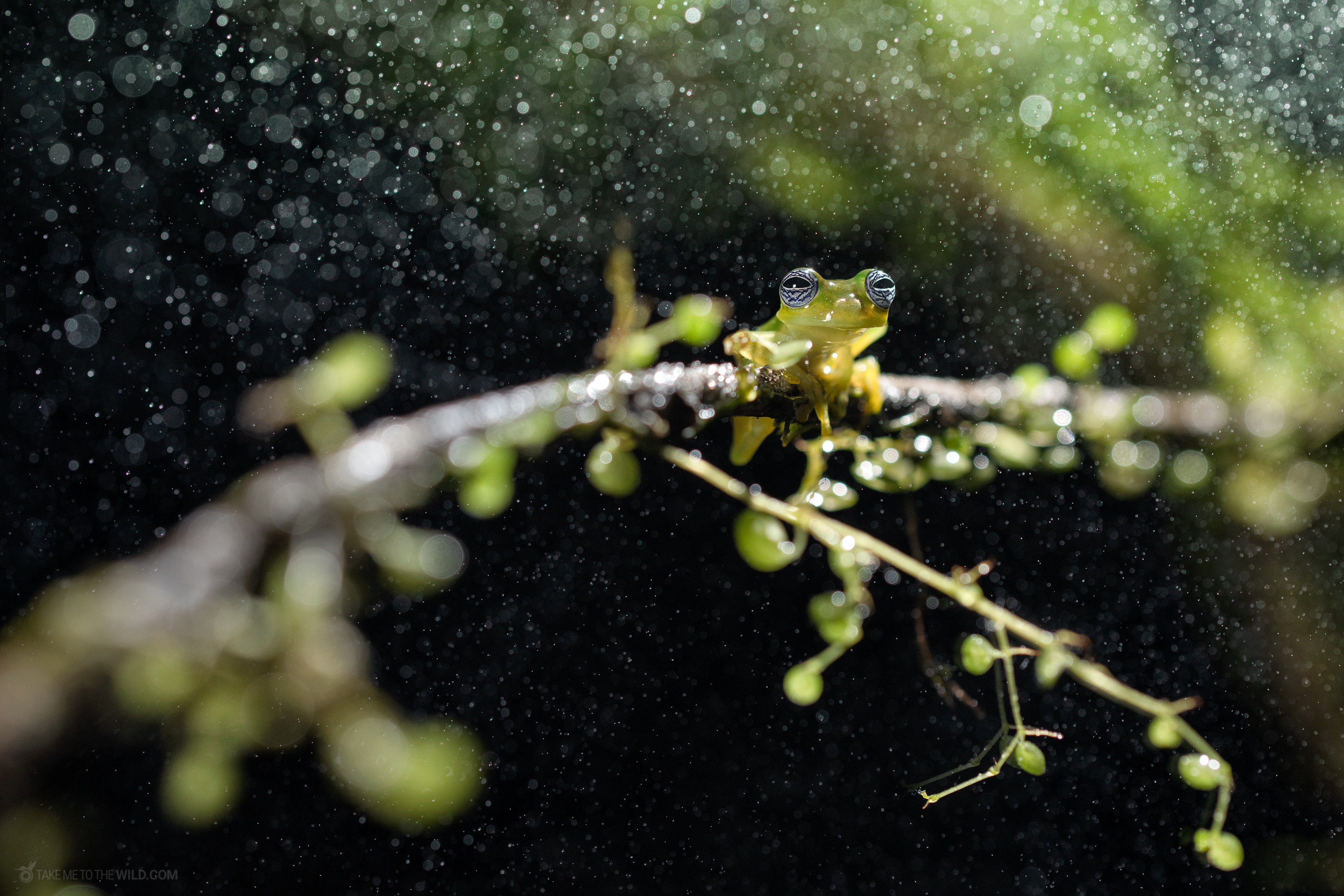
The second lesson is to move slowly. Every time I rush through the forest, I miss things. The viper on the branch at shoulder height. The glass frog on the underside of a leaf. The tiny opossum watching me from two meters away. The night rewards patience and punishes carelessness.
Embracing the Discomfort
Night photography in the tropics means rain. It means mud. It means mosquitoes finding every gap in your clothing. It means your glasses fogging up constantly. It means your camera gear getting wet no matter how careful you are. It means being cold when you expected to be warm, and sweating when you thought you would be cold.
At some point I stopped fighting it. The rain comes, you get wet. The mud is deep, your boots fill with water. The mosquitoes bite. None of it stops. You either accept it or you go home. And if you accept it, something interesting happens. You stop thinking about your comfort and start paying attention to what is around you. The discomfort becomes background noise, and the forest opens up.
The Things That Find You
You do not find most nocturnal animals. They find you. Or rather, they were always there, and you finally learned to see them.
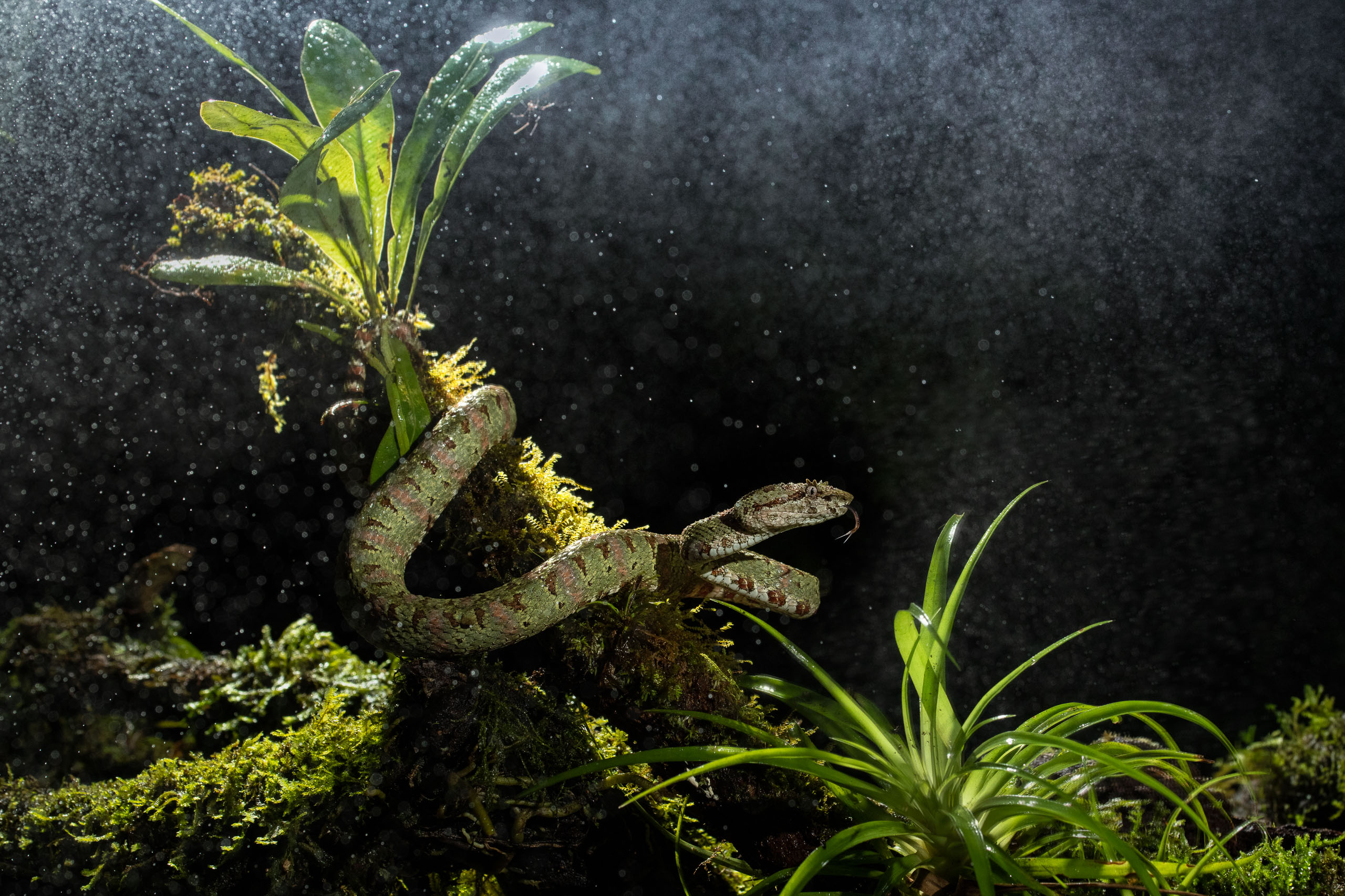
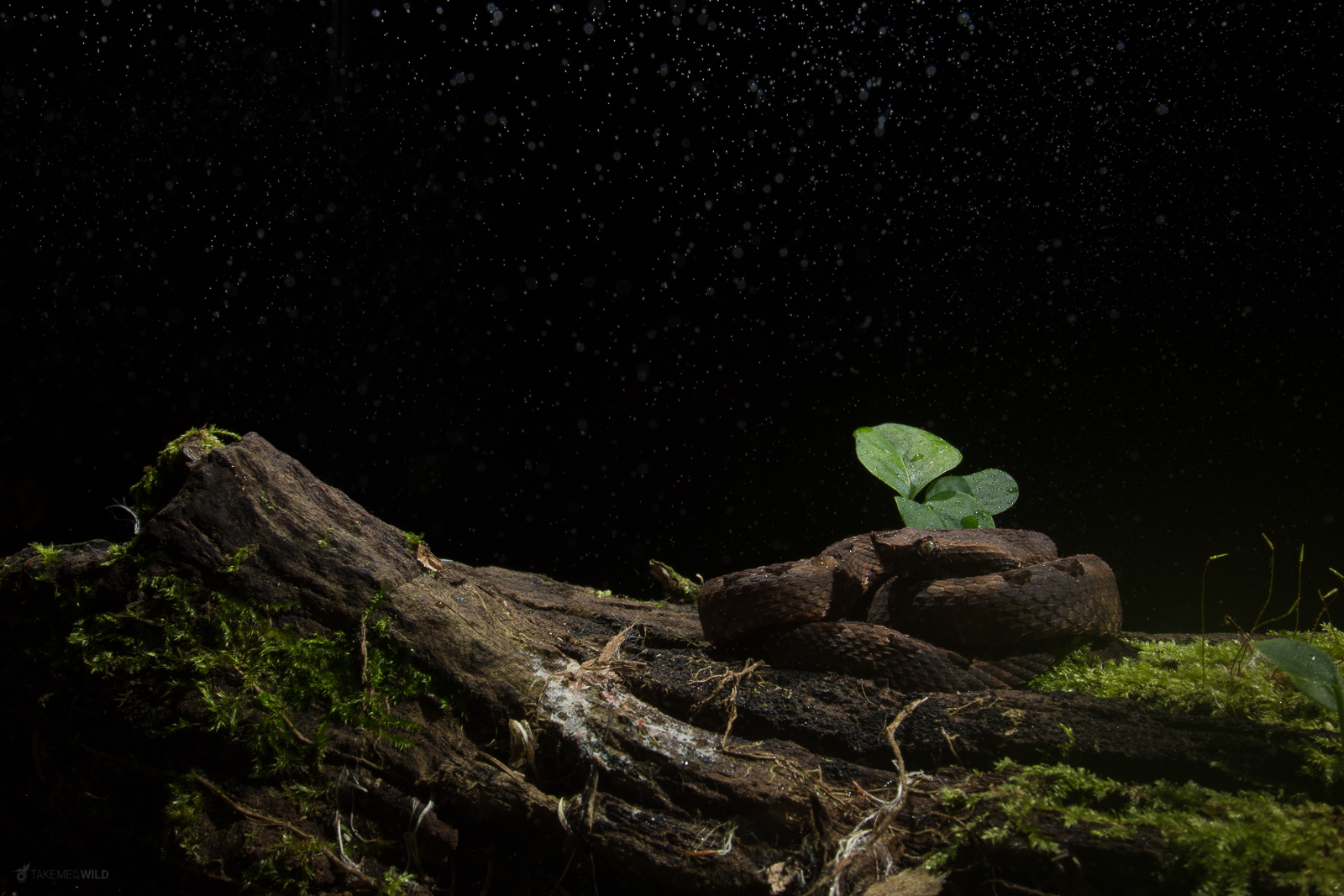
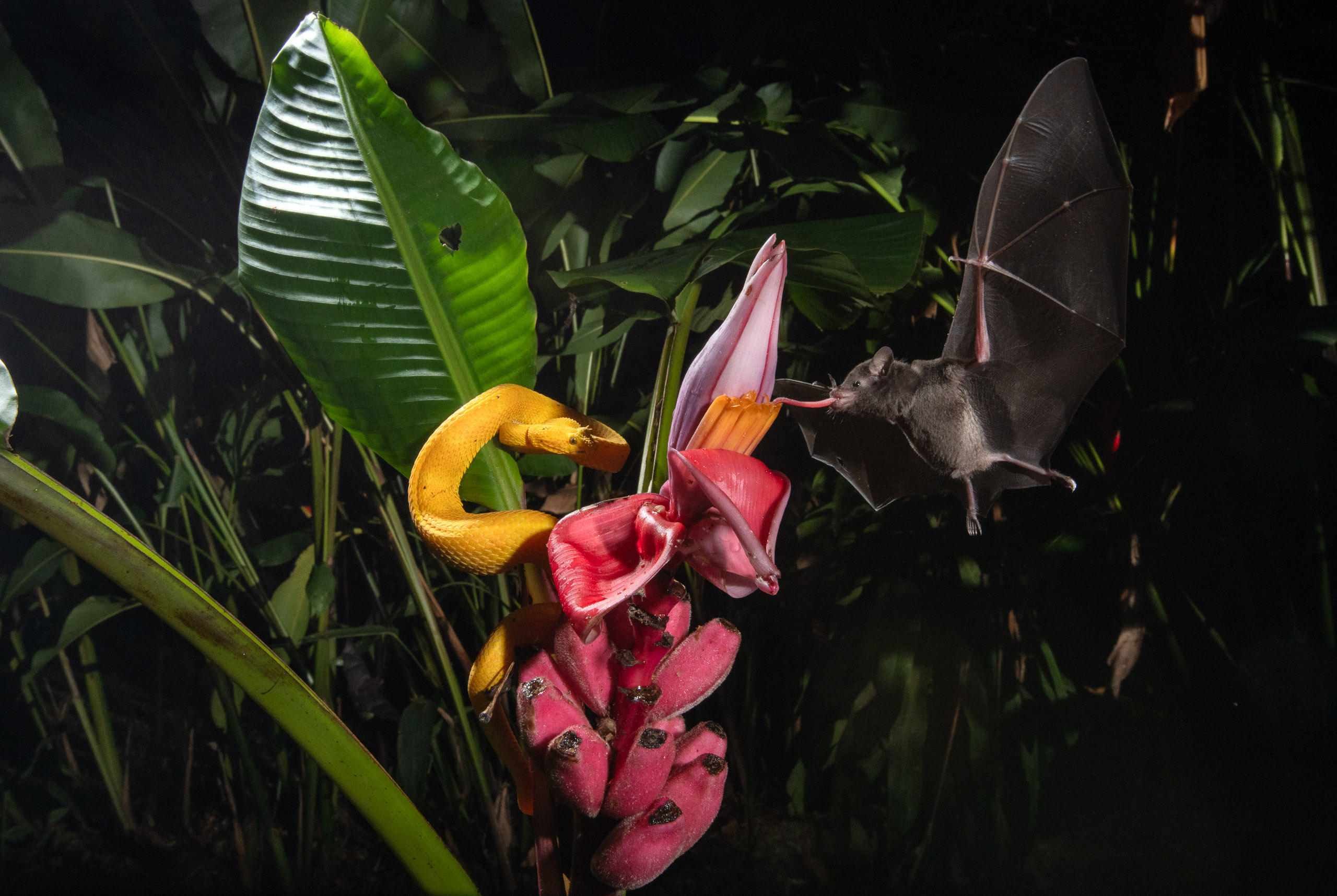
The Eyelash Pit Viper is the one that gets your attention first. Not because you spot it, but because someone points it out to you, coiled on a branch at the exact height where your hand would grab if you stumbled. After that, you never walk the same way again. You check every branch before you touch it. You sweep your headlamp slowly, methodically, because missing a viper is not a mistake you want to make twice.
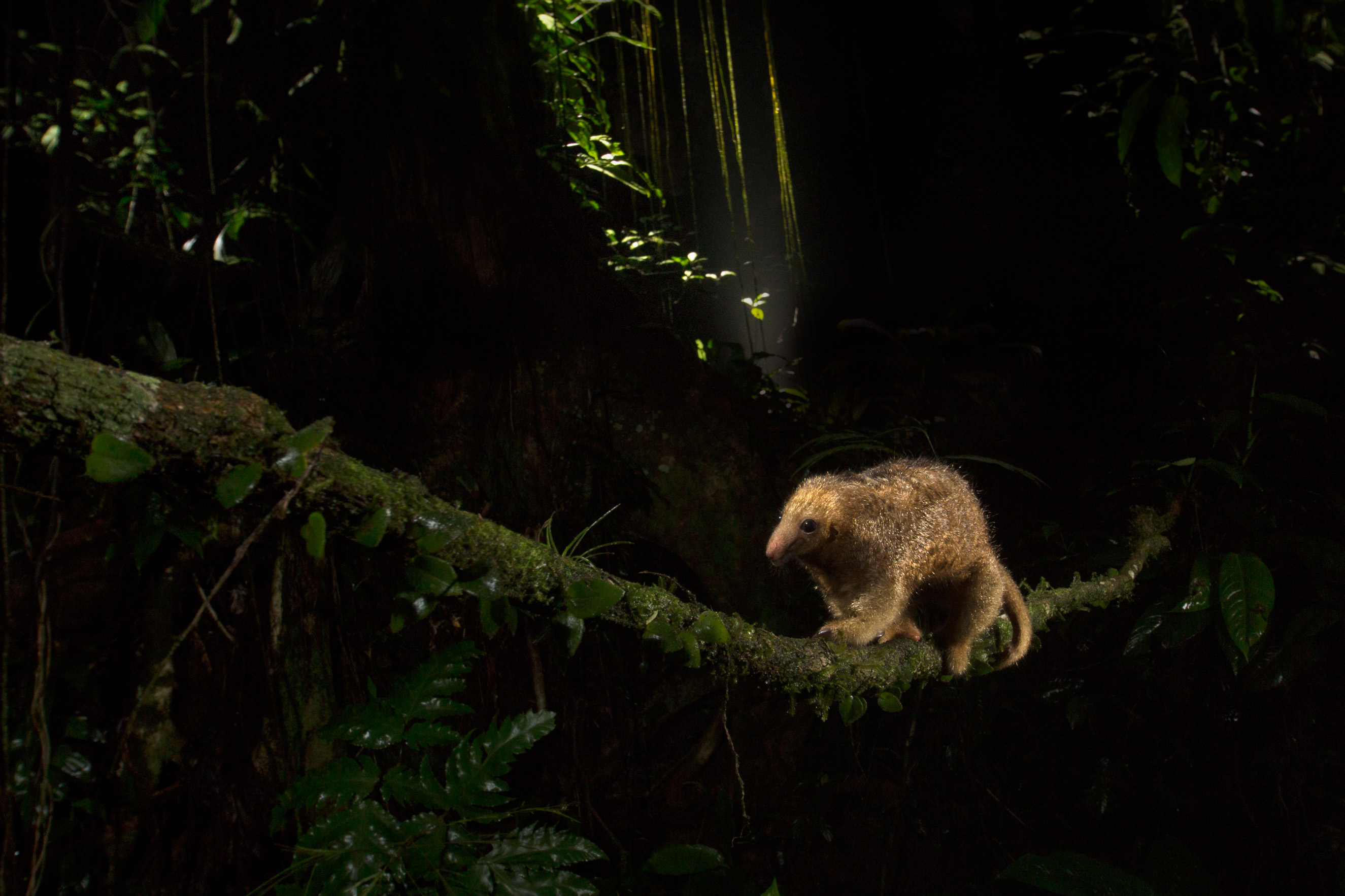
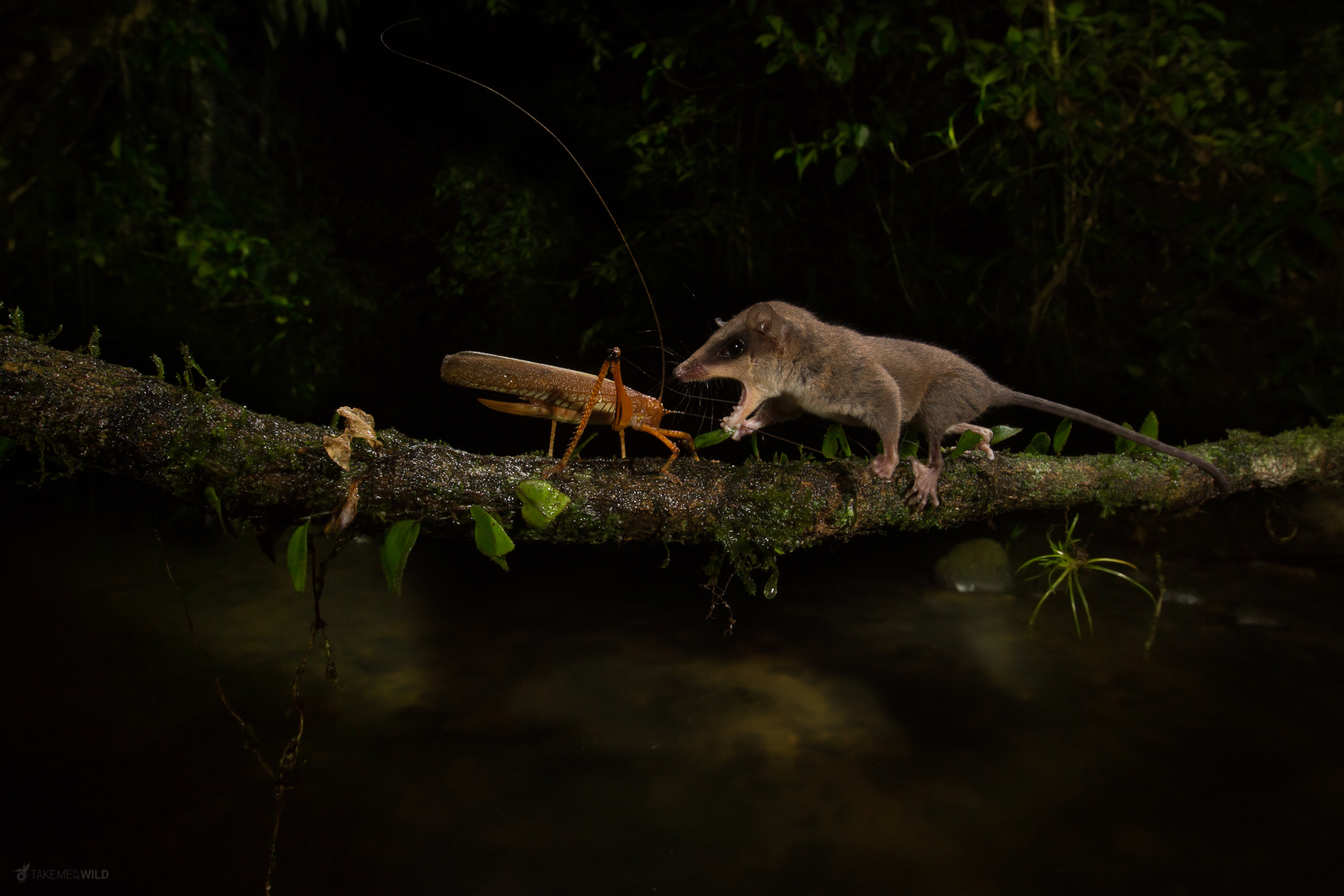
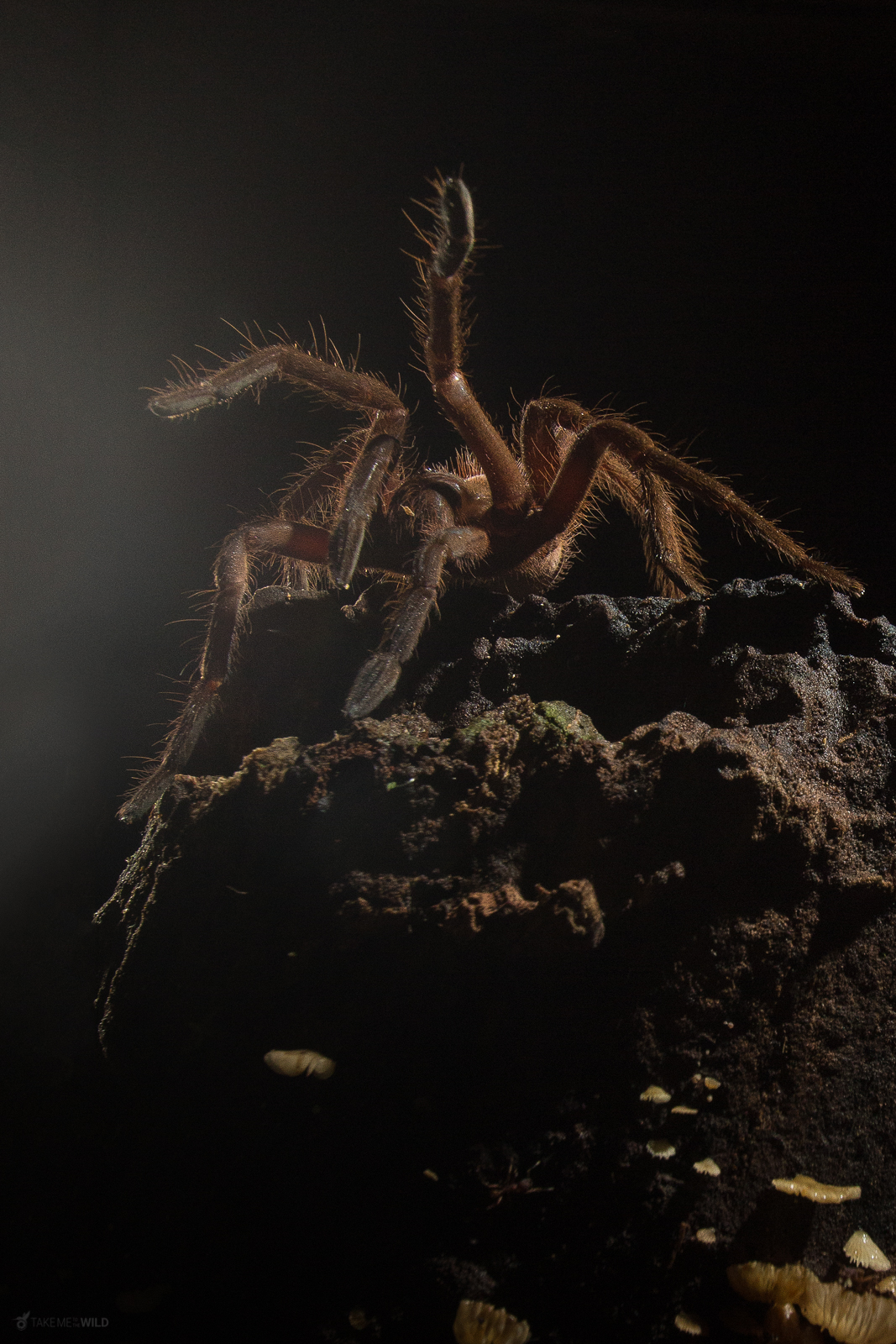
Then there are the creatures that are genuinely strange. The Silky Anteater, tiny and slow, crossing a vine in the canopy like a living cotton ball. The Mexican Mouse Opossum, smaller than your fist, catching a cricket with hands that look almost human. The tarantula sitting in the middle of the trail, completely still, waiting.
The Night Flyers
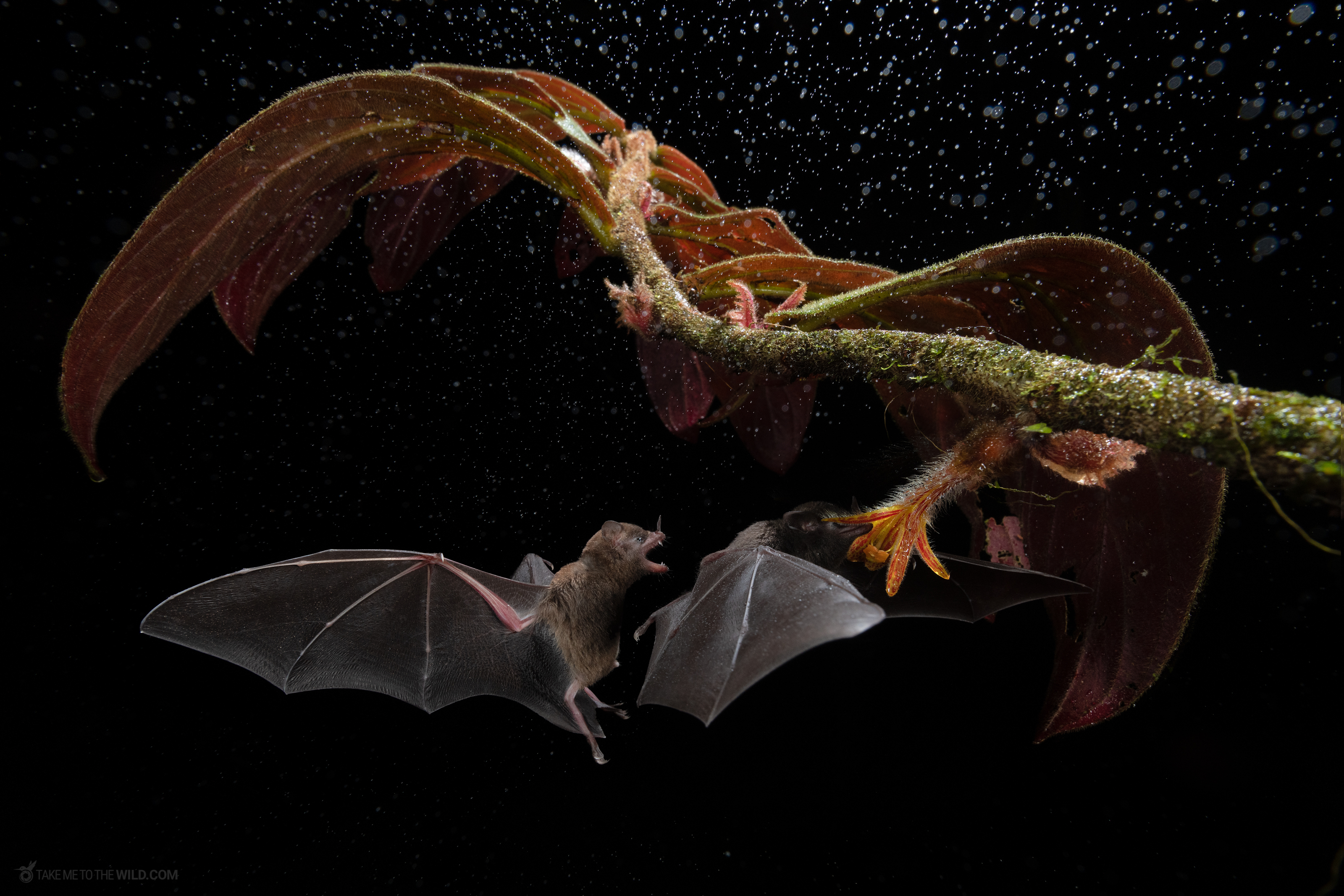
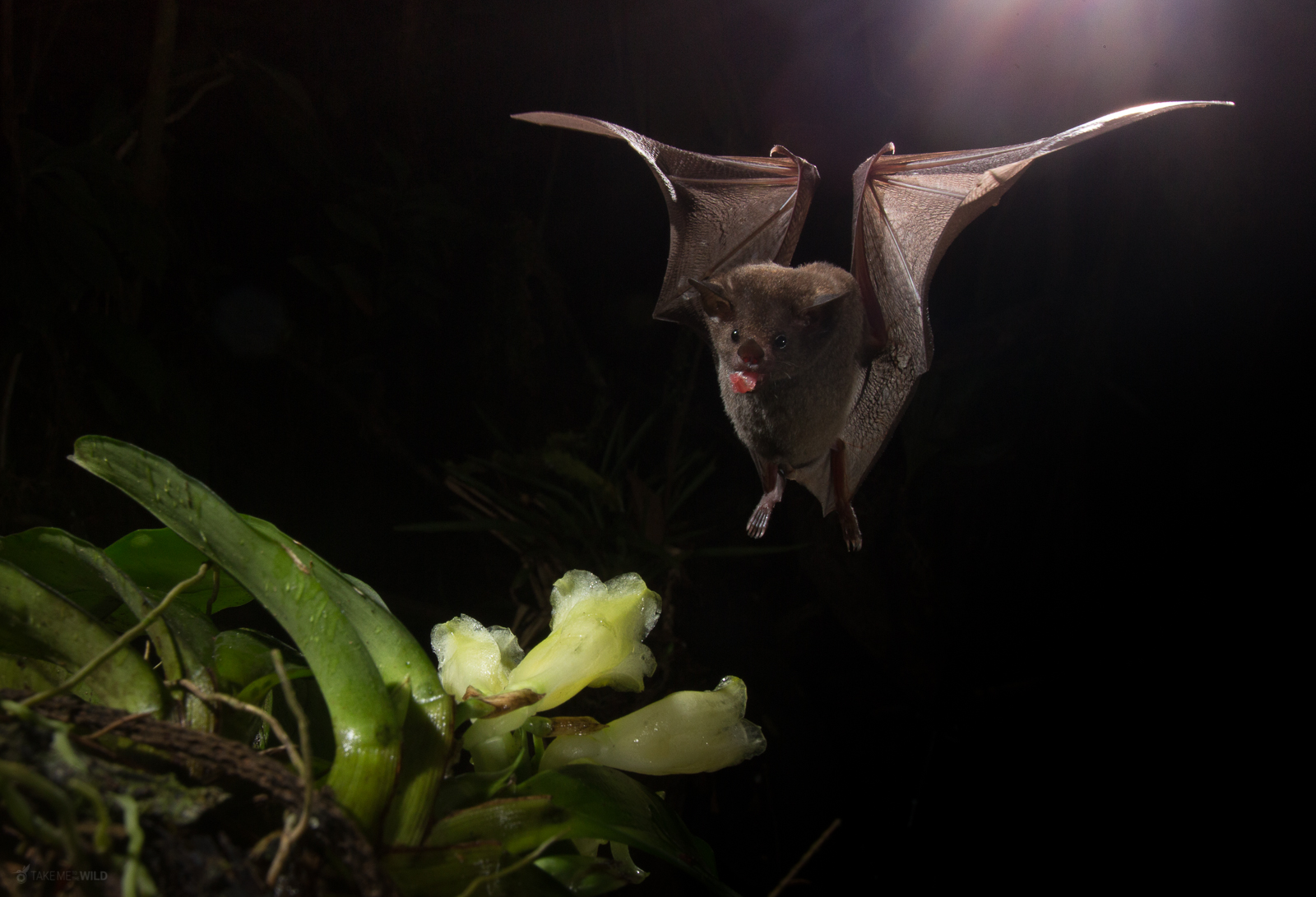
The bats are the hardest to photograph and the most rewarding. The Long-tongued Bat feeds from flowers in the dark, hovering in front of them the way a hummingbird does during the day. To capture it, I set up flash triggers aimed at a flower and waited. The bat comes in fast, extends its tongue into the flower, and is gone in less than a second. Getting a sharp image took many nights and many failed attempts.
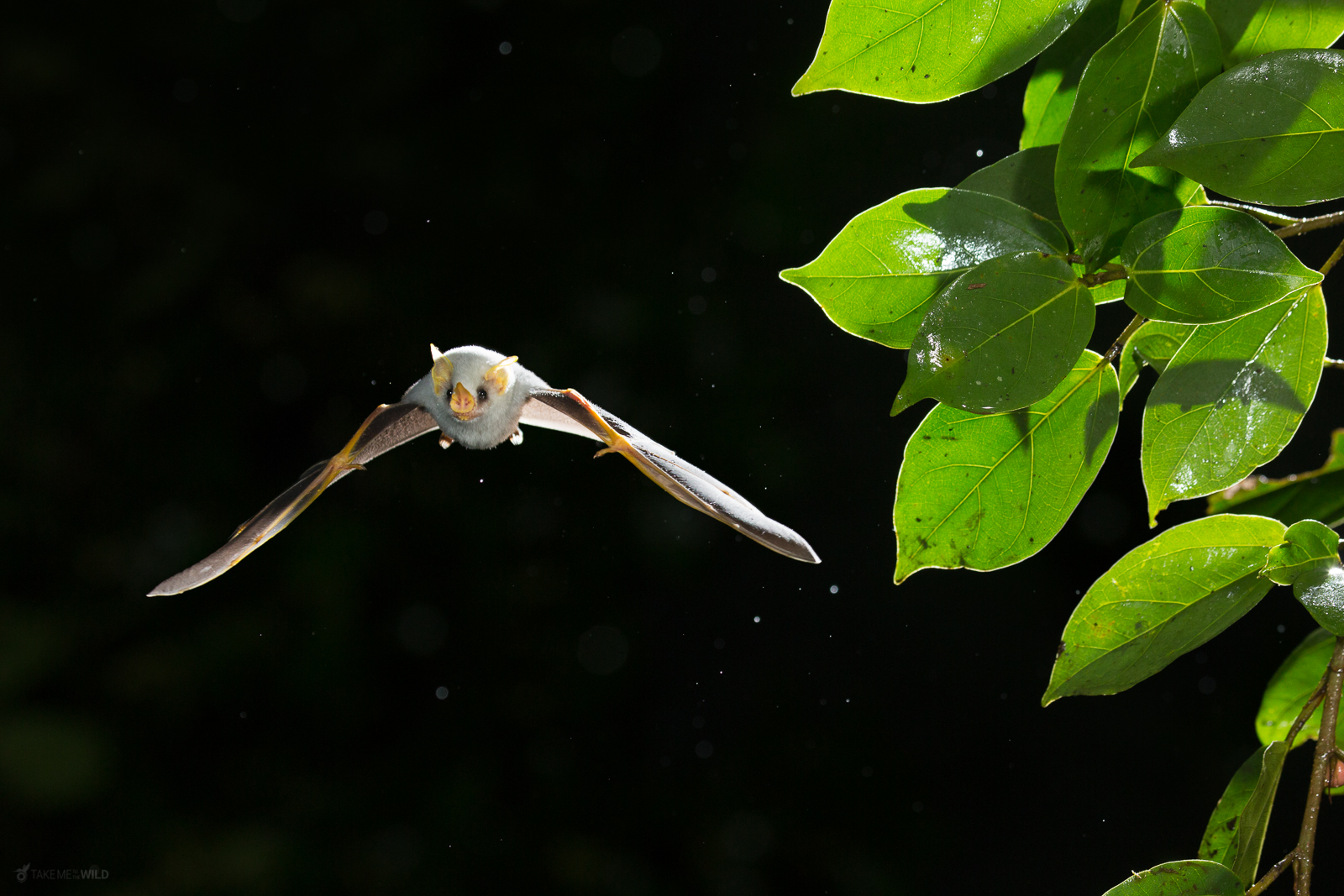
The Honduran White Bat is different. It is small, white, and builds tents from large leaves, folding them over to create a shelter. Finding one of these tents at night, with the tiny bats roosting underneath, is one of the most surreal experiences the forest offers.
The Guardians
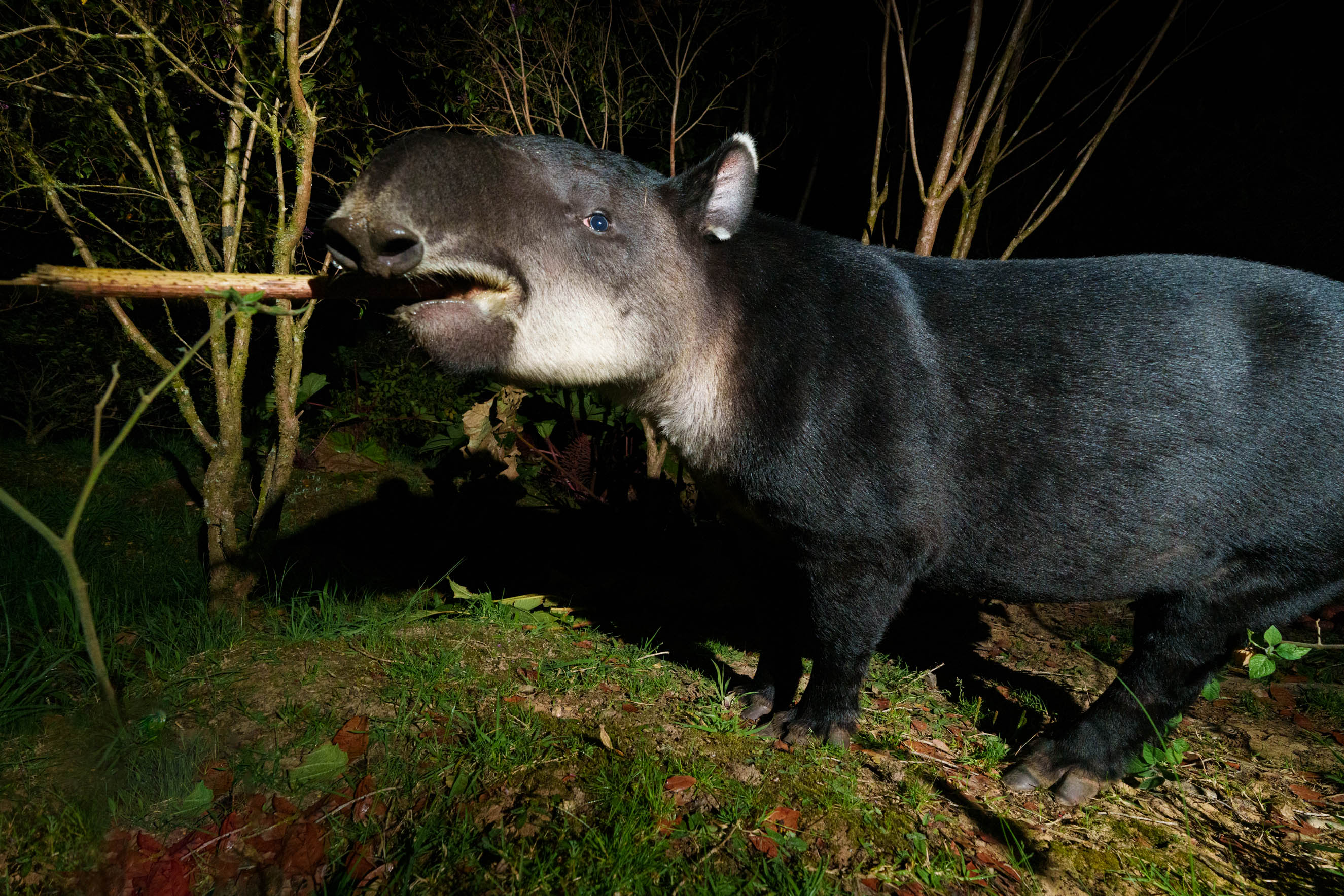
The tapir moves through the forest at night like a ghost. Heavy, quiet, deliberate. You hear it before you see it, the soft crunch of leaves, the snap of a twig, and then the shape materializes out of the darkness. It is the largest land mammal in Costa Rica, and it moves as if careful not to disturb the forest it helps shape. Seeing one at night is rare, and every encounter feels like a gift.
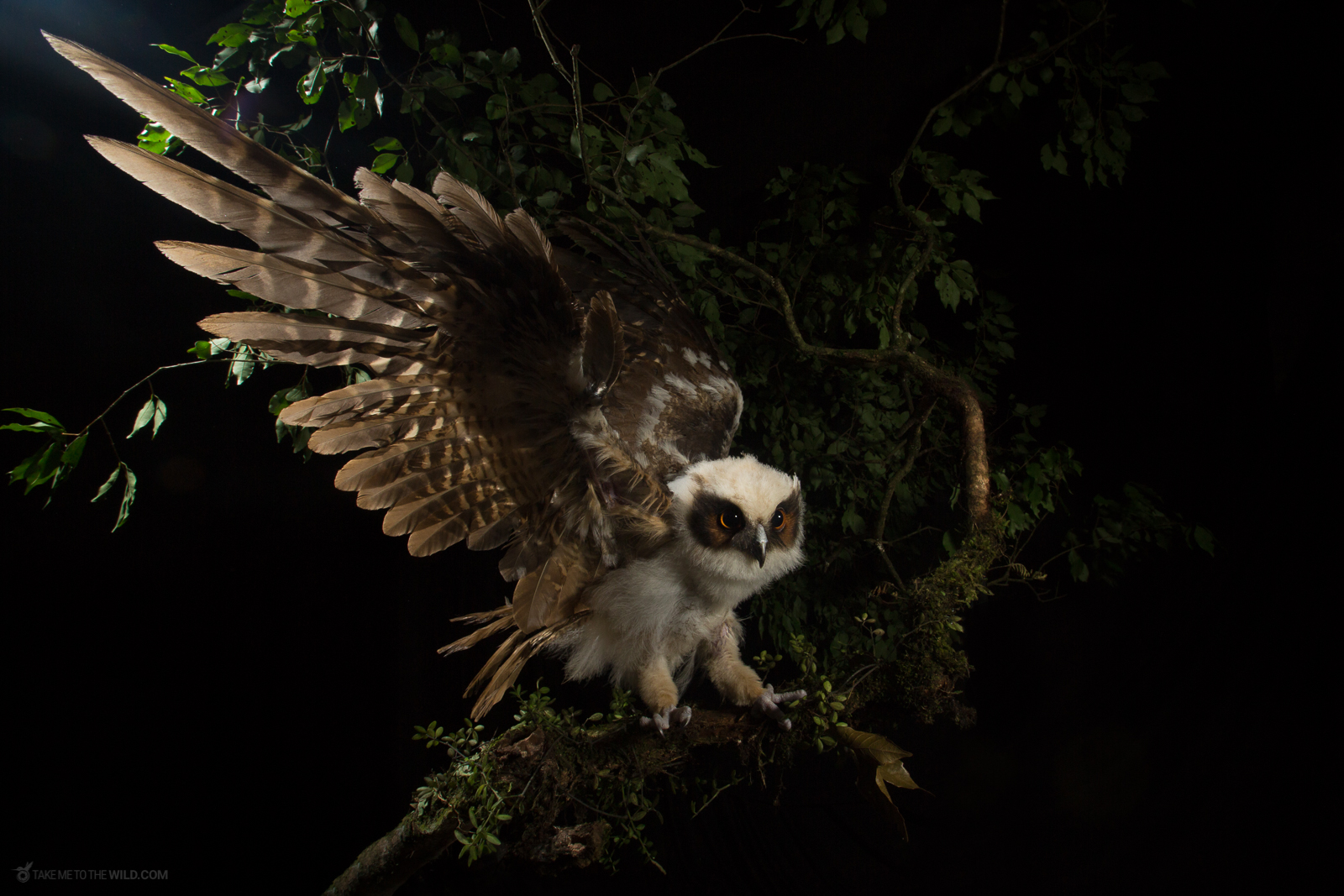
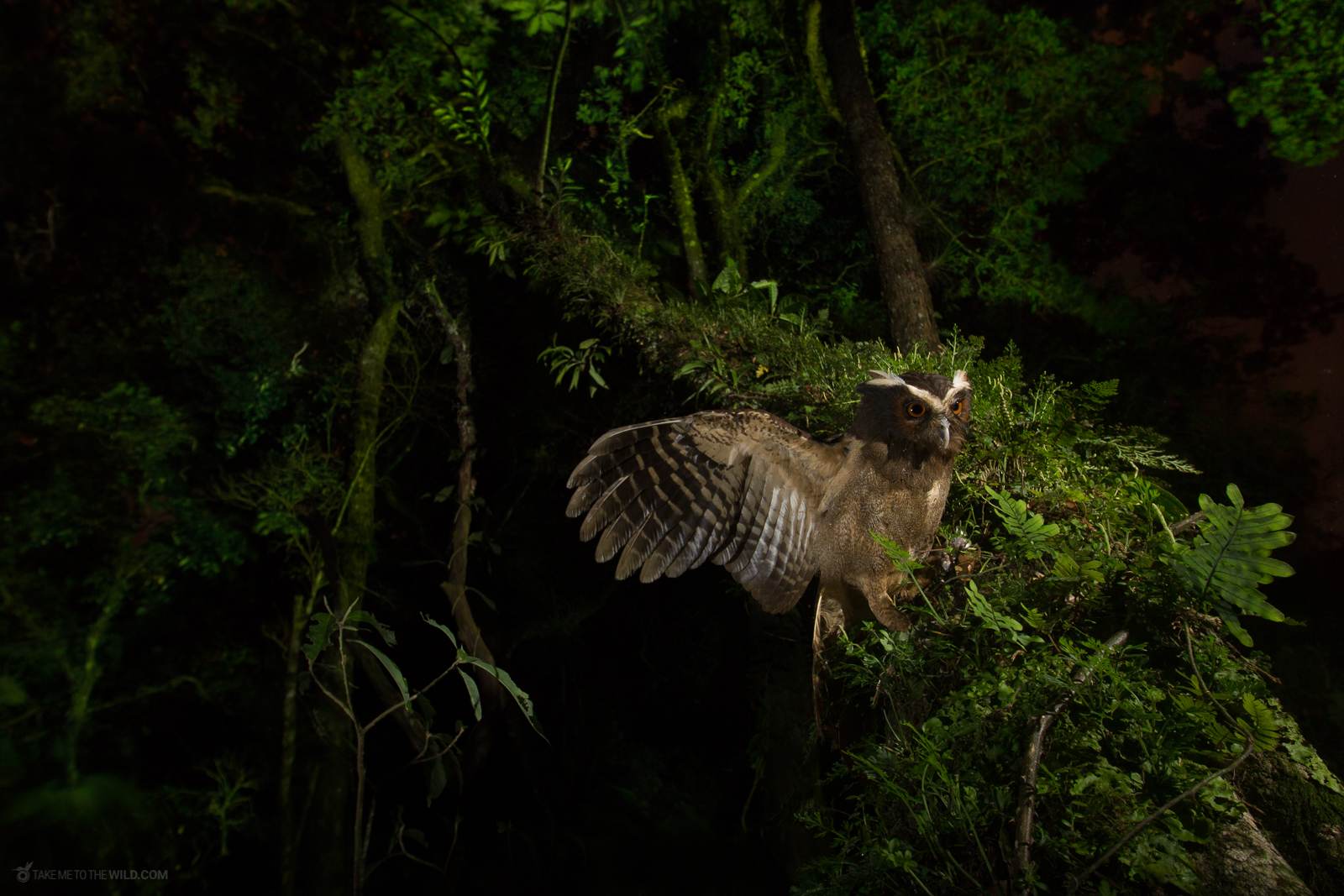
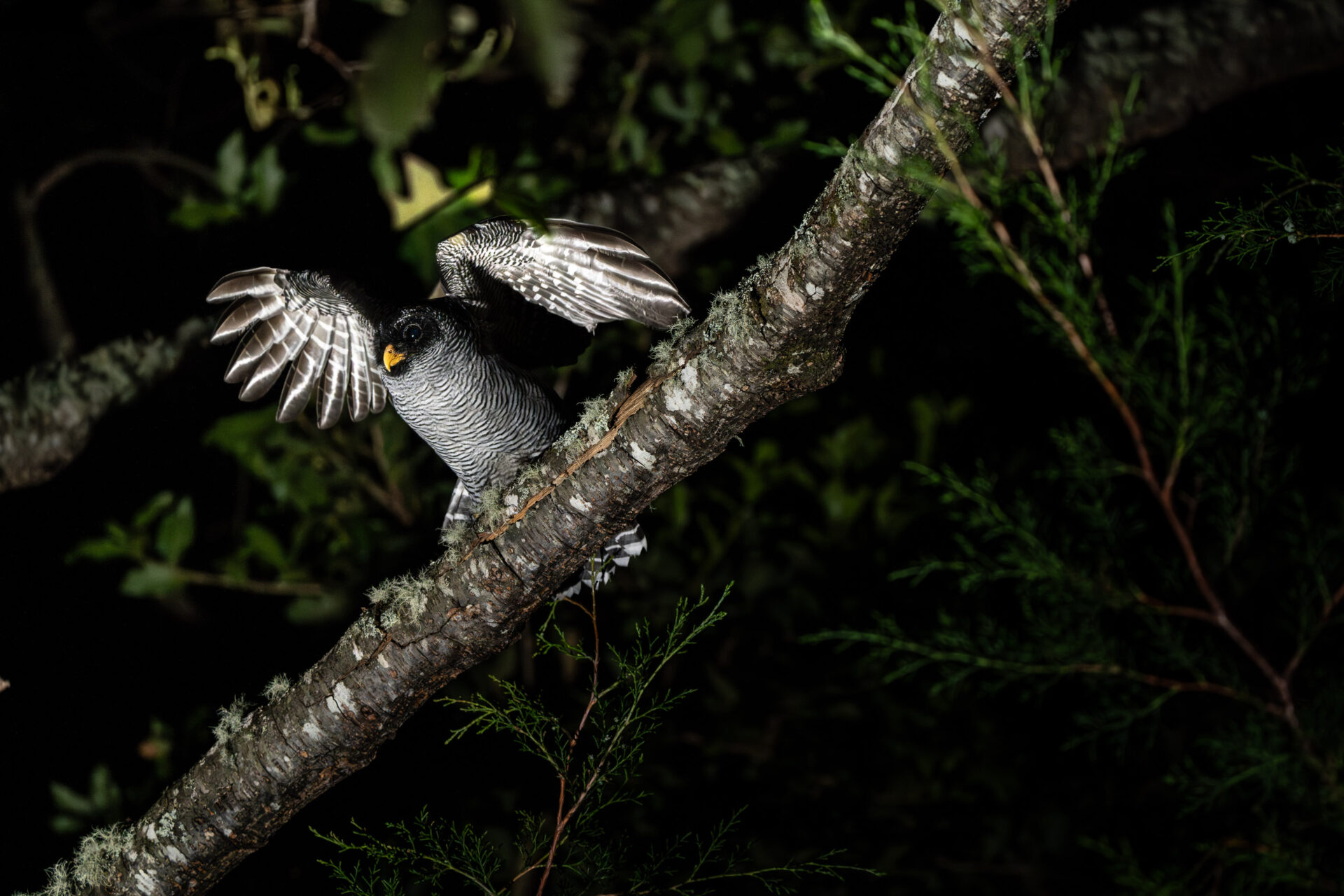
And then there are the owls. The Crested Owl sitting on a low branch, watching you with pale yellow eyes. The Mottled Owl hunting from a perch, dropping silently onto prey you never saw. They are always there, somewhere above you, watching. They see in the dark far better than you ever will.
What the Night Teaches
“The forest at night does not care about your plans, your comfort, or your fear. It asks only one thing: are you willing to sit with the discomfort long enough to see what it has to show you?”
After years of walking through dark forests, I have learned a few things that have nothing to do with photography.
The first is that fear is useful. It keeps you alert, careful, alive. The moment you stop respecting the forest is the moment you step on a viper or grab a branch you should not have touched. Fear is not the enemy. Carelessness is.
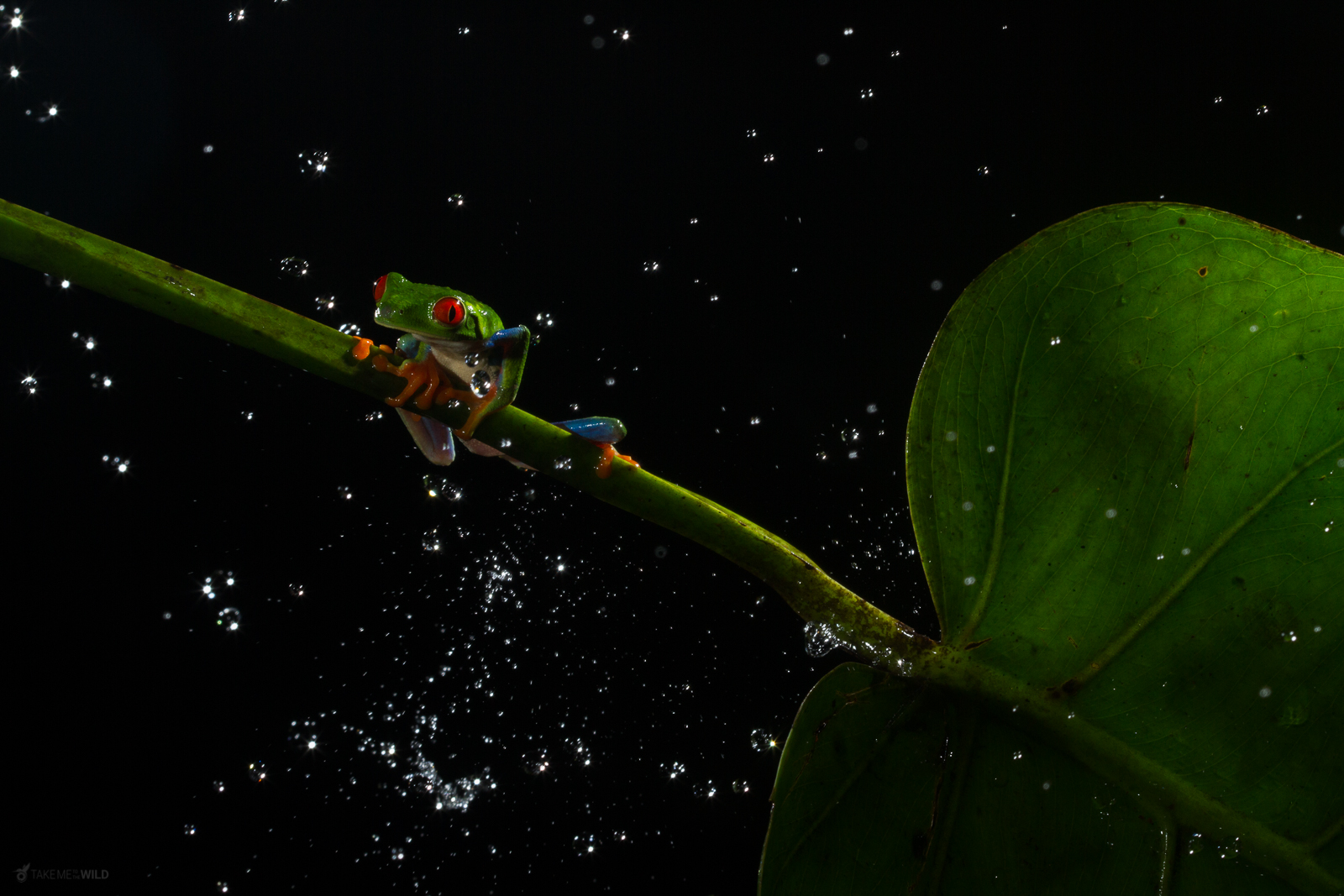
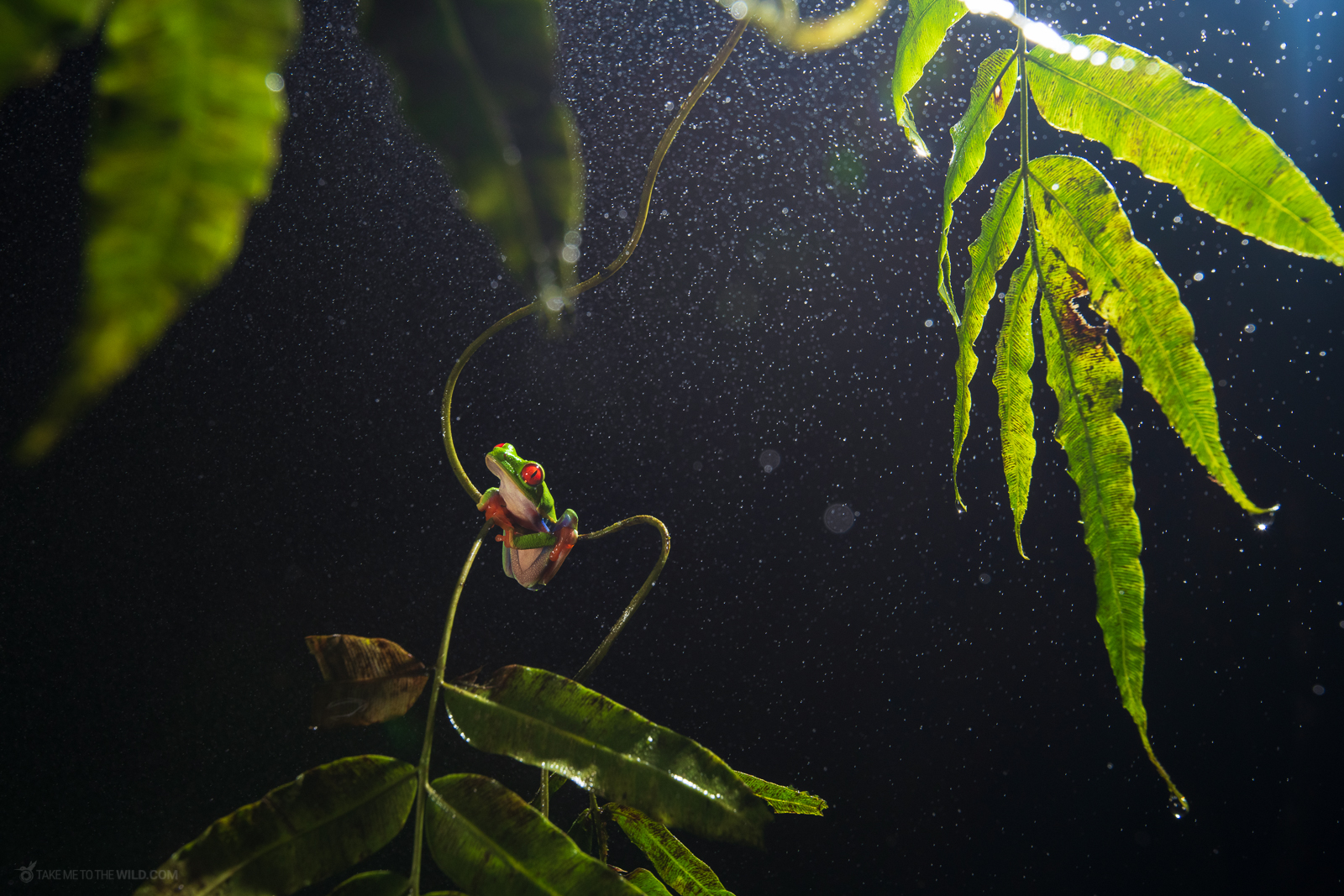
The second is that discomfort is temporary. The rain stops. The mosquitoes lose interest. The cold passes. But the image of a red-eyed tree frog sitting on a leaf in the downpour, or a bat hovering in front of a flower at midnight, stays with you forever.
The third is that the natural world does not owe you anything. You can go out every night for a week and see nothing. And then, on a random Tuesday, at 3 AM, in the rain, something appears that takes your breath away. You cannot earn these moments. You can only show up and be ready.
Gear
The photography gear used in this story.
Lenses
- Canon EF 100-400mm f/4.5-5.6L IS
- Sony FE 90mm f/2.8 Macro G
Related Topics