Since I started with wildlife photography, owls have fascinated me. Just finding and observing these remarkable creatures during the night is challenging enough, let alone photographing them successfully. There is something about them that gets under your skin. Maybe it is the fact that they live in a world most people never see, the one that starts after dark, when the forest transforms into a different place entirely. Maybe it is the way they look at you, those enormous eyes, completely still, piercing through the darkness, like they have been watching you for a long time before you even noticed them. Whatever it is, once you start looking for owls, you don’t stop.
Costa Rica has 14 species of owls. That number sat in my head for a long time, like a challenge I hadn’t asked for but couldn’t ignore. Some of them are relatively easy to find, perched in familiar trees along trails I have walked hundreds of times. Others are rare, secretive, and live in places that are hard to reach. A few of them are so difficult to see that most birders who have spent decades in the country have never encountered them. They live above the clouds, in the cold, wet highlands of the Talamanca Mountains, where the nights are long and the mist swallows everything.
I decided I wanted to photograph them all. And so began years of night walks, cold camps, and the slow accumulation of encounters that have shaped how I see this country and its forests after dark.
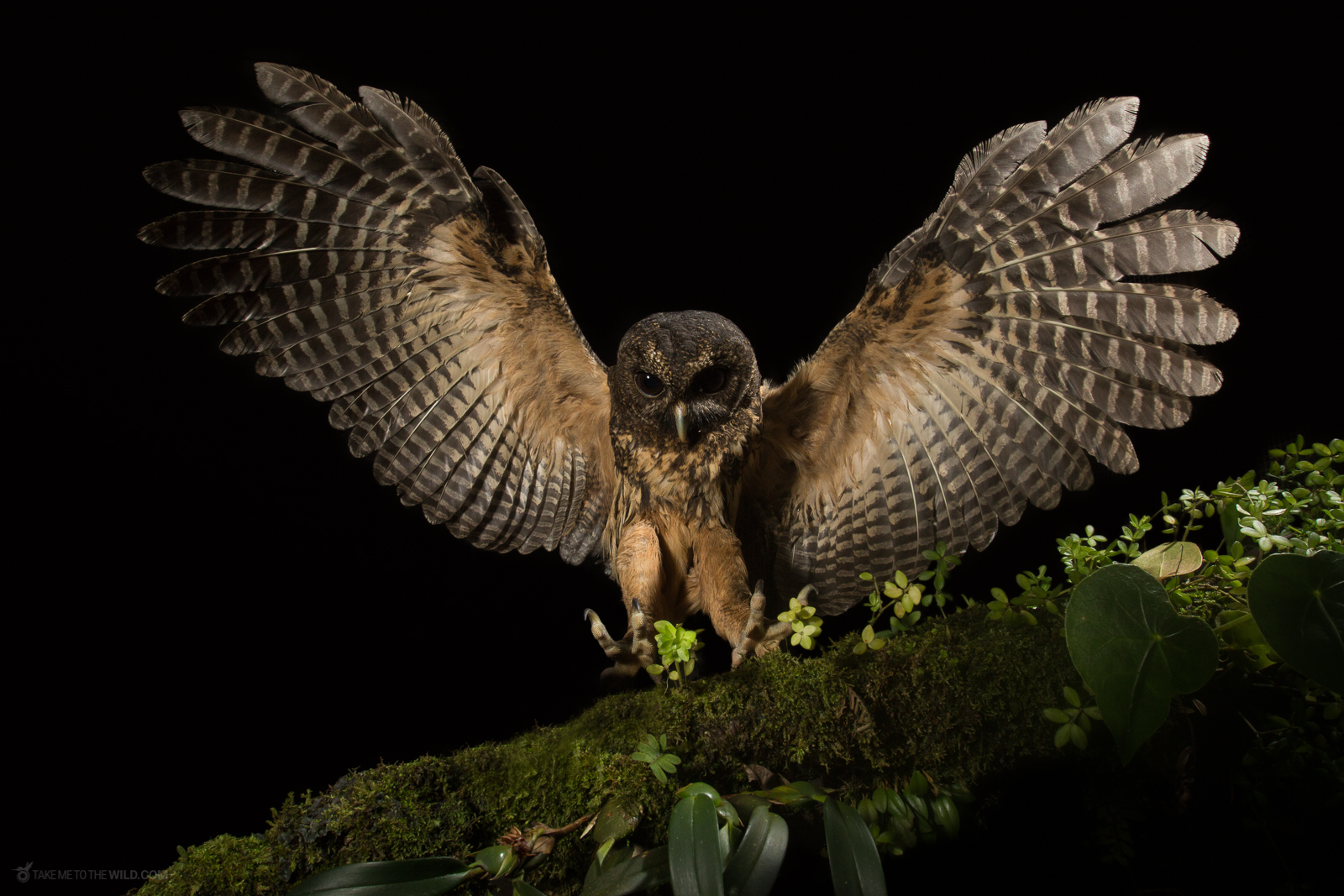
The Night Shift
Finding owls means working at night. That sounds simple enough, but in practice it changes everything. The forest you know during the day, the one with familiar trails and recognizable landmarks, becomes an entirely different world after sunset. You walk in complete darkness, your headlamp cutting a narrow beam through the undergrowth while moths spiral into the light and land on your face. The sounds change too. The birdsong is replaced by a chorus of frogs, insects, and strange calls that echo through the canopy.
I spent countless nights in national parks and private reserves across the country. Braulio Carrillo, Sarapiqui, the highlands around Cerro de la Muerte, the dry forests of Guanacaste. Each region has its own community of owls, adapted to different habitats and elevations. We invested a lot of time scouting and studying locations, nesting sites, hunting perches, and for some images, I set up motion sensor triggers in advance to capture the exact moment I was after.
The key is patience. You go out, you listen, you wait. Sometimes you hear nothing and walk for hours in silence. Sometimes you hear a call in the distance and spend an hour tracking it through dense undergrowth, only to have the bird fly away before you get close. But sometimes, everything lines up, and the forest gives you a gift.
The Lowland Species
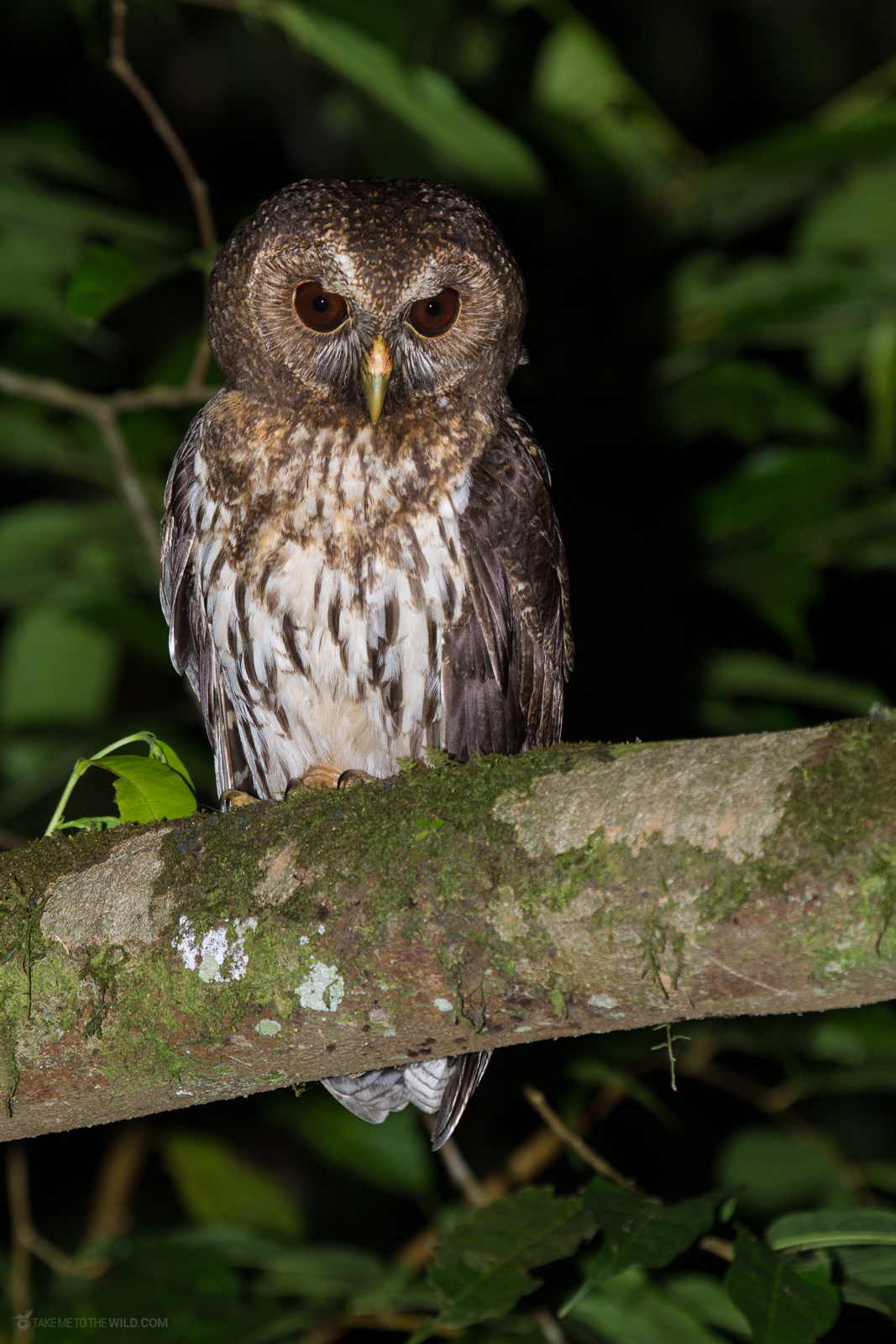
The Mottled Owl was one of the first species I found. It is relatively common in the lowland and mid-elevation forests, and its call is distinctive, a series of deep hoots that carry through the forest at night. Once you learn to recognize it, you start hearing it everywhere. The challenge is getting close enough to photograph it without disturbing it.
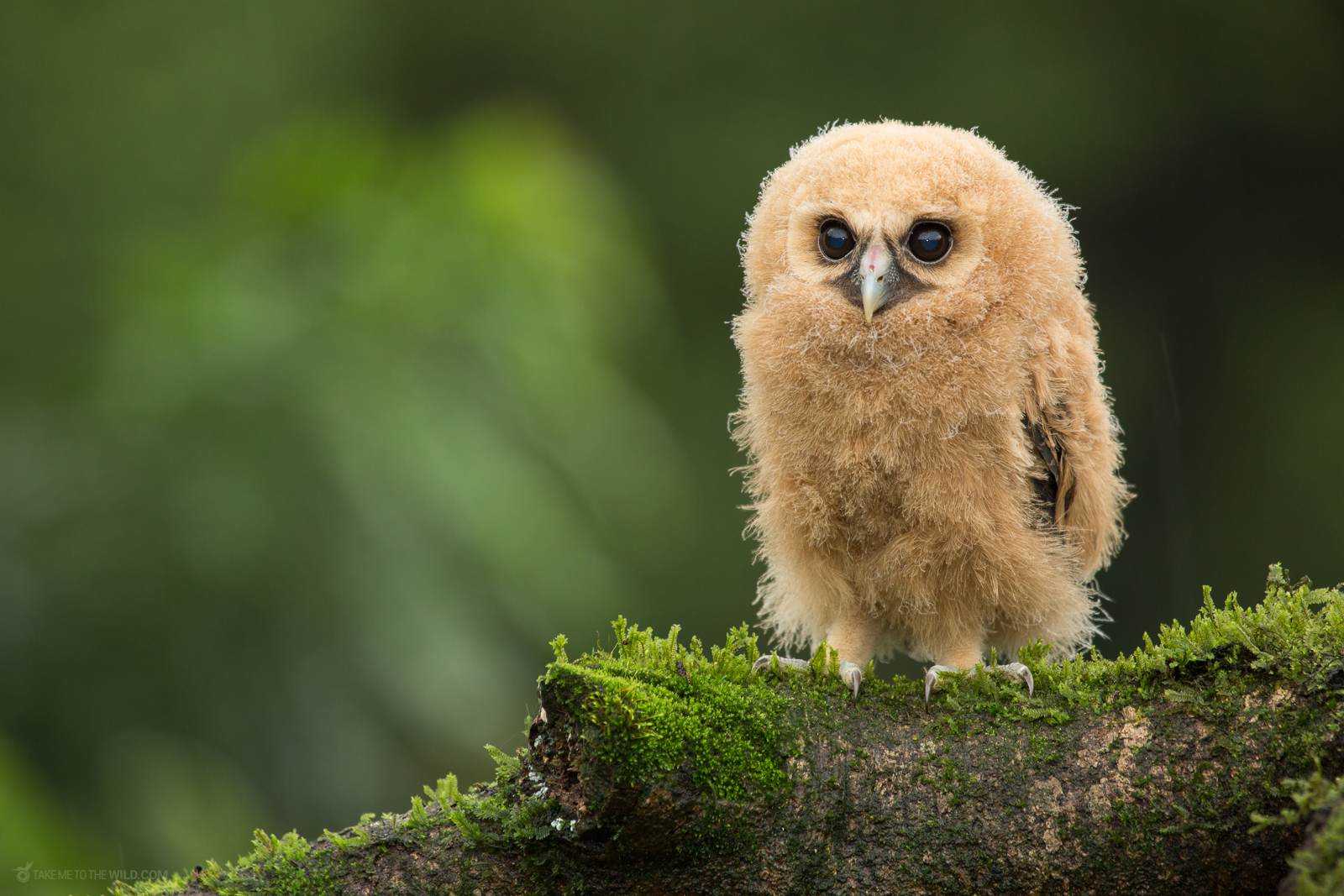
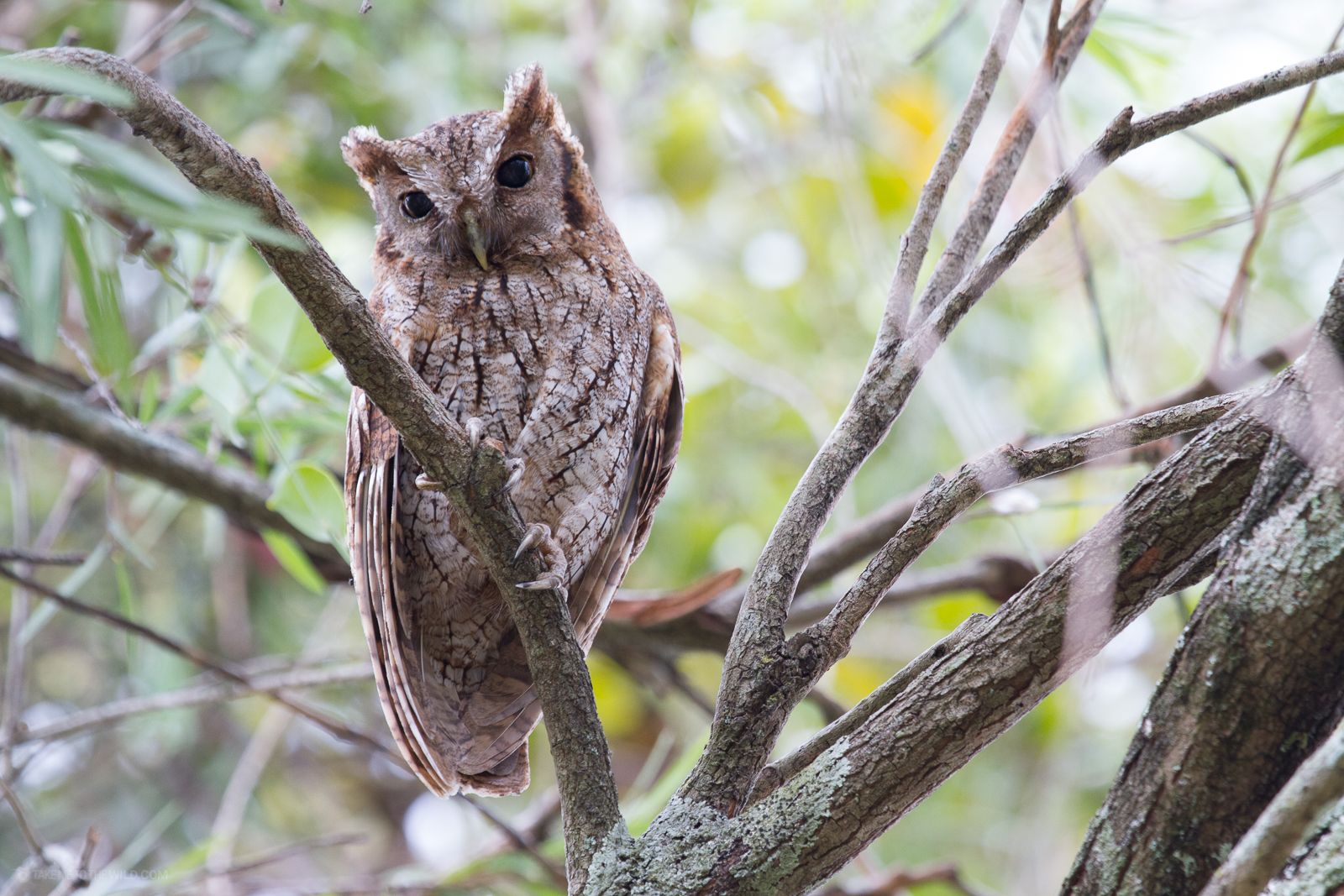
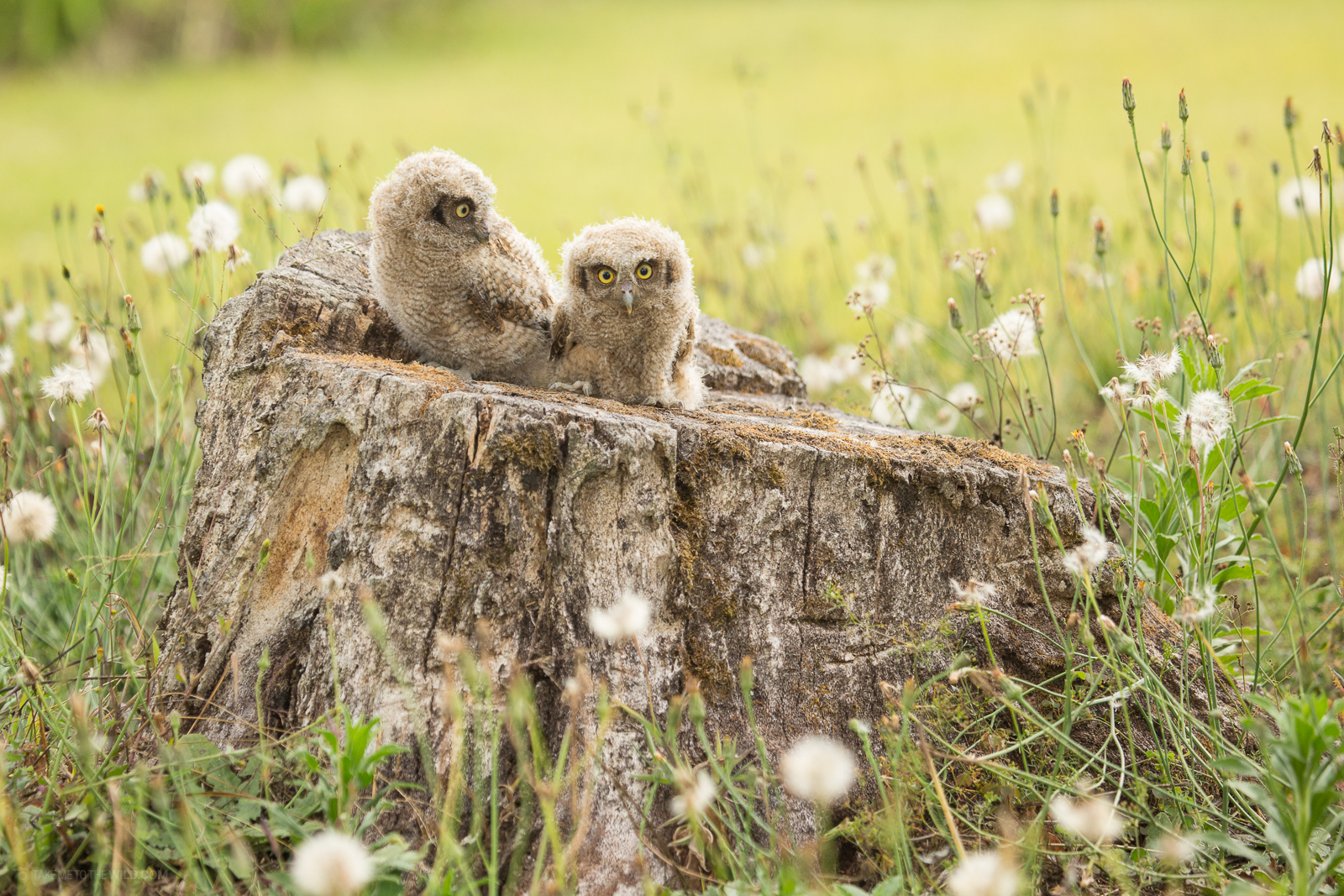
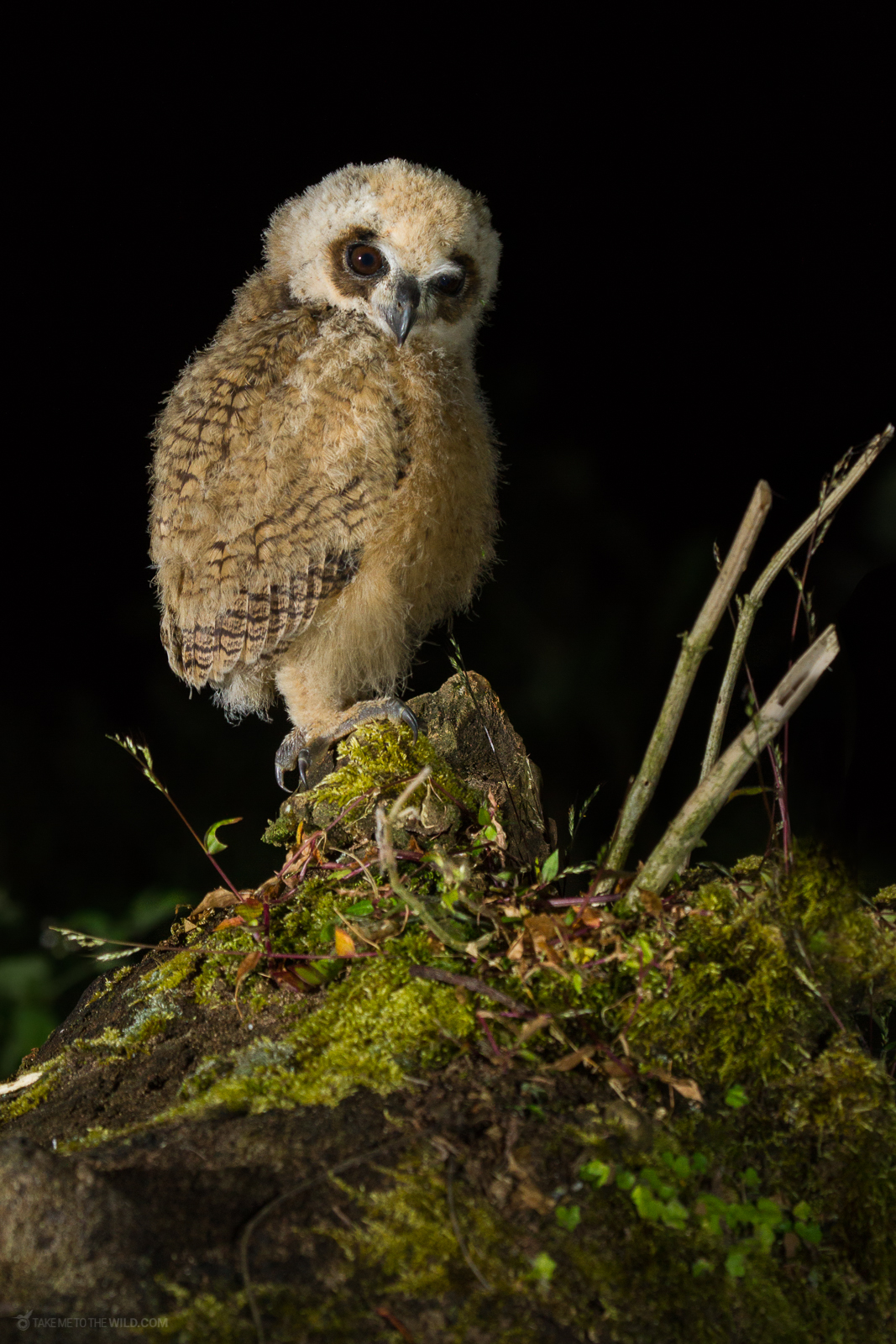
The Tropical Screech Owl is another common species, small and well camouflaged. I found a pair nesting in a tree cavity in the Central Valley, and over several weeks I returned to photograph them and their chicks. The owlets are impossibly fluffy, with huge eyes that haven’t quite figured out what to focus on yet.
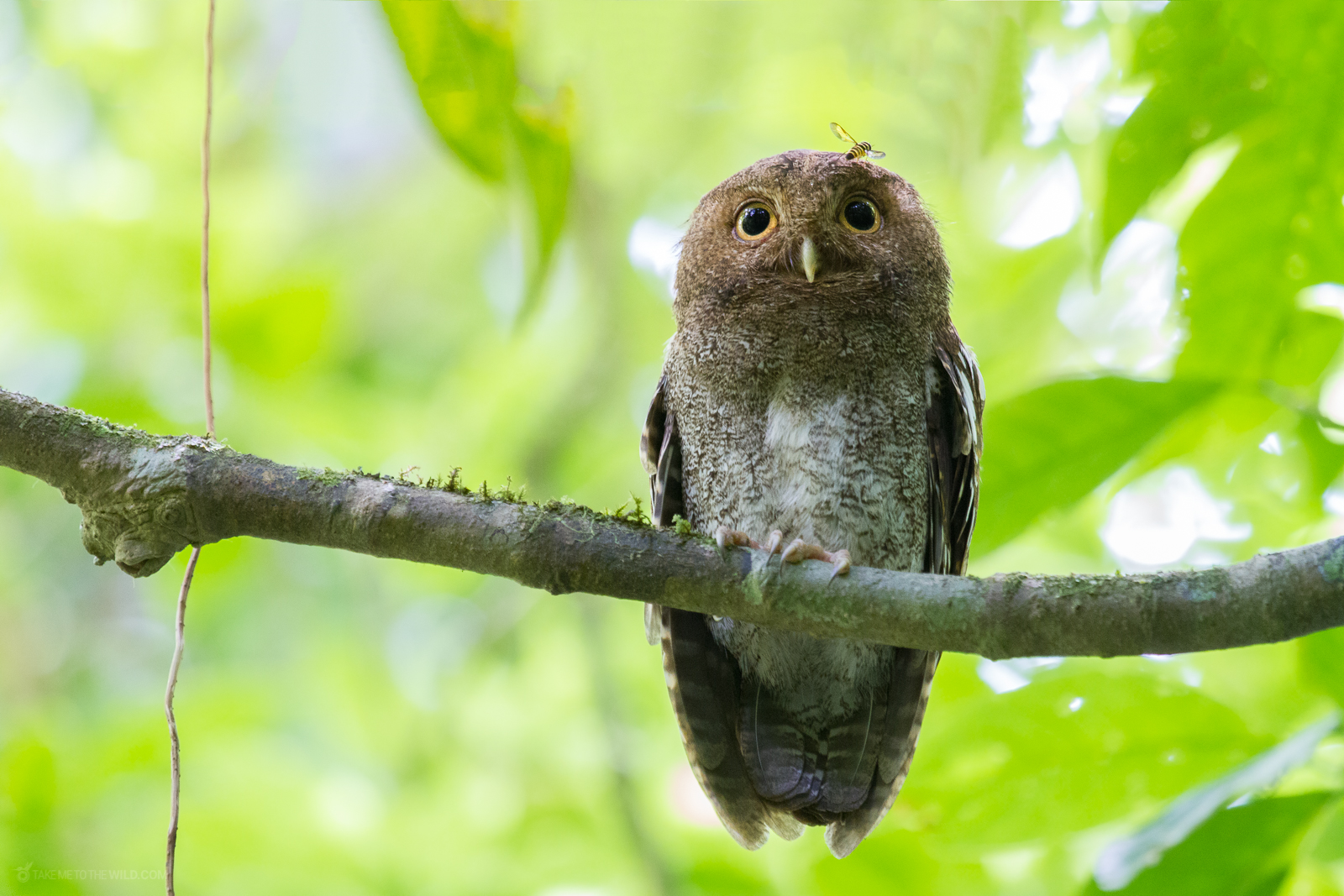
The Vermiculated Screech Owl is similar in size but found at slightly higher elevations. I photographed one that had a bee sitting on its face. The owl didn’t seem to care at all.
The Church Tower
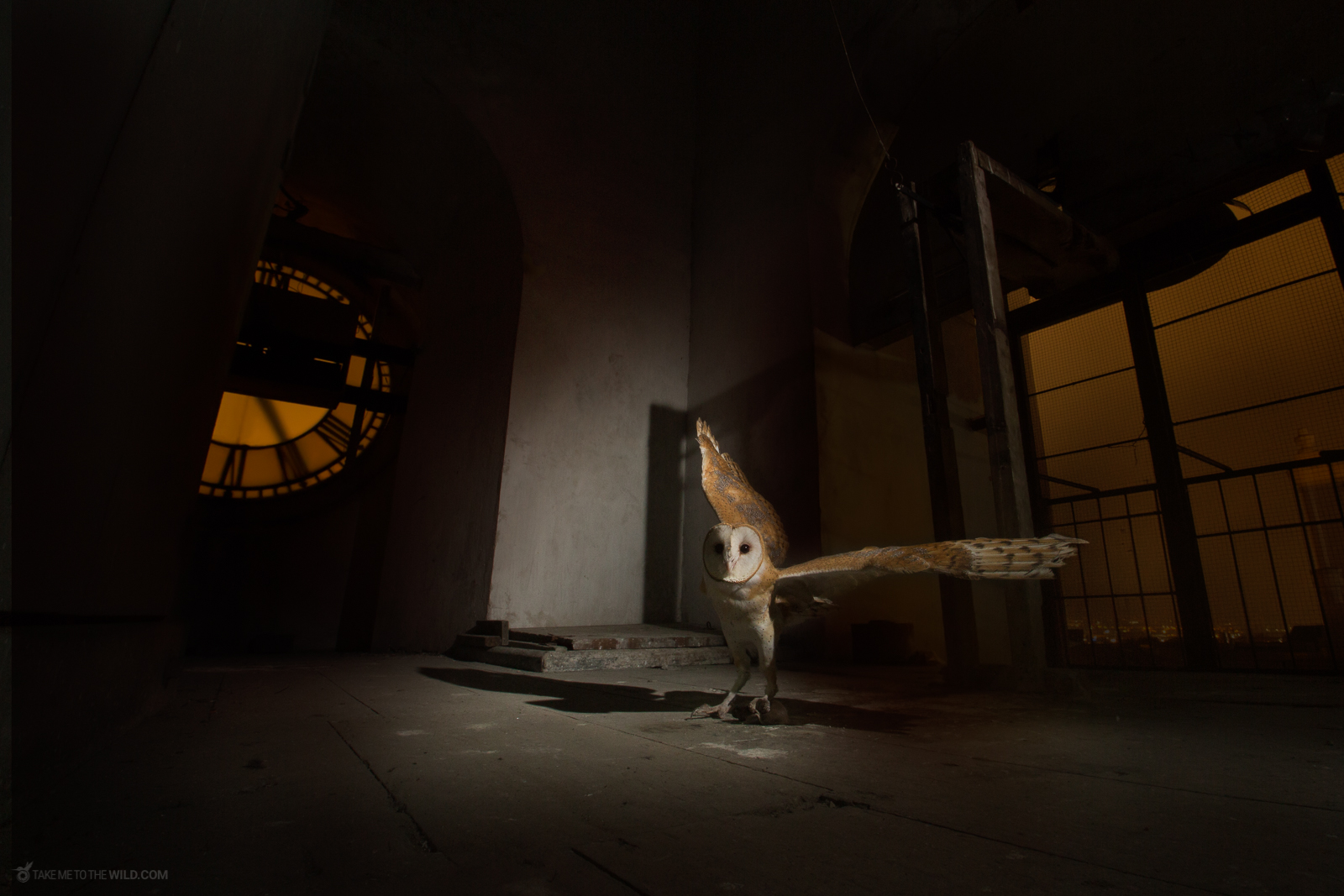
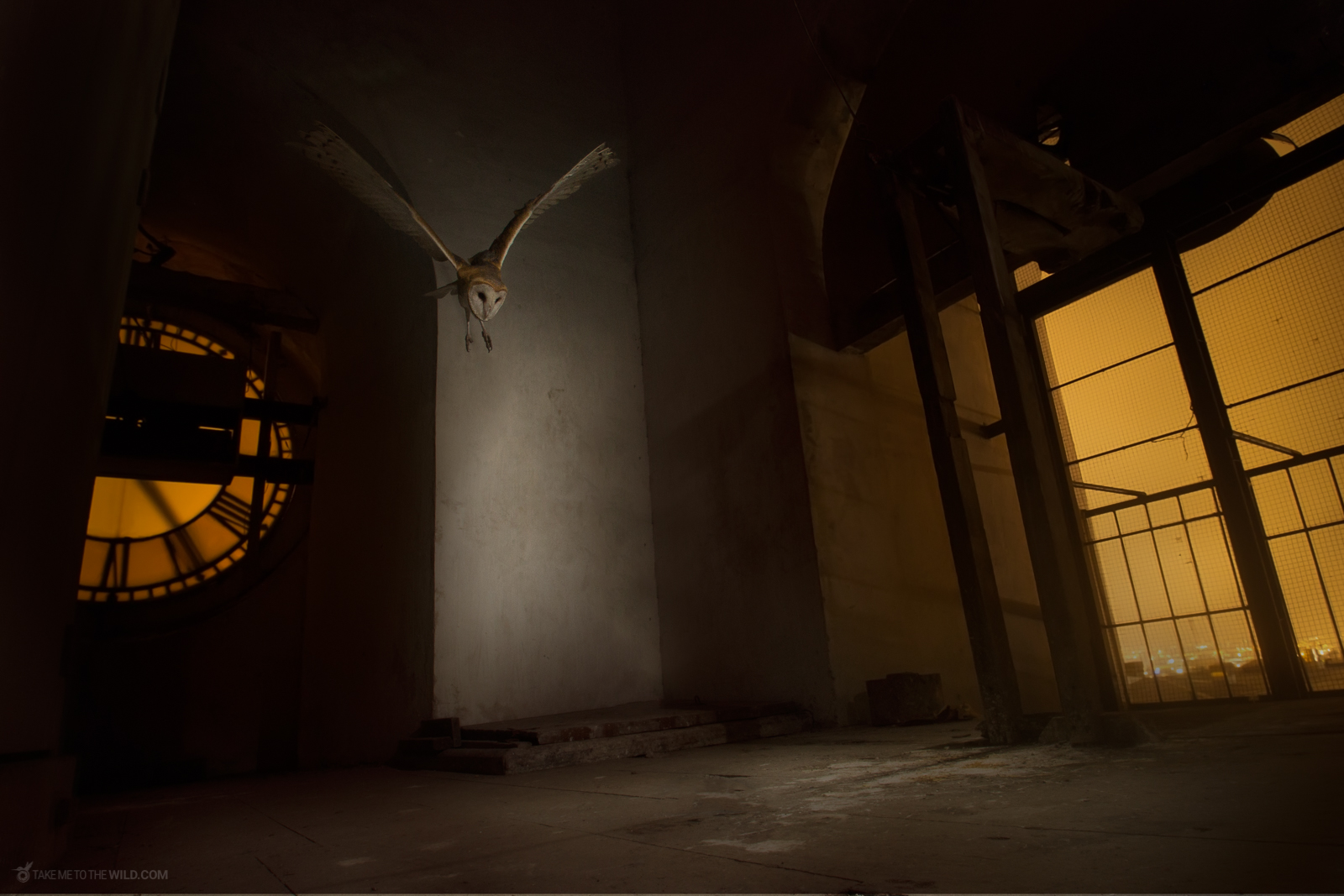
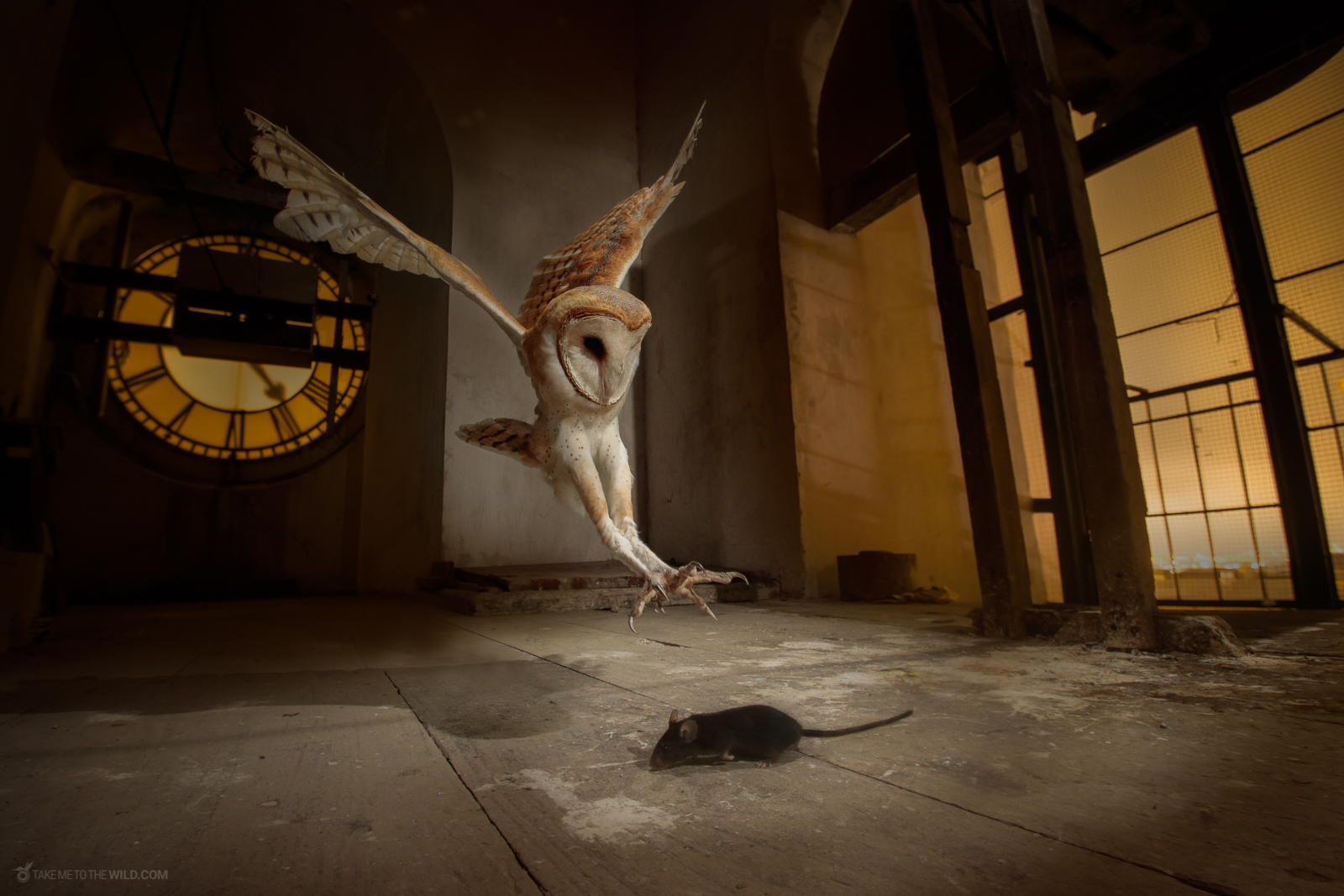
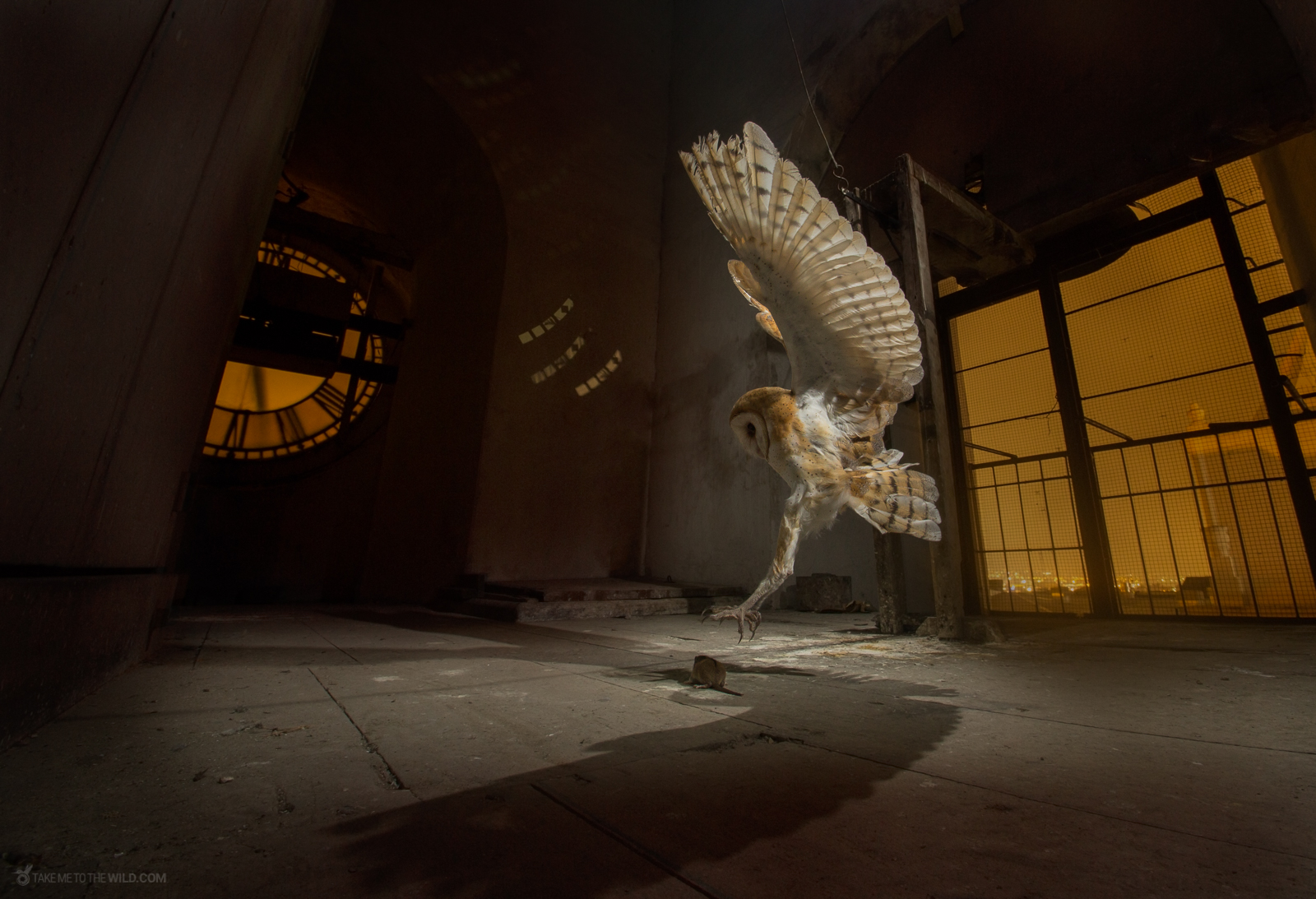
One of my favorite projects was photographing the Barn Owls that nest in old church bell towers in the Central Valley. These birds have been using these structures for decades, maybe longer. The churches offer shelter, height, and a good hunting ground in the surrounding fields.
I spent many nights at one particular church, setting up my camera and flash at the base of the tower, waiting for the owls to come and go. They would leave at dusk to hunt and return before dawn. Getting a sharp image of a Barn Owl in flight, in the dark, with a bell tower in the background, took many attempts. But when it finally came together, it was one of the images I am most proud of.
The Crested Owl
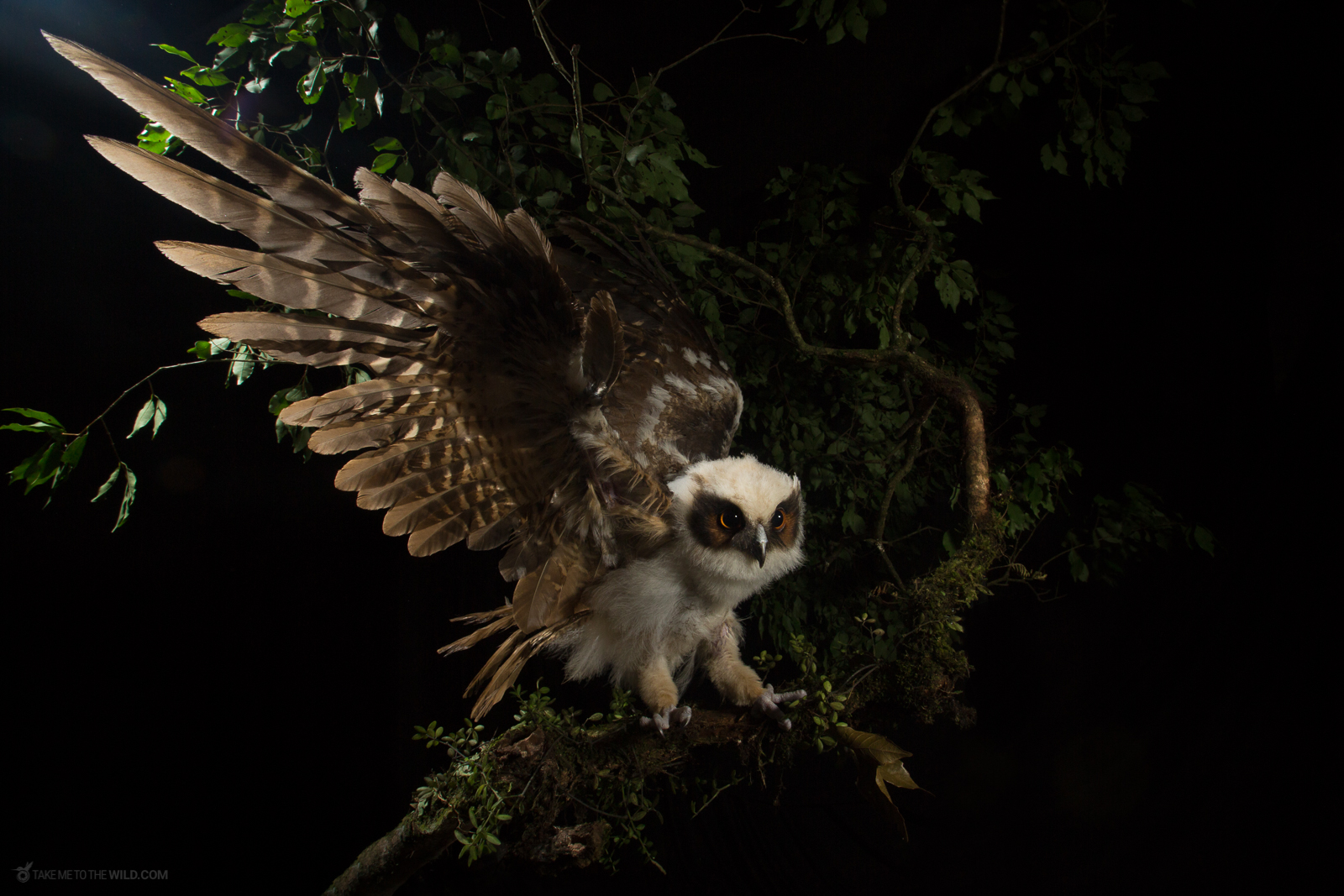
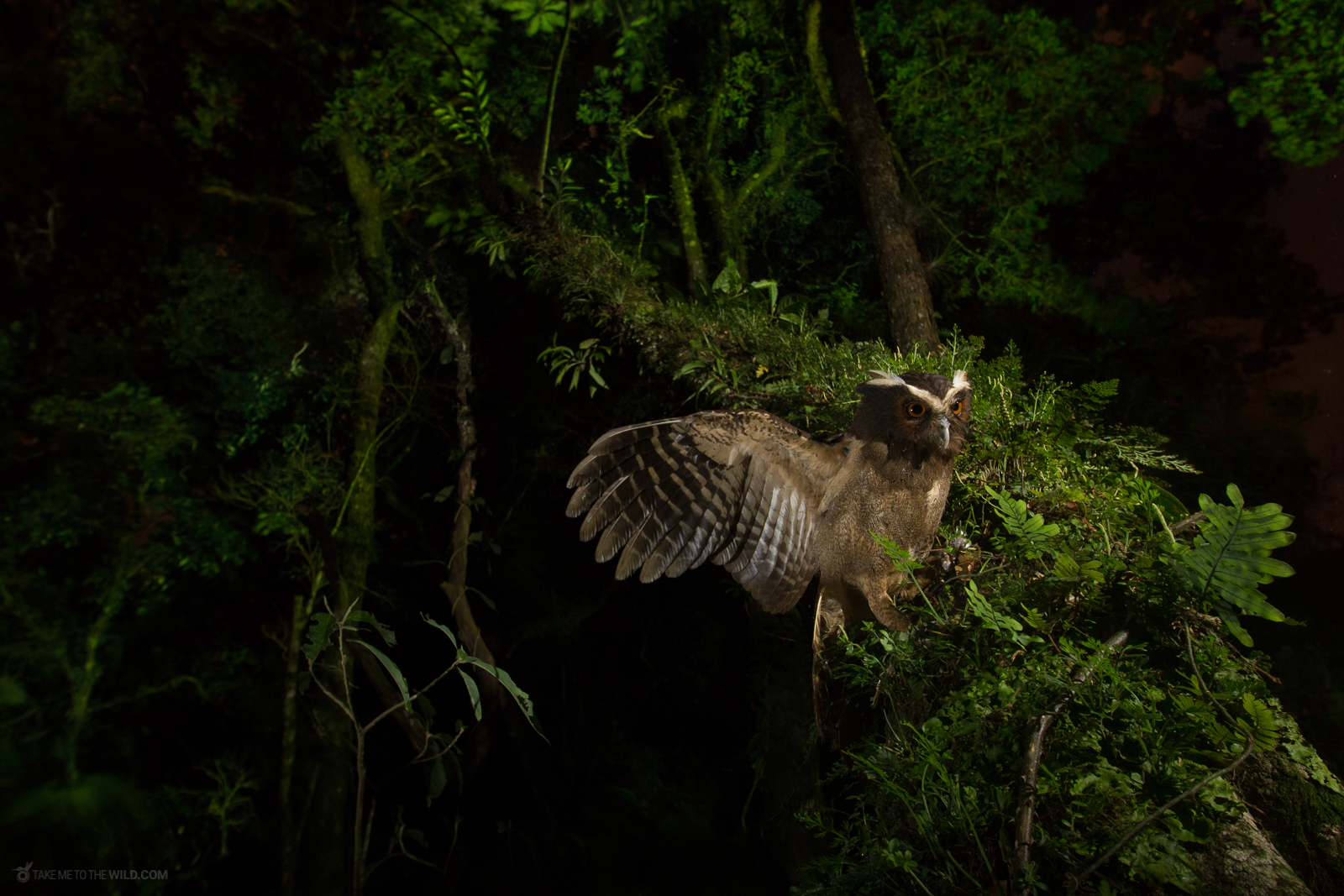
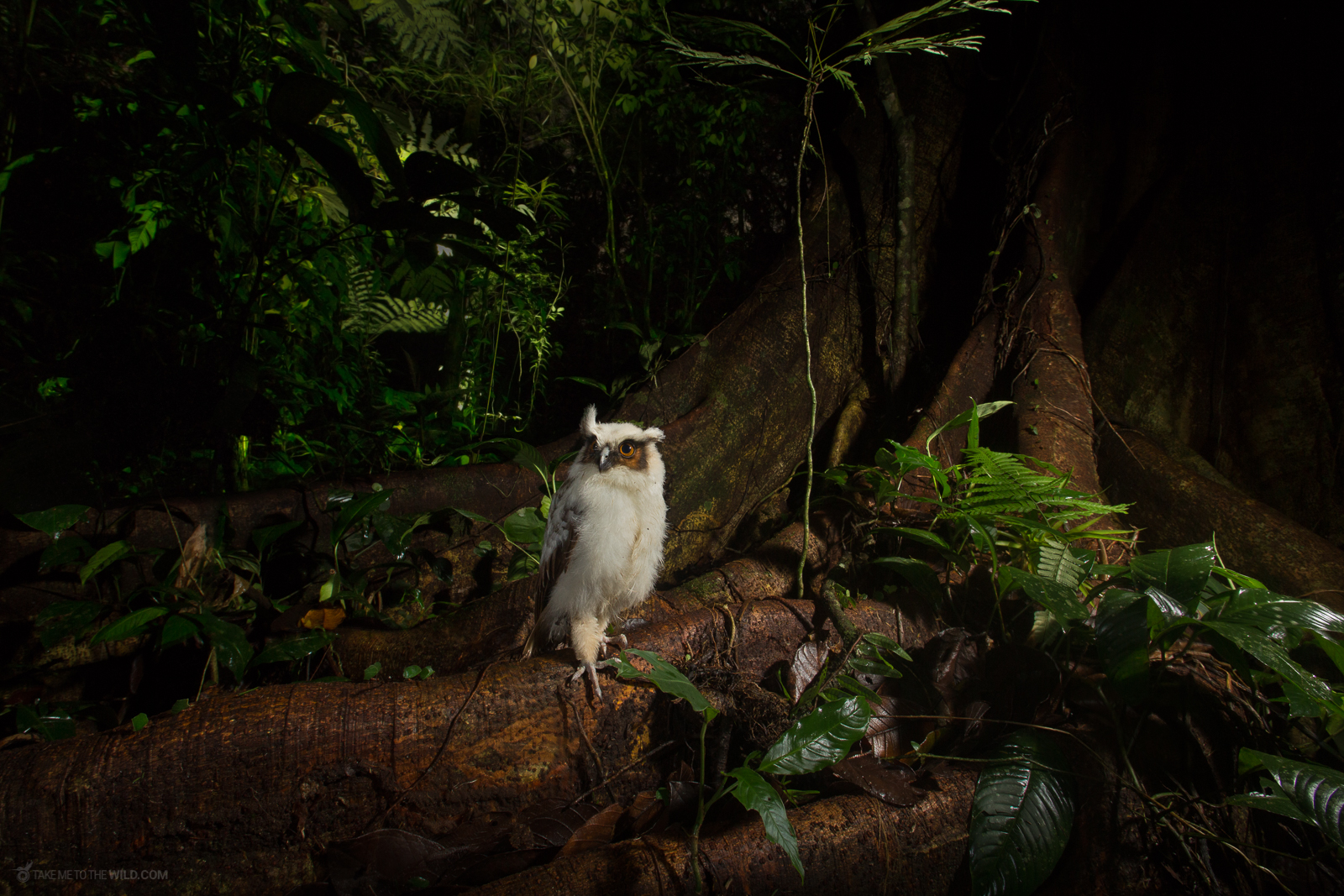
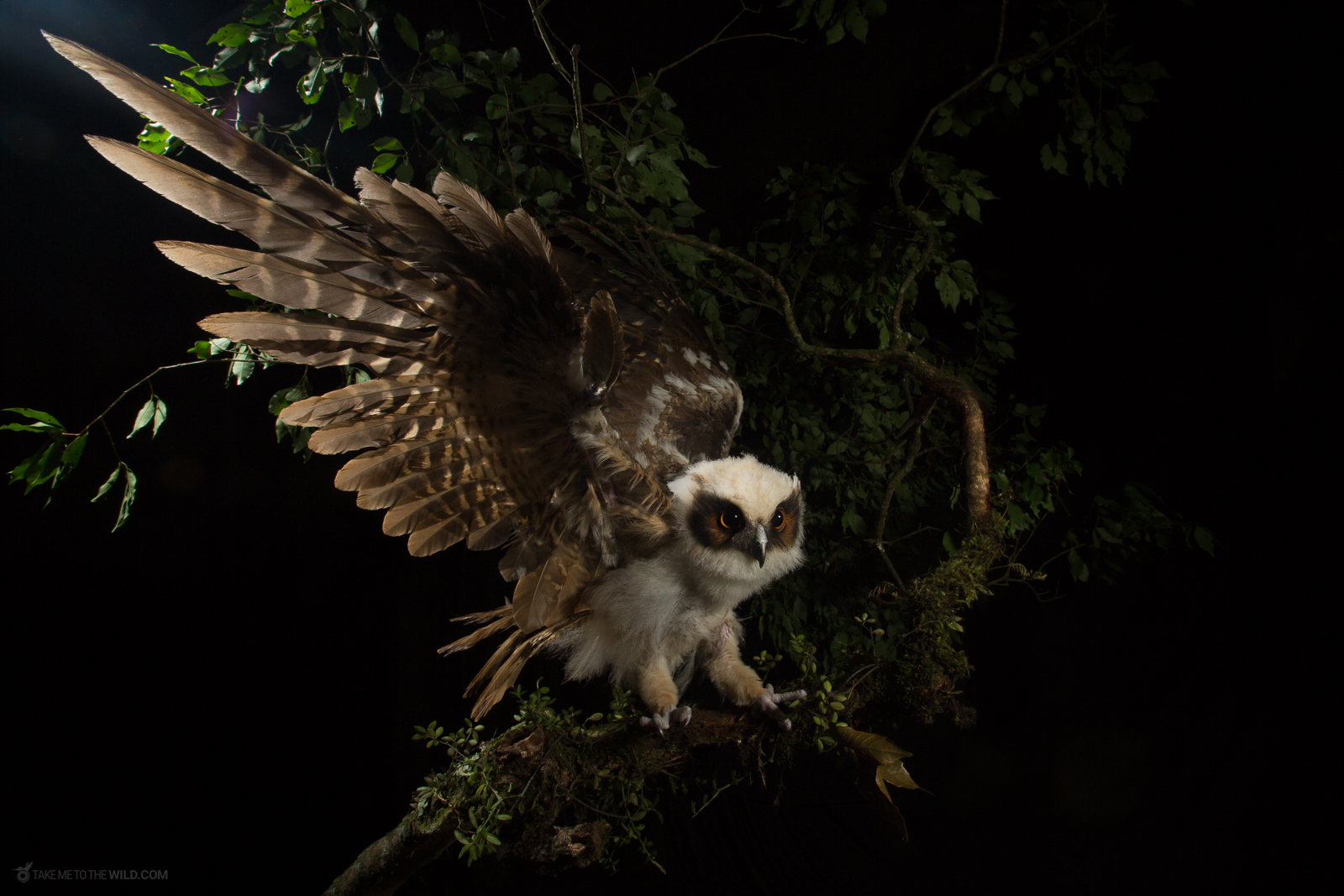
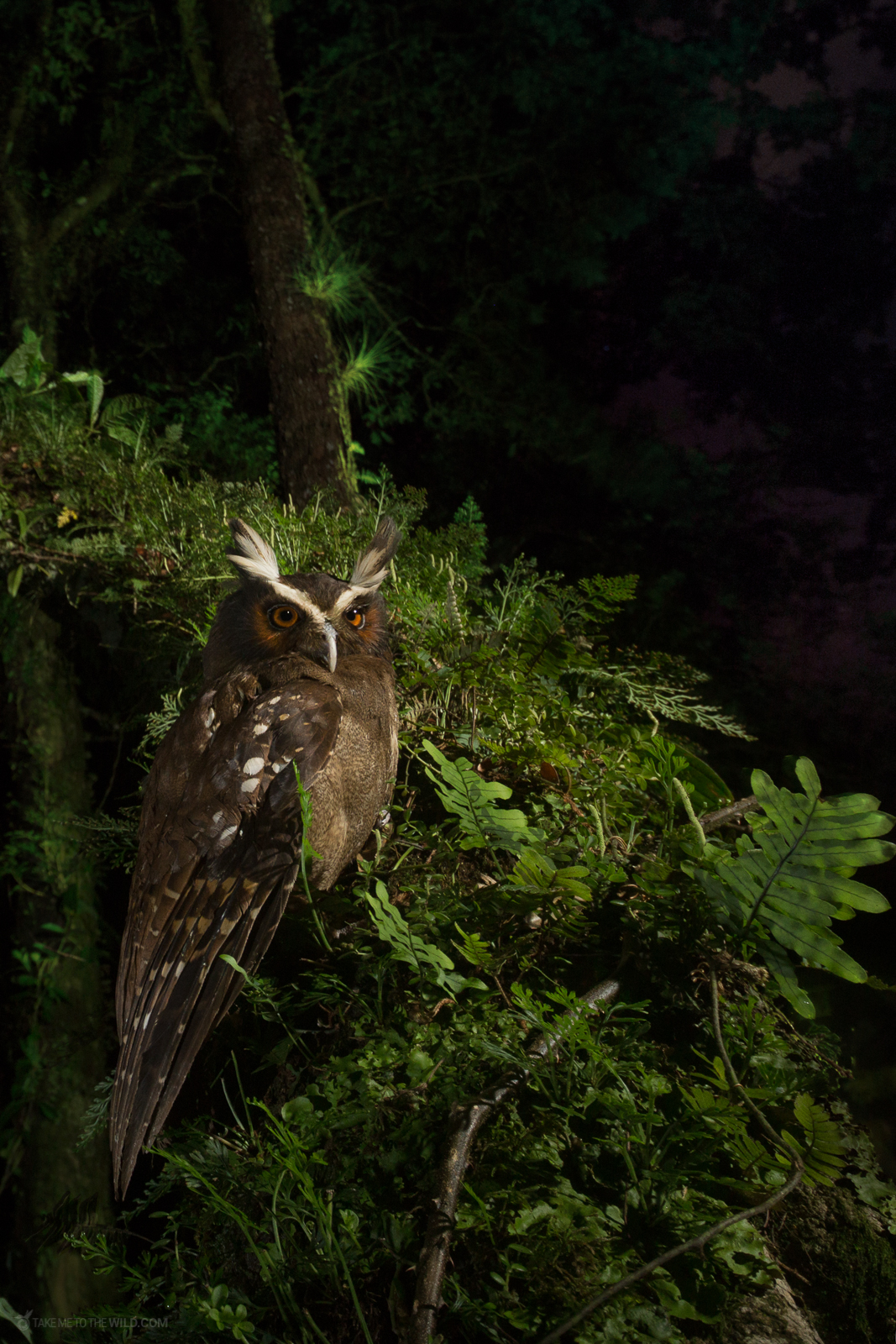
The Crested Owl is one of the most beautiful owls in Costa Rica, and one of the harder lowland species to find. It lives deep in mature rainforest and rarely calls. You can walk past one without ever knowing it was there.
I found my first one in Braulio Carrillo National Park, sitting on a low branch about two meters off the ground. It looked at me with those pale yellow eyes, completely calm, and I managed to get several images before it flew deeper into the forest. I went back to that same area many times after that, but never found it in the same spot again.
The Spectacled Owl
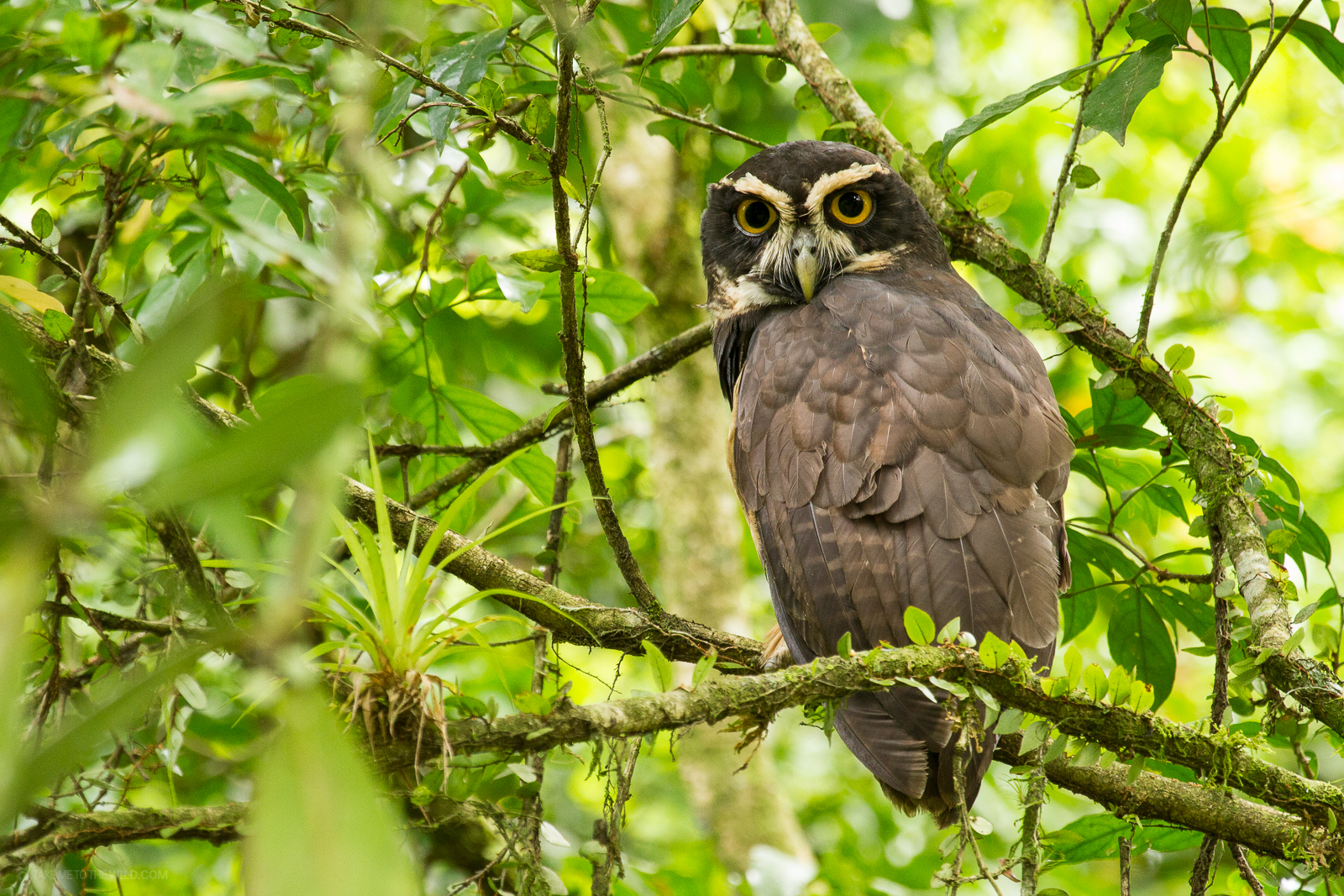
The largest owl in Costa Rica is the Spectacled Owl. It is a powerful bird, with a deep booming call that carries a long way through the forest. The name comes from the white markings around its eyes that look like spectacles.
I photographed one in the lowland rainforest near Sarapiqui. It was sitting on a thick branch, looking down at me with what felt like mild annoyance. These owls feed on large prey, including skunks, opossums, and even smaller owls.
The Pygmy Owls
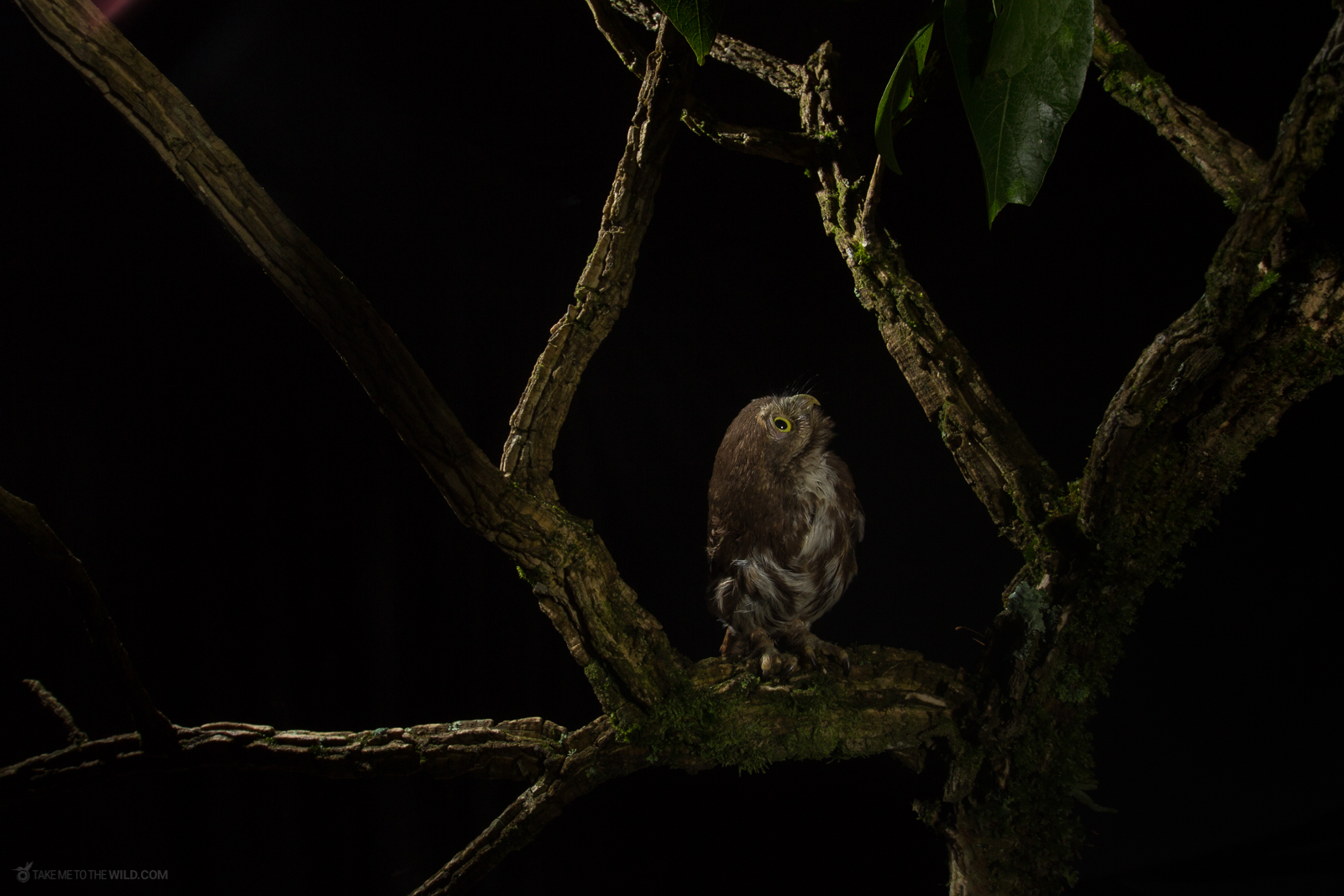
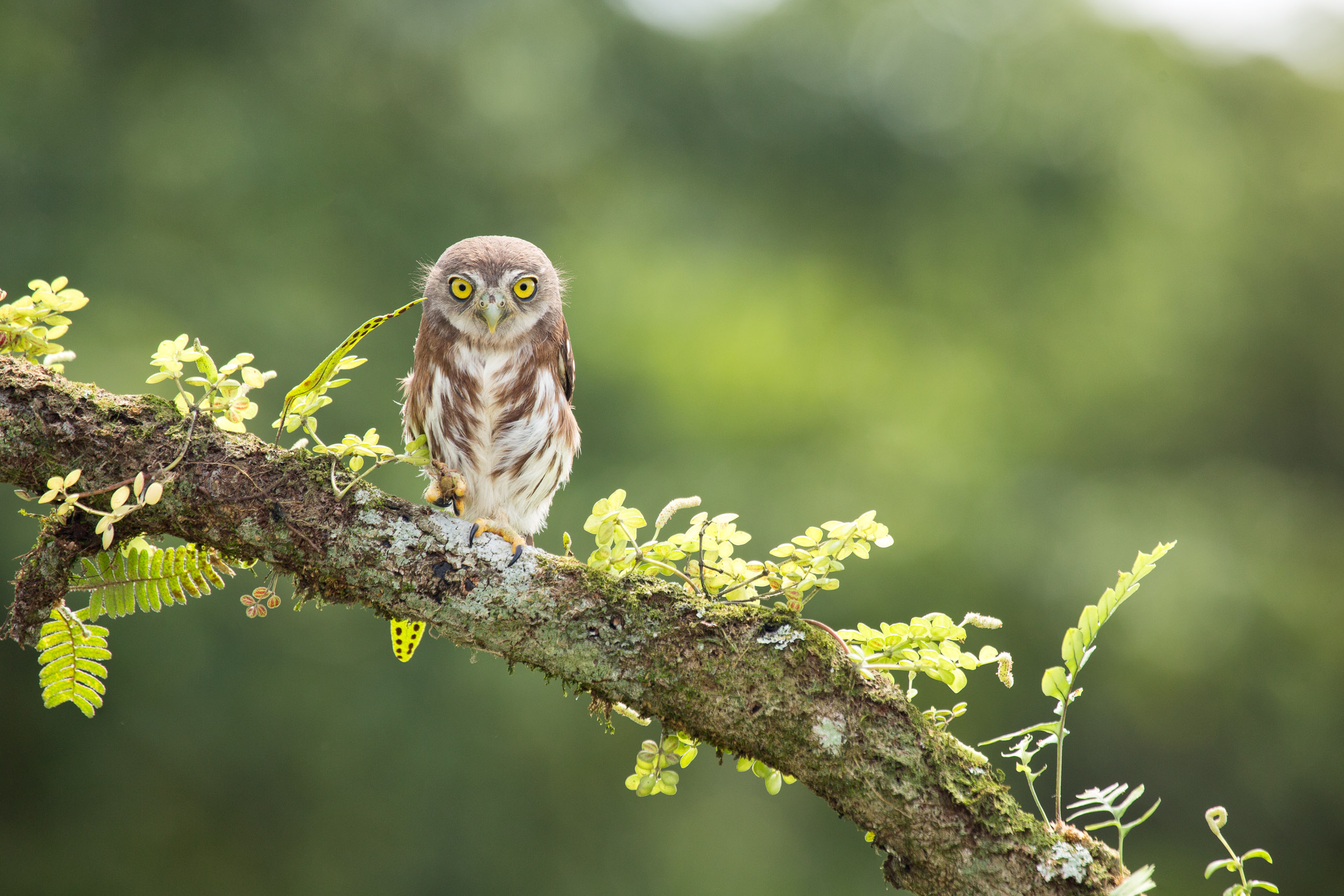
The Ferruginous Pygmy Owl and the Central American Pygmy Owl are tiny. You could hold one in your hand. But they are fierce little hunters, taking insects, lizards, and even small birds much larger than themselves. The Ferruginous is found in the lowlands and is active during the day, which makes it one of the easier species to find and photograph.
The Striped Owl
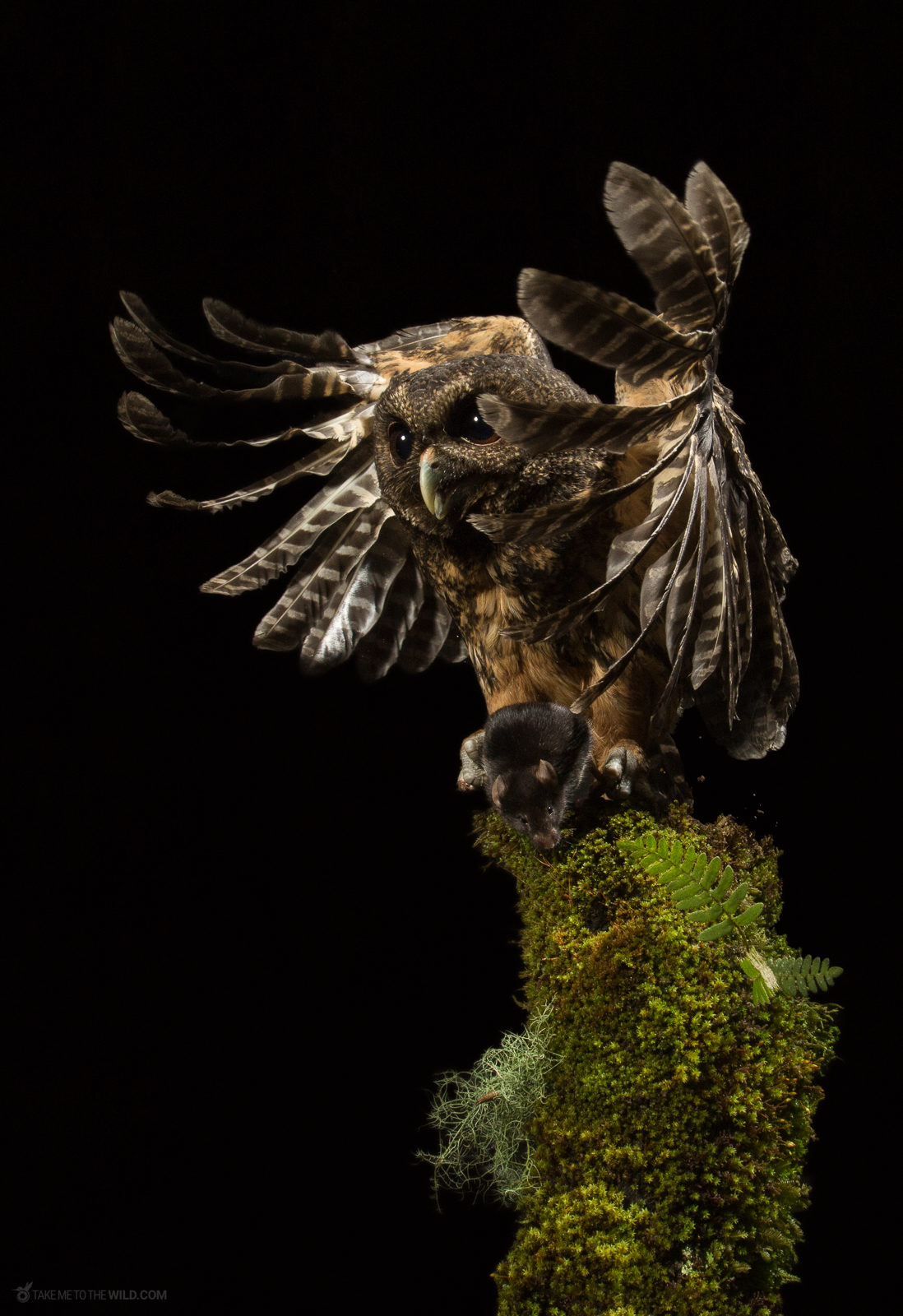
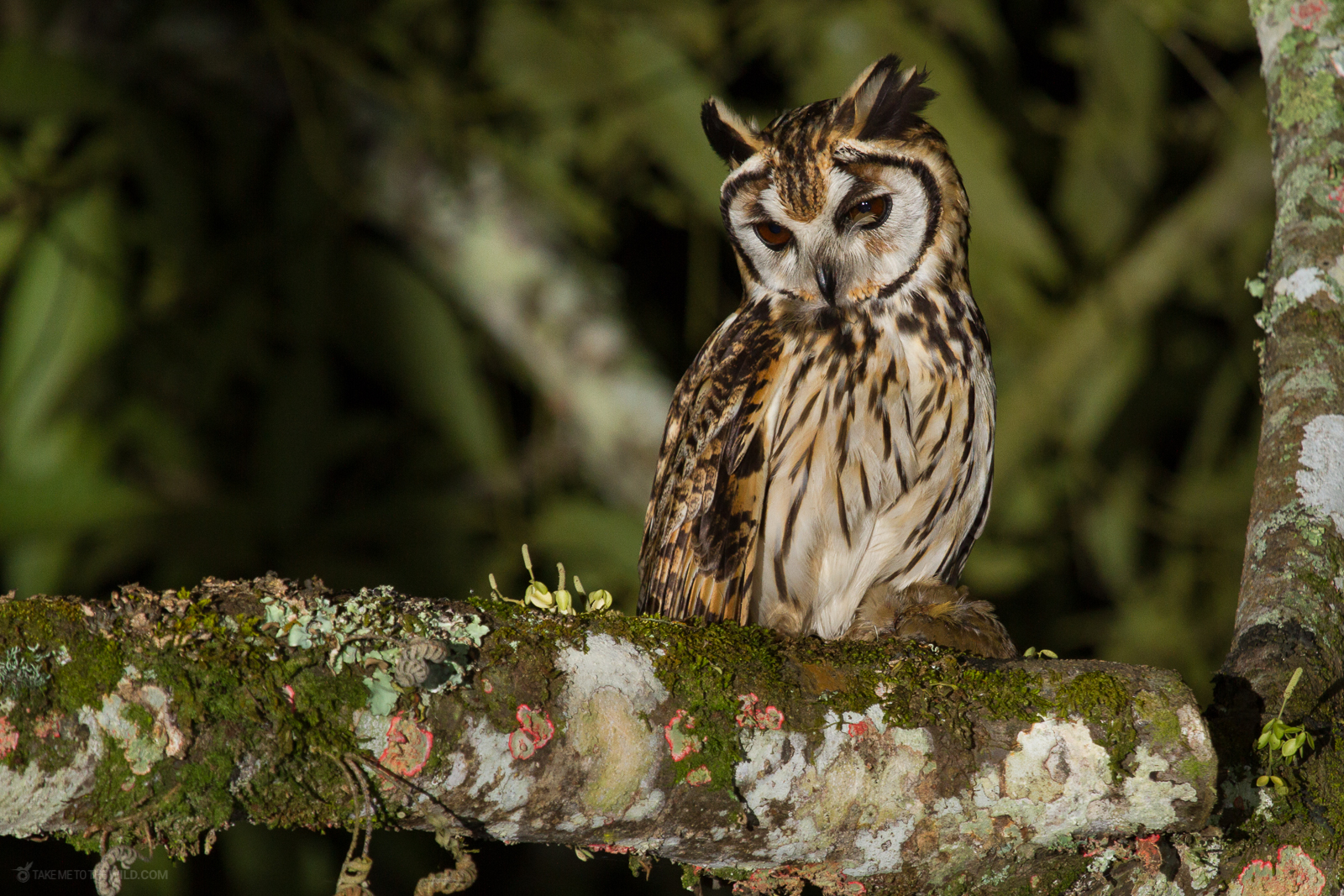
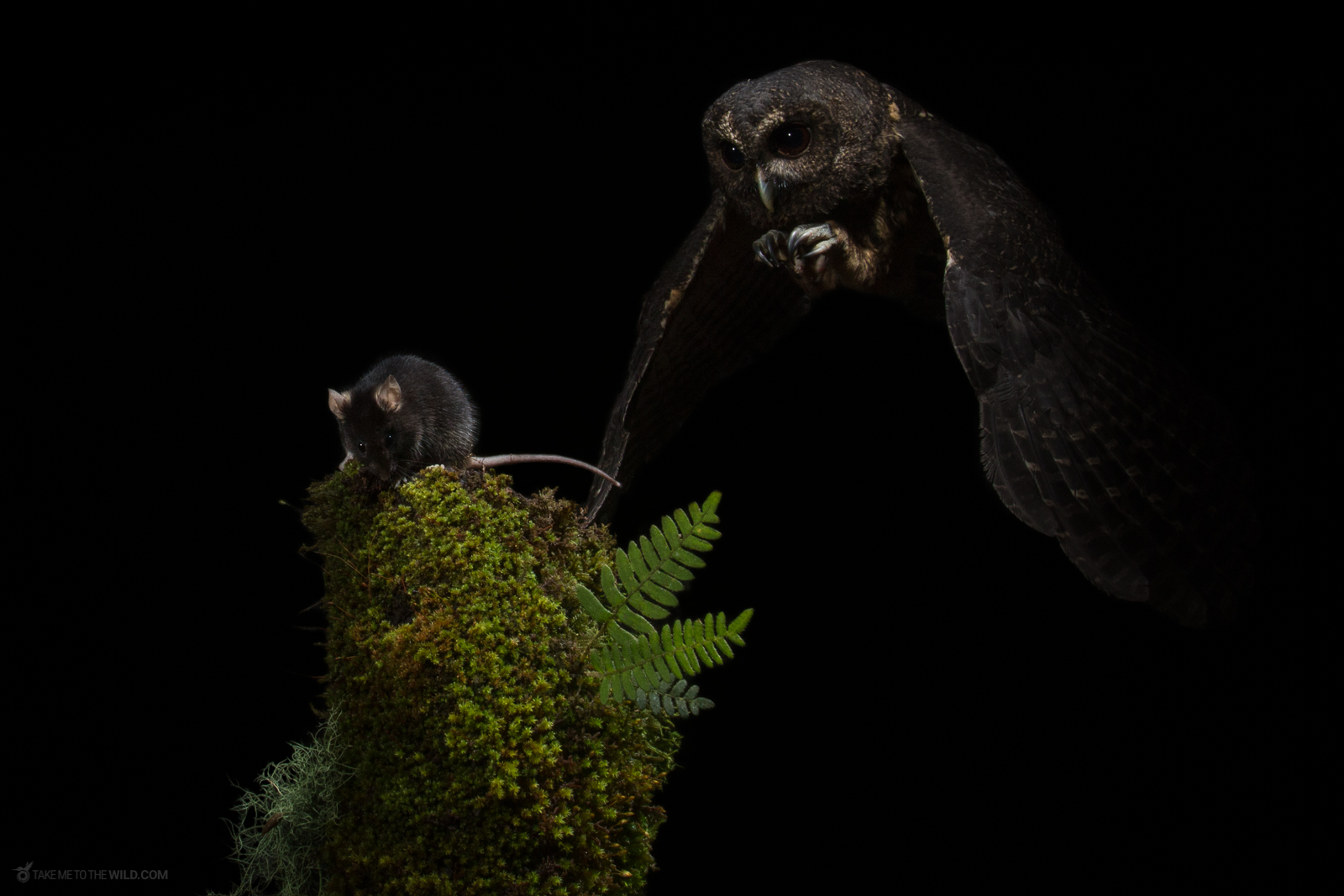
The Striped Owl is an open-country species, found in grasslands and agricultural areas. It is easier to find than the forest species, but harder to photograph well because it tends to flush at longer distances. I spent several nights in the fields around Turrialba watching them hunt. One evening I photographed one with a freshly caught rodent, looking straight at the camera as if daring me to try and take it.
The Highland Ghosts
“The highland owls are the hardest. They live above 2,500 meters, in the cold, wet cloud forests and páramo of the Talamanca Mountains, where the nights are long and the trails are steep.”
The highland owls are the hardest. They live above 2,500 meters, in the cold, wet cloud forests and páramo of the Talamanca Mountains, where the nights are long and the trails are steep and slippery with moss. Up here, everything moves slower. The air is thin, the temperature drops close to freezing after dark, and the mist rolls in thick enough that your headlamp barely cuts through it. Sound travels differently up here. A call that seems close can be hundreds of meters away, swallowed by the fog. Your fingers go numb holding the camera, and the cold seeps into your bones after a few hours. But this is where the rarest owls live, and there is no shortcut.
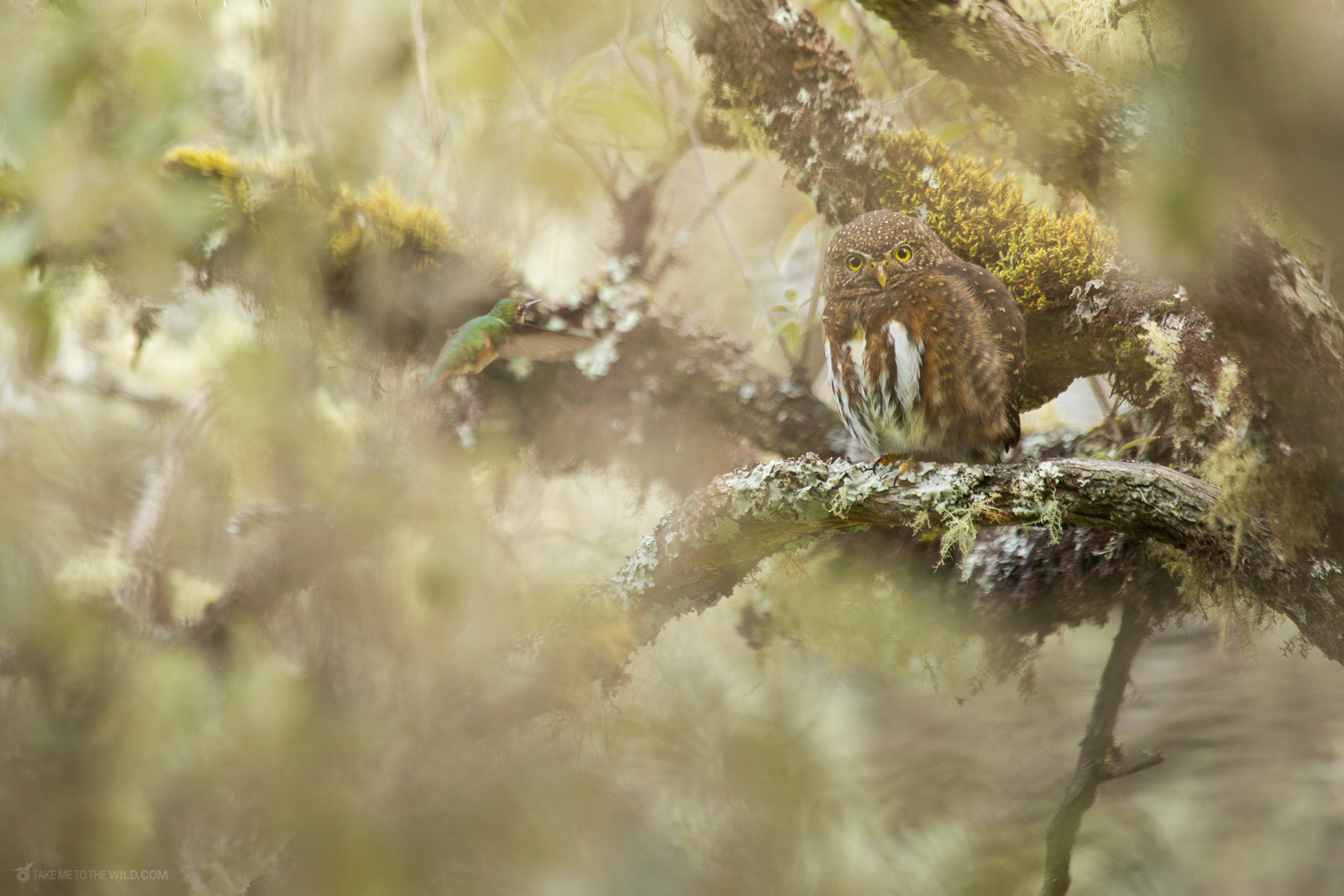
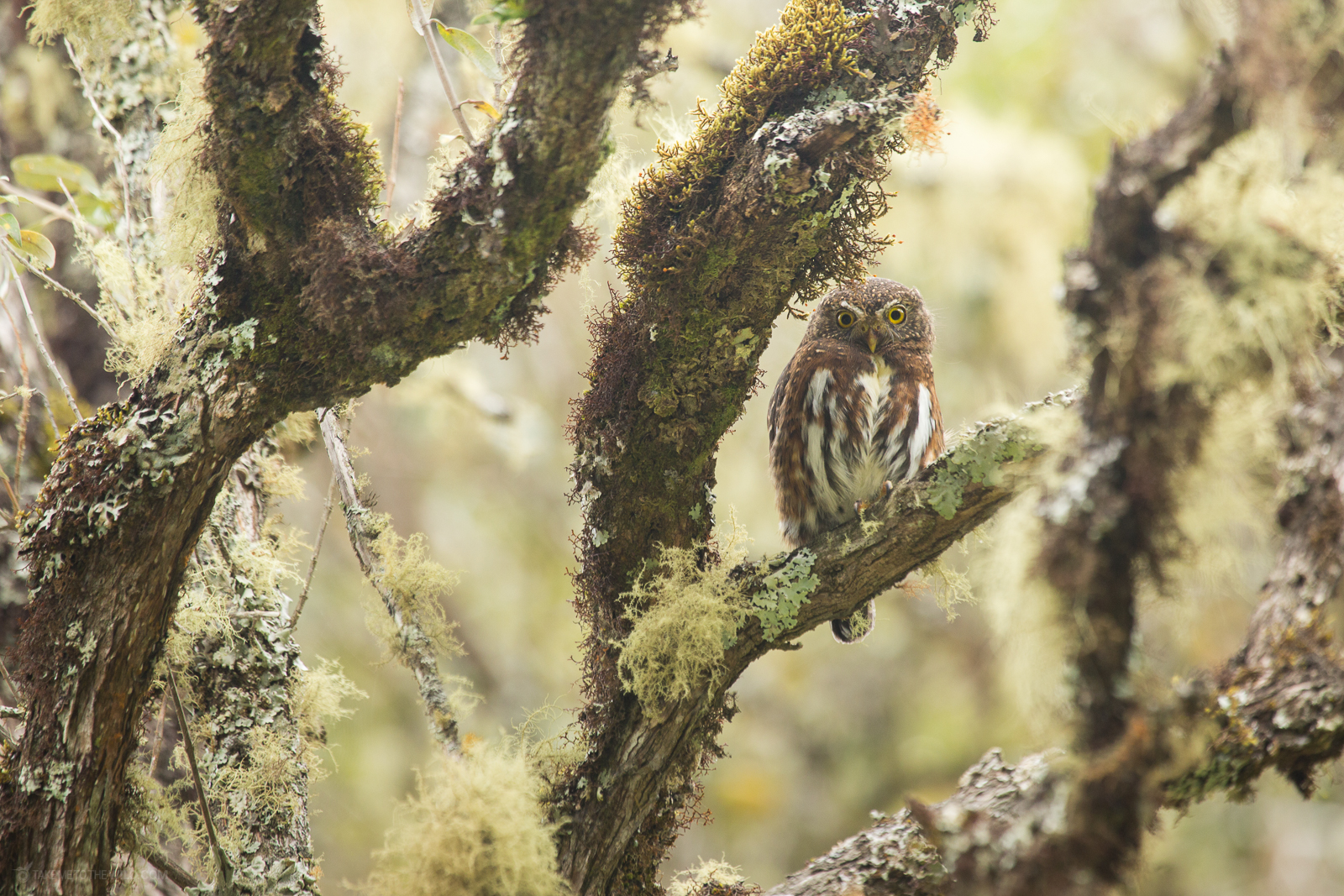
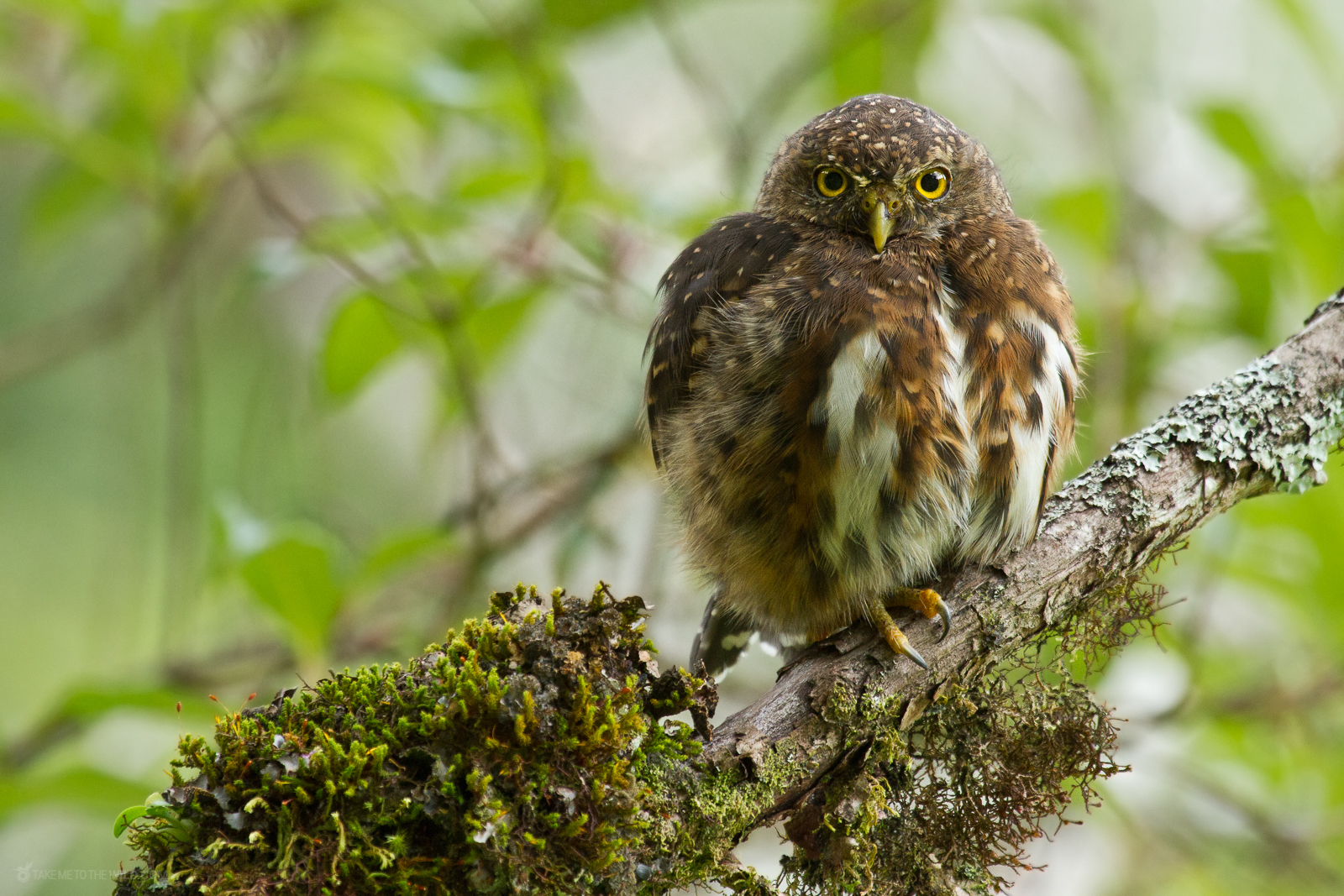
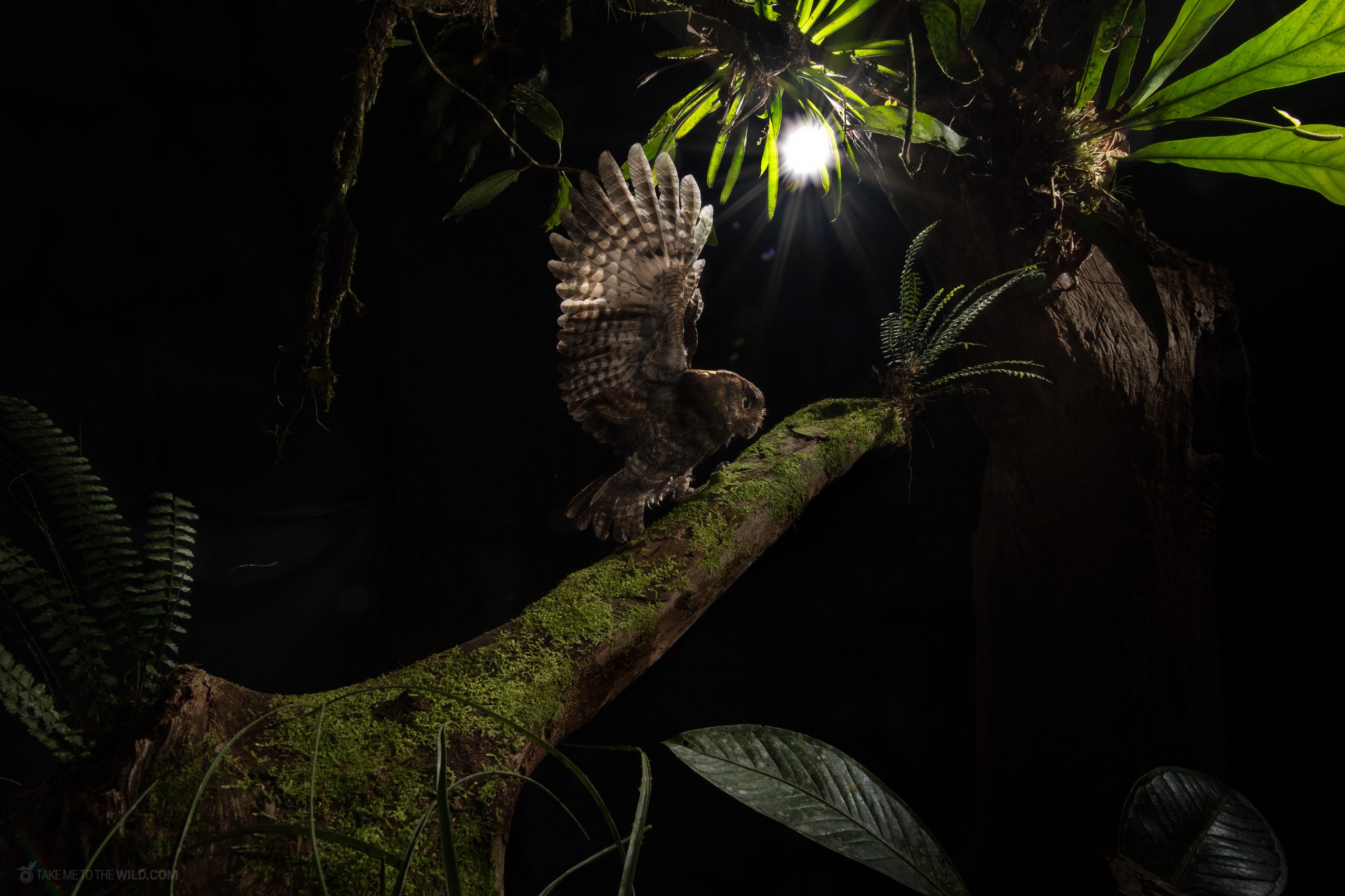
The Costa Rican Pygmy Owl is endemic to the country. It exists only in the highland forests of the Talamanca range, above 2,000 meters. It is tiny, even smaller than the Ferruginous Pygmy Owl, and incredibly hard to find. It perches in the mossy branches of old oaks, its plumage blending perfectly with the lichens. I spent many mornings in the highlands around Cerro de la Muerte scanning the canopy, listening for its high-pitched call, before I ever saw one.
The image I finally got, of one perched on a mossy branch with a hummingbird hovering nearby, is one of my favorites. It captures something about that world up there, the moss, the mist, the smallness of these creatures in a very big forest.
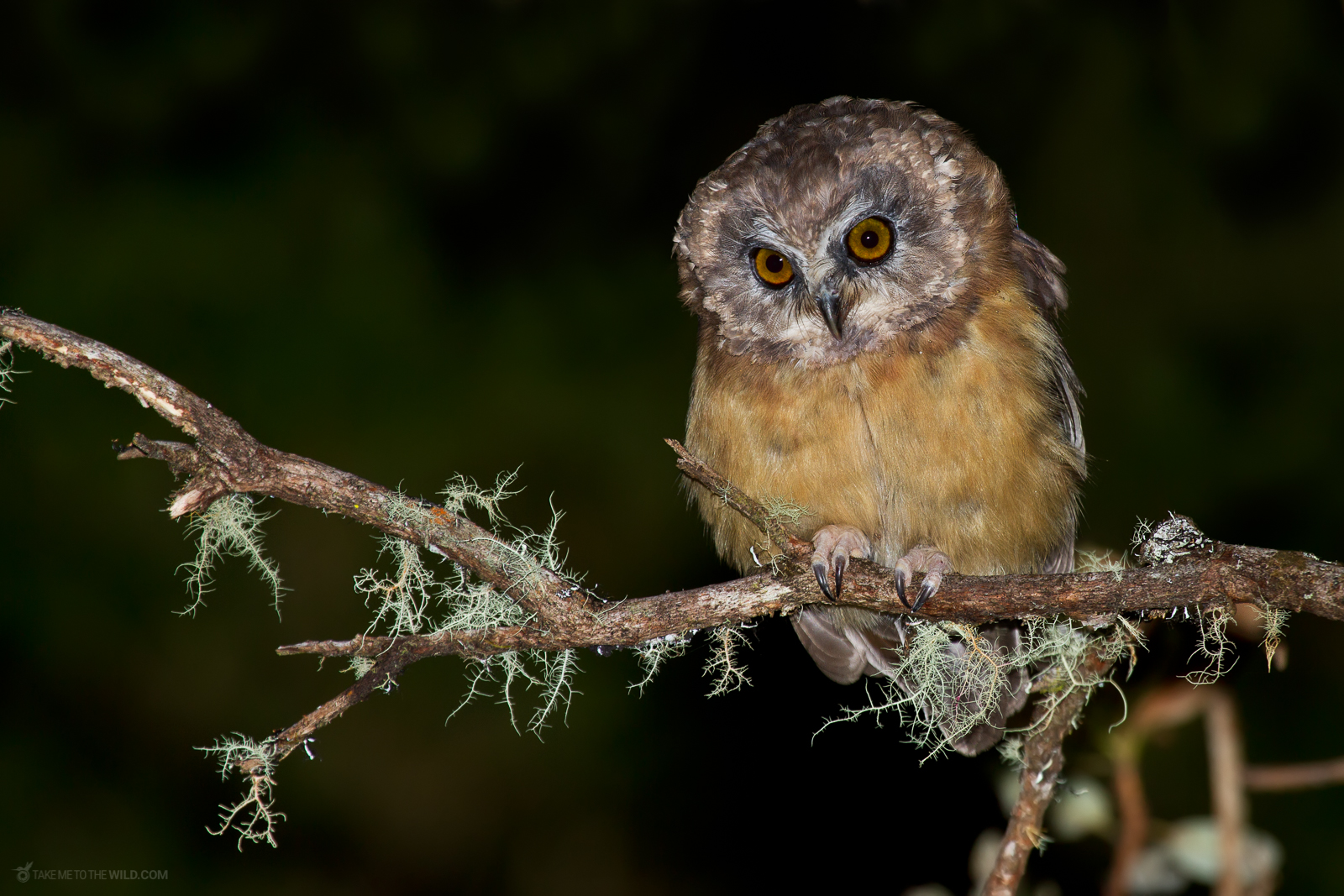
The Unspotted Saw-whet Owl is another highland species, and possibly the hardest owl to find in Costa Rica. It is small, nocturnal, and lives in dense undergrowth at high elevations. Most birders have never seen one. Its call is a series of rapid toots, easy to miss if you are not specifically listening for it.
I found one after many failed attempts, deep in the cloud forest above San Gerardo de Dota. It was sitting in a tangle of branches about a meter off the ground, looking directly at me. I got a few frames before it vanished into the undergrowth. That moment, after all those empty nights in the cold, made every trip worth it.
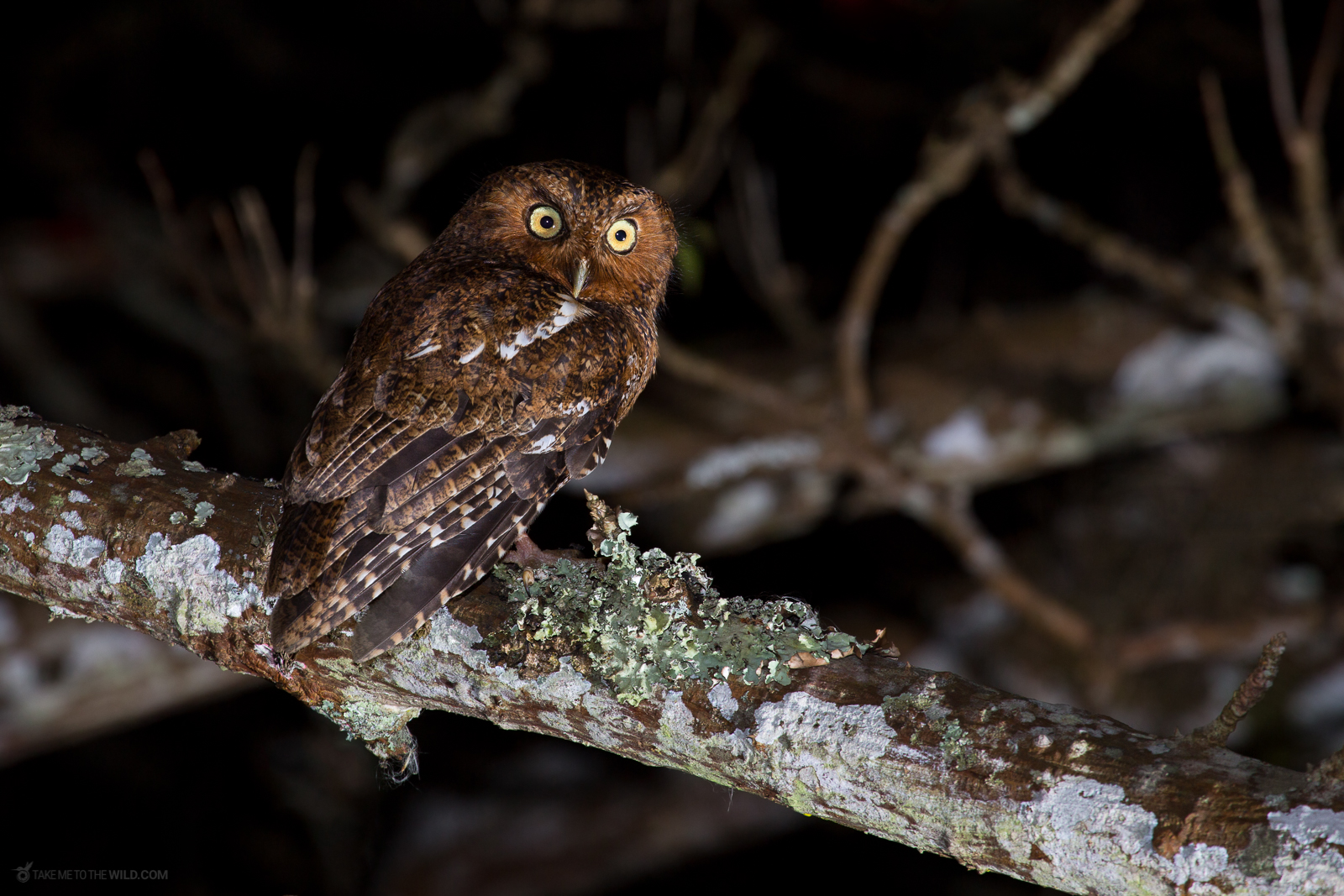
The Bare-shanked Screech Owl is another highland specialty. It is found in the cloud forests of the Talamanca and Central Volcanic ranges, usually above 1,500 meters. Its featherless legs are its most distinctive feature. Like the other highland species, finding one requires dedication, cold nights, and a good ear.
The Black-and-white Owl
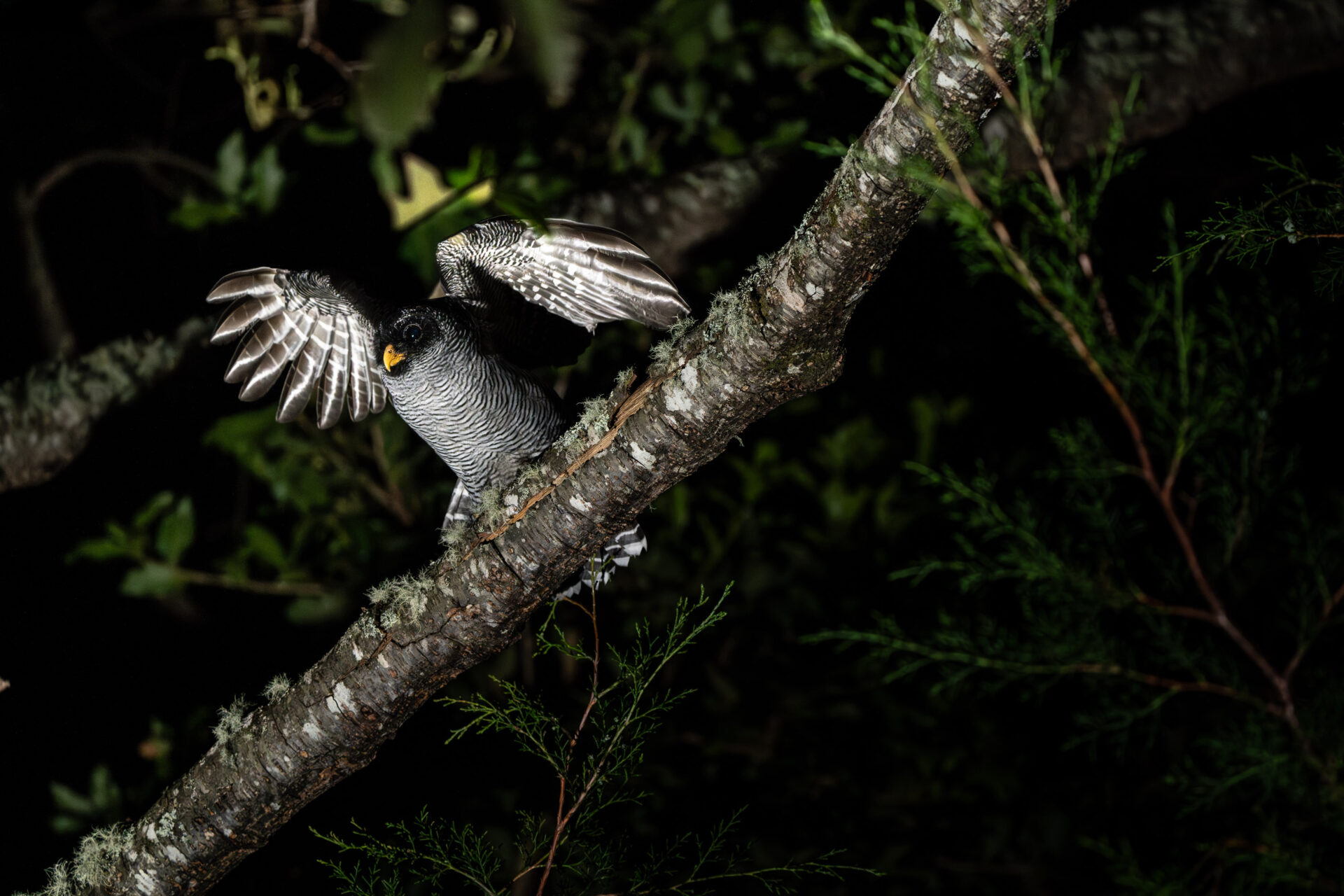
The Black-and-white Owl is a striking, medium-sized owl found in the lowland and mid-elevation forests. Its bold black and white barred plumage makes it unmistakable once you see it. But seeing it is the hard part. It is strictly nocturnal and tends to hunt along forest edges and rivers, where it takes large insects and bats on the wing.
I looked for this species for a long time. It took many nights along forest edges and riverbanks before I finally found one perched in a tree along the Sarapiqui river corridor. It sat there calmly, its barred chest catching the light, and I managed to get the shot.
What the Owls Taught Me
After years of night walks, cold camps, and countless hours of listening in the dark, I have photographed nearly all 14 species of owls found in Costa Rica. The quest is close to complete, but there is always one more to find.
What I have learned from all these years is that the forest after dark is a completely different place. It is alive in ways you don’t expect. The night belongs to them, and we are just visitors passing through. Every encounter has been a gift, every empty night a lesson in patience.
Get out there at night and keep listening. Be curious. There is always something to find.
Gear
The photography gear used in this story.
Related Topics