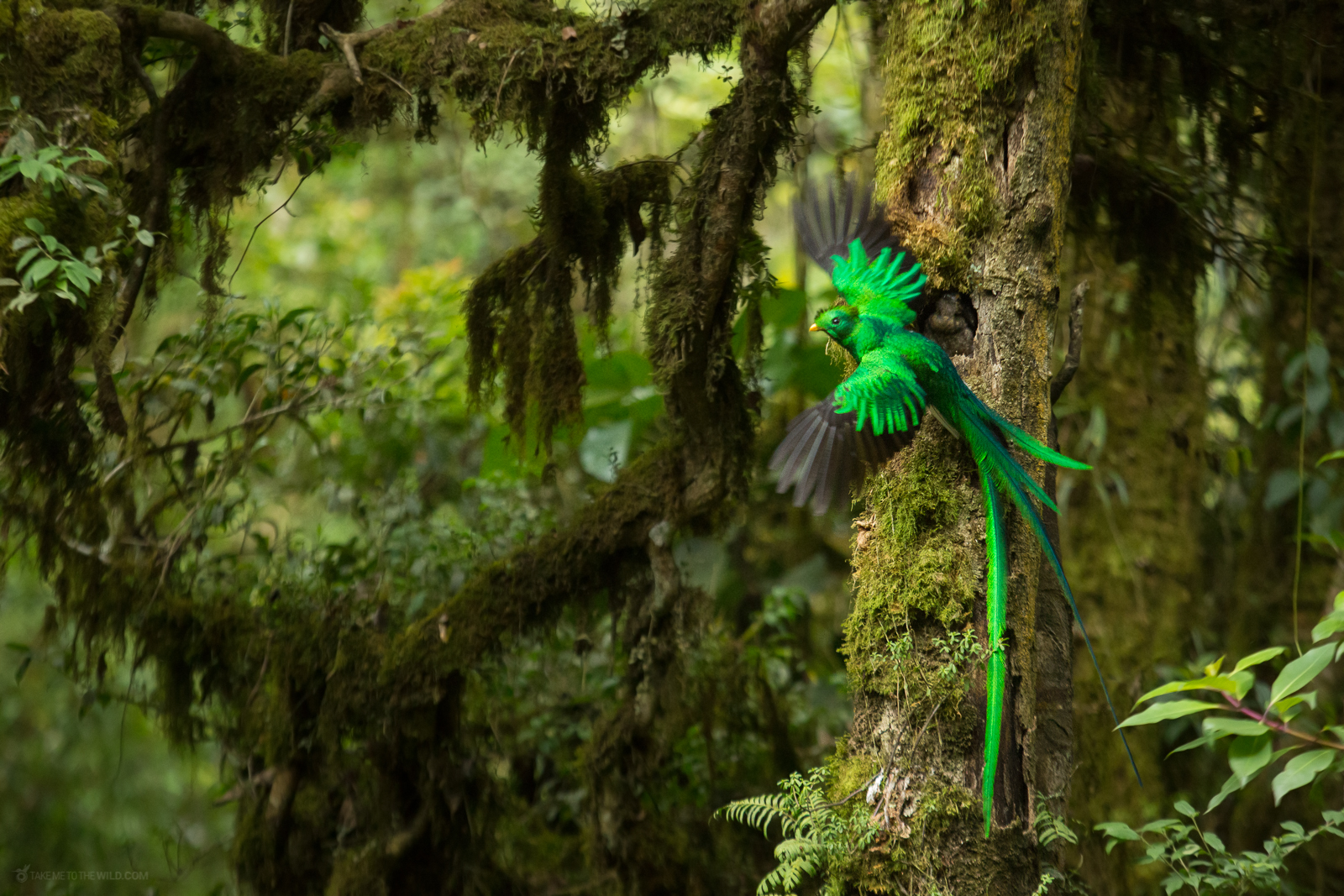
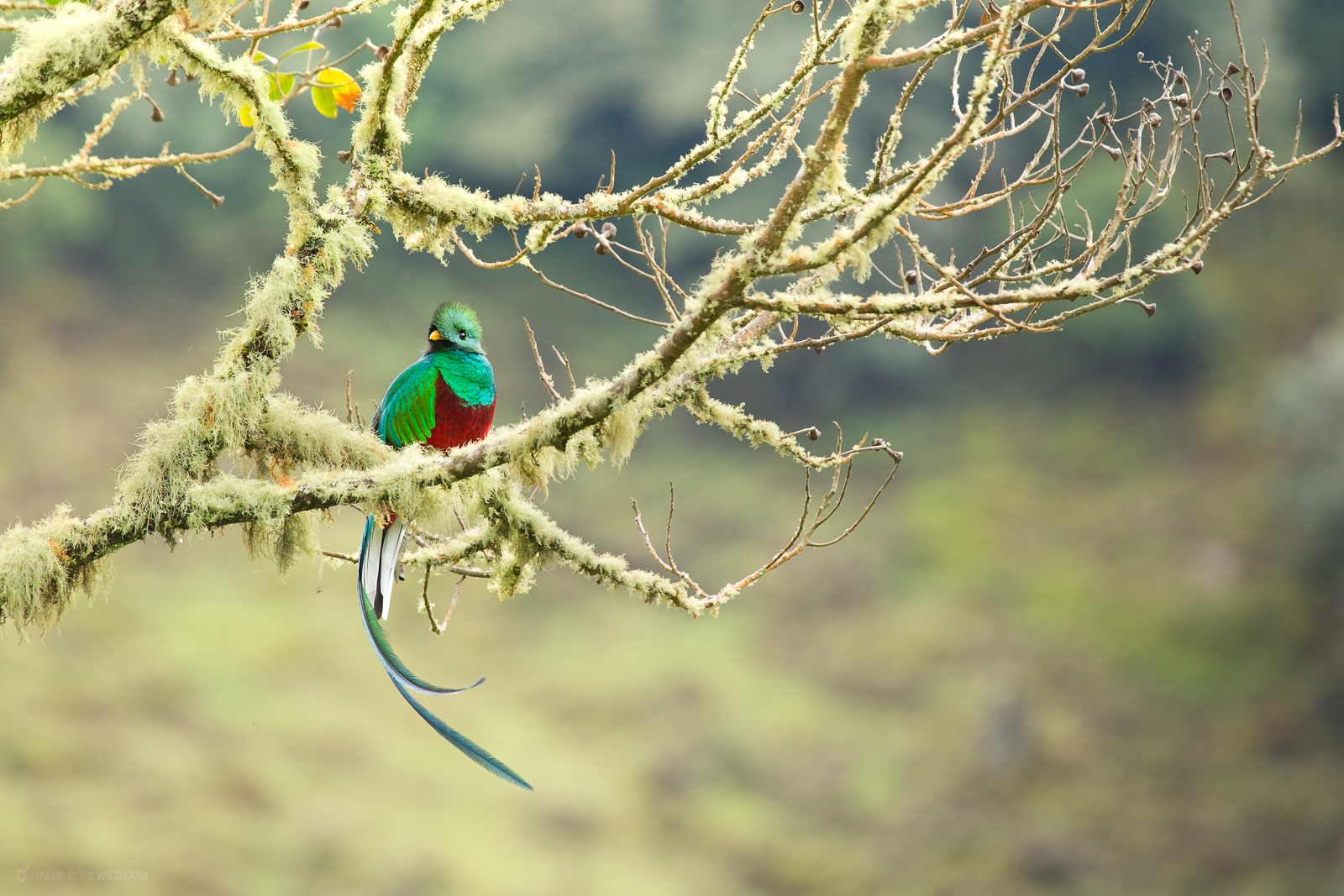
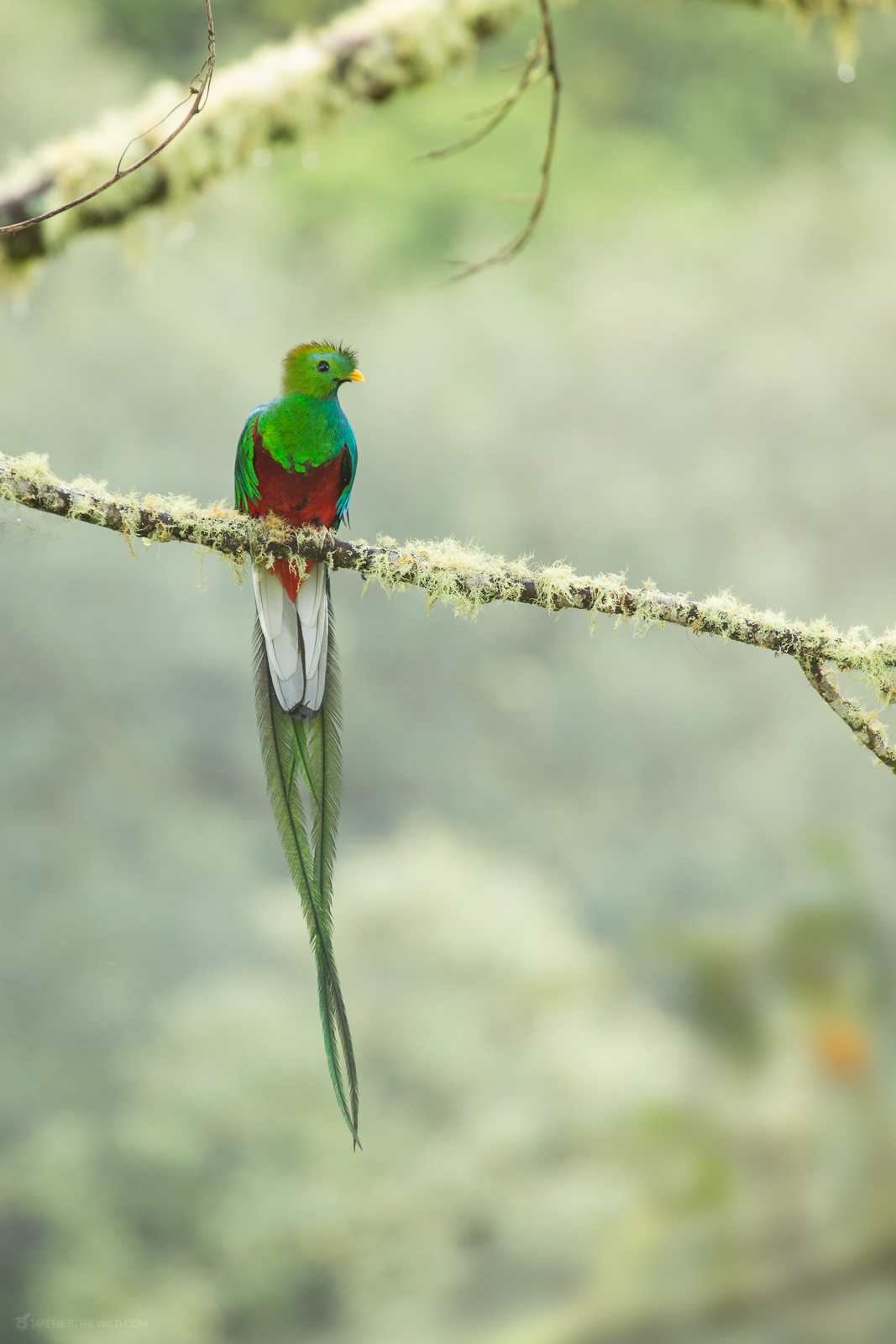
If ever there existed an ultimate symbol of the beauty embodied by birds, the Resplendent Quetzal would certainly qualify. Rare, stunningly beautiful, elusive, and limited to the remote and mist-draped cloud forests of Central America, this bird, with its shimmering golden green and blood-red feathers, has captured the human imagination for thousands of years.
For centuries the Resplendent Quetzal (Pharomachrus mocinno) dominated the traditions and beliefs of the Maya and Aztec. Quetzalcoatl, the cultural force for good for both civilizations, was symbolized by the head of a serpent adorned with the feathers of a Resplendent Quetzal. The feathers were considered more valuable than gold. To kill a quetzal was a capital crime. And yet here it is, still flying through the same forests, wearing the same feathers, as if time had not touched it at all.
The Cloud Forest
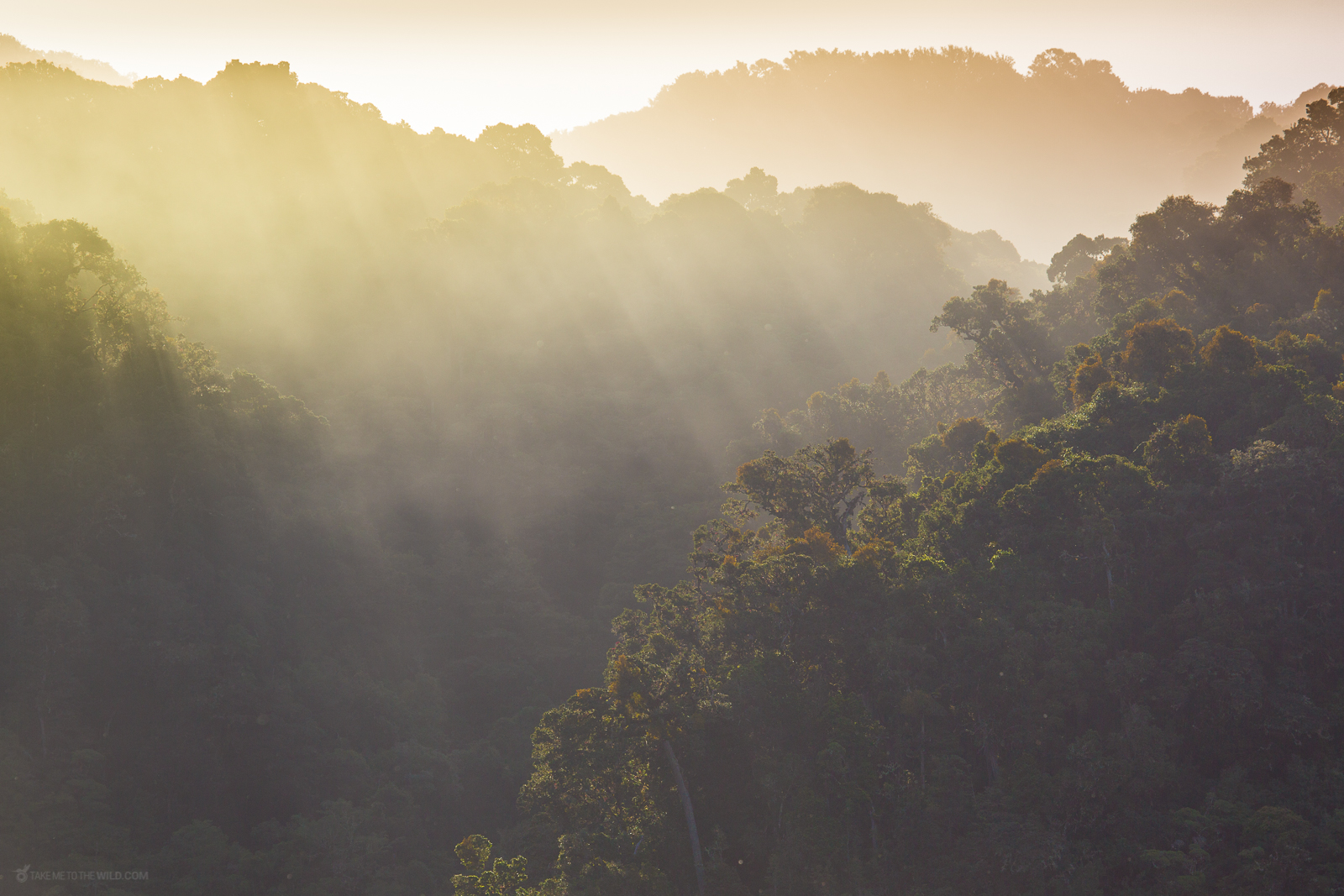
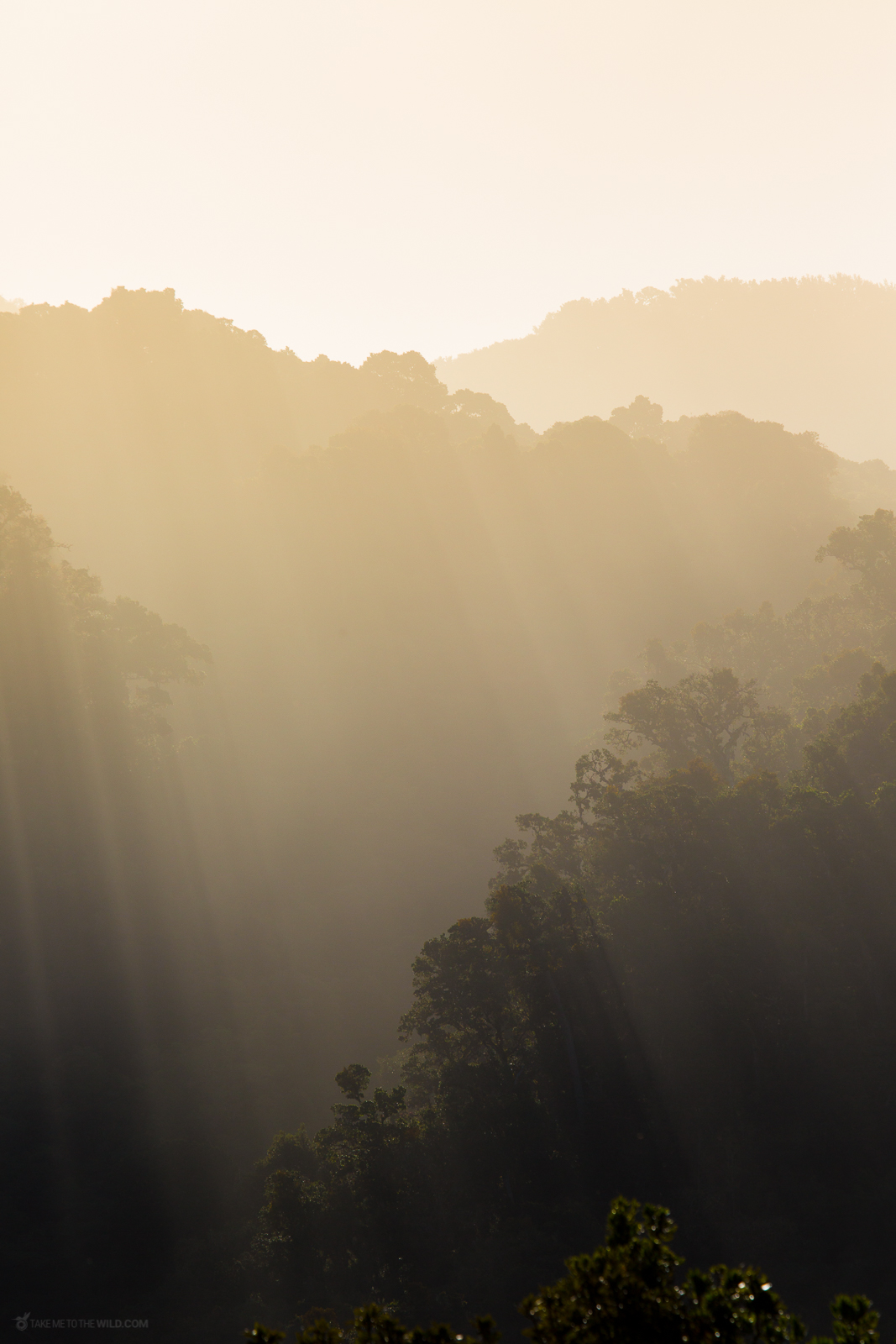
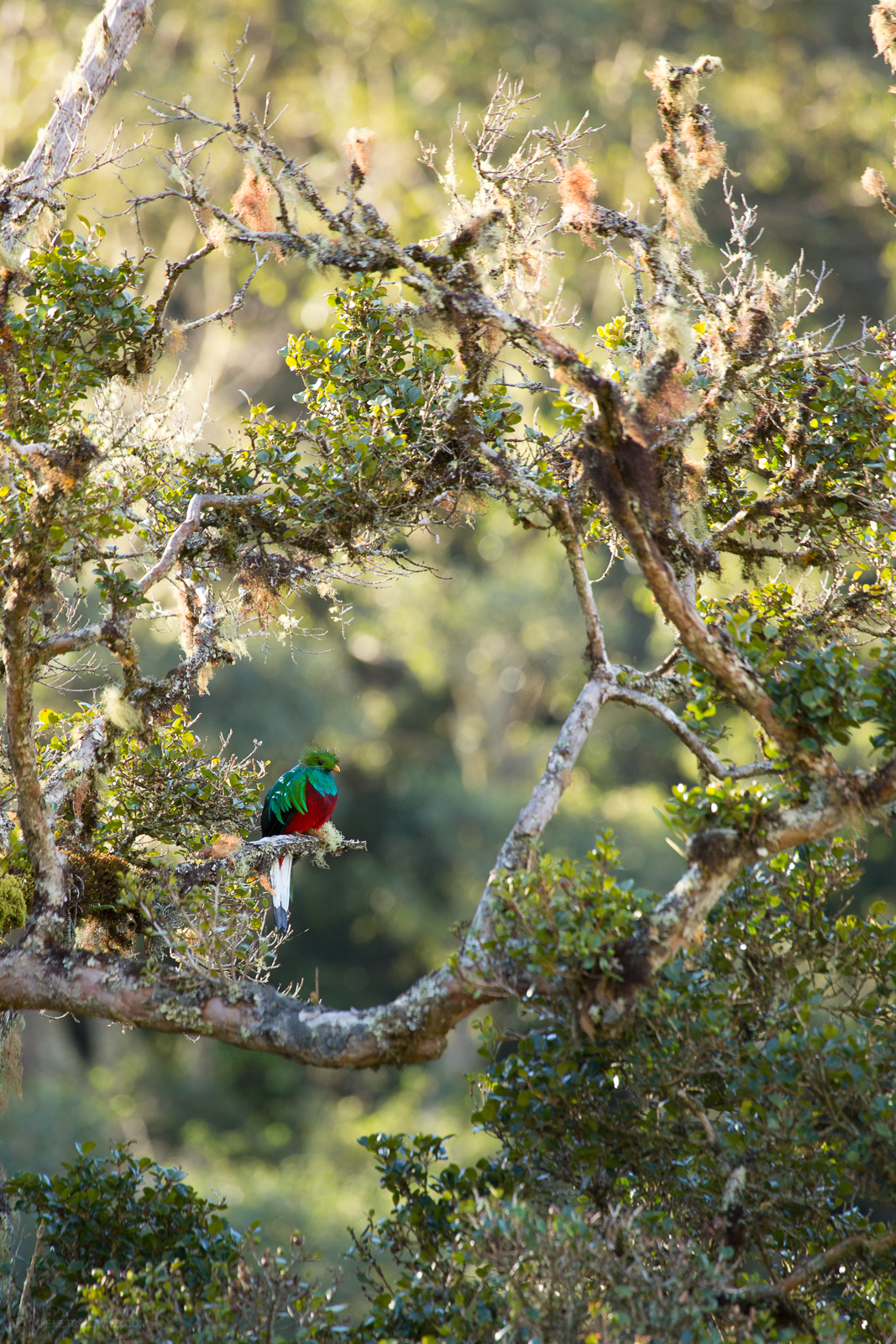
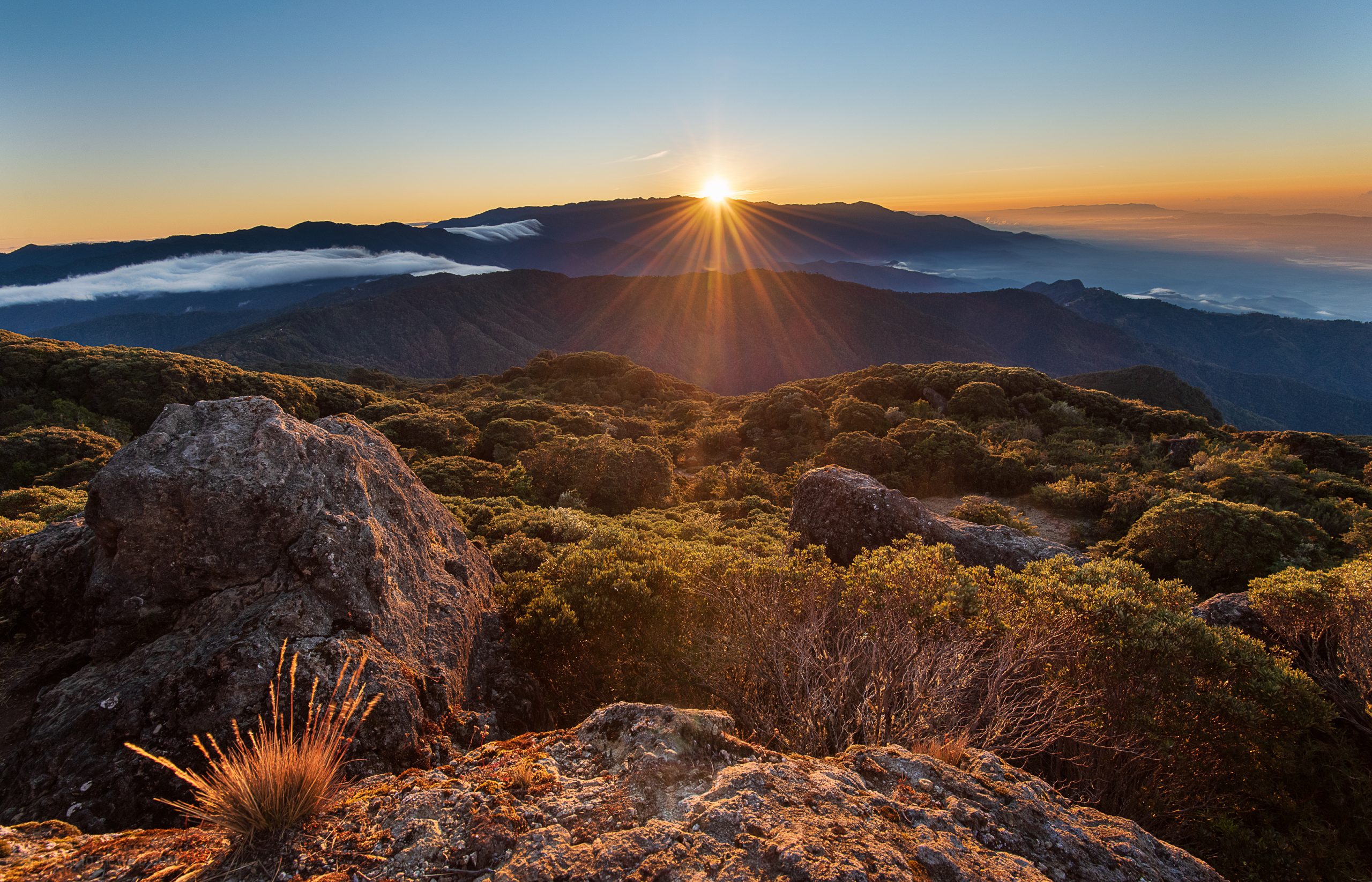
The Resplendent Quetzal’s main habitat is the cloud forest. These are incredible and hypnotic places, worlds of mist and mystery, landscapes forever cloaked in fog and secrets. The air is cool and wet, the trees are covered in moss and bromeliads, and the light filters through the canopy in soft, green tones. They are nature’s water towers, providing billions of gallons of fresh, clean, filtered water to the lowlands below.
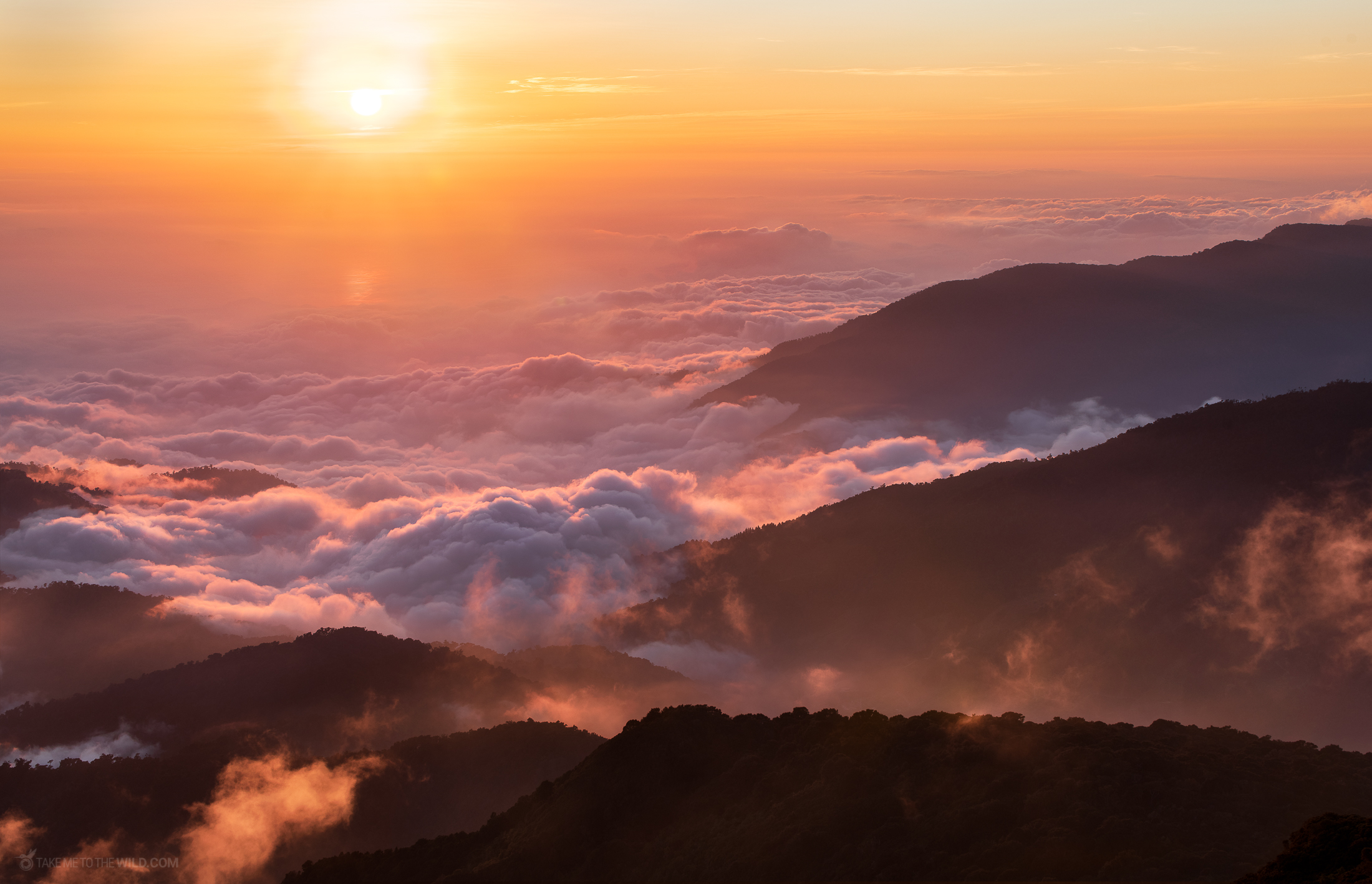
One of the best places in the world to observe and photograph the Resplendent Quetzal is San Gerardo de Dota, surrounded by the towering Talamanca Mountains near Parque Nacional Los Quetzales in the highlands of Costa Rica. The valley sits at around 2,200 meters, nestled between ancient oak forests that are home to a healthy population of quetzals year round.
The birds can be seen all year long, usually perching near trails or the side of the road in the early hours of the morning. The best time is during nesting season, from March to June, when the males display their extraordinary tail feathers and both parents take turns feeding the chicks.
Finding the Quetzal
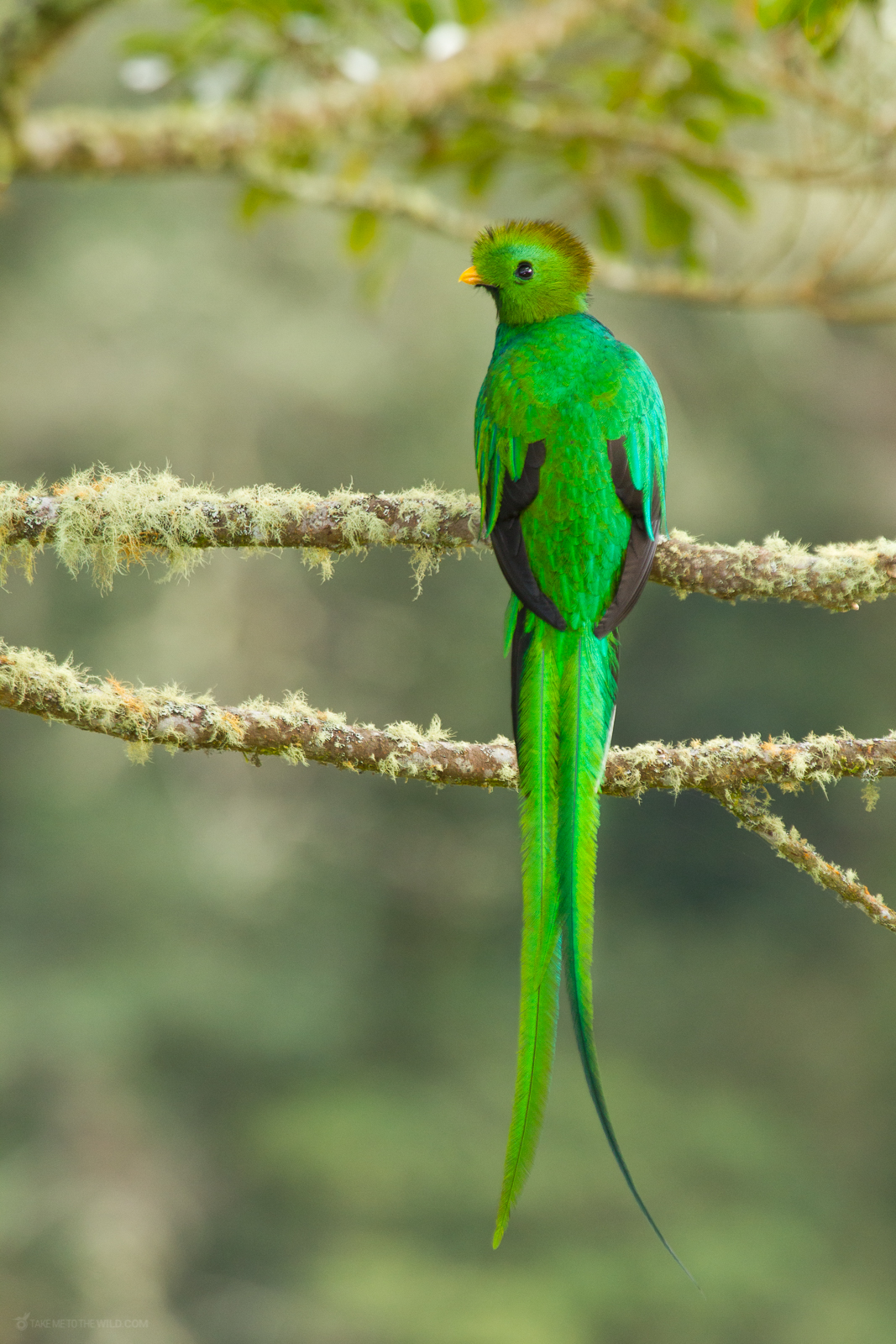
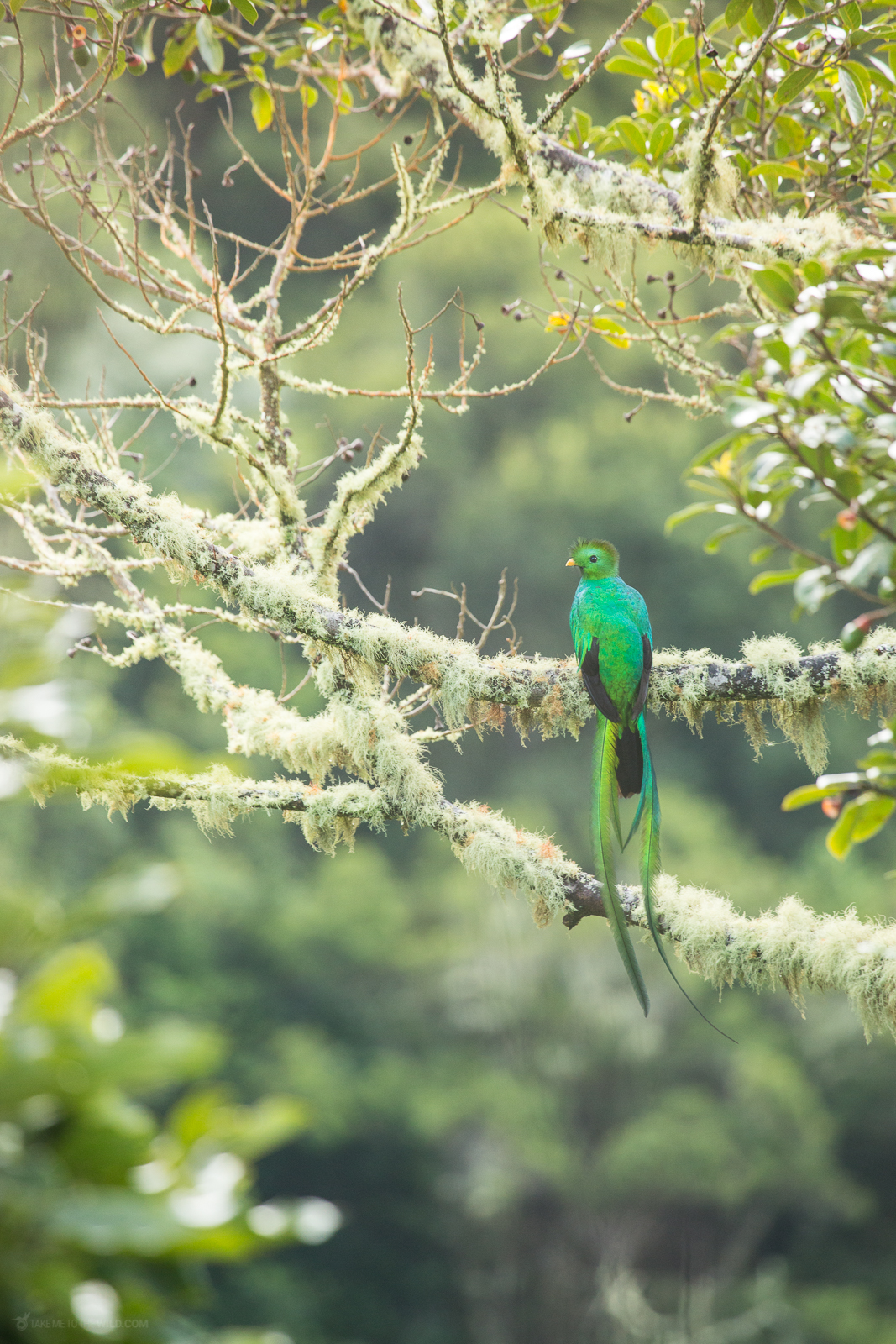
I have spent many mornings in the cloud forests around San Gerardo de Dota, arriving before dawn, walking the trails in near darkness, listening for the quetzal’s distinctive call. It is a deep, melodic sound, two syllables that echo through the fog. Once you learn it, you can track it. But the bird itself is surprisingly hard to spot. Despite its bright colors, it sits motionless in the canopy, and the green of its back blends perfectly with the moss-covered branches.
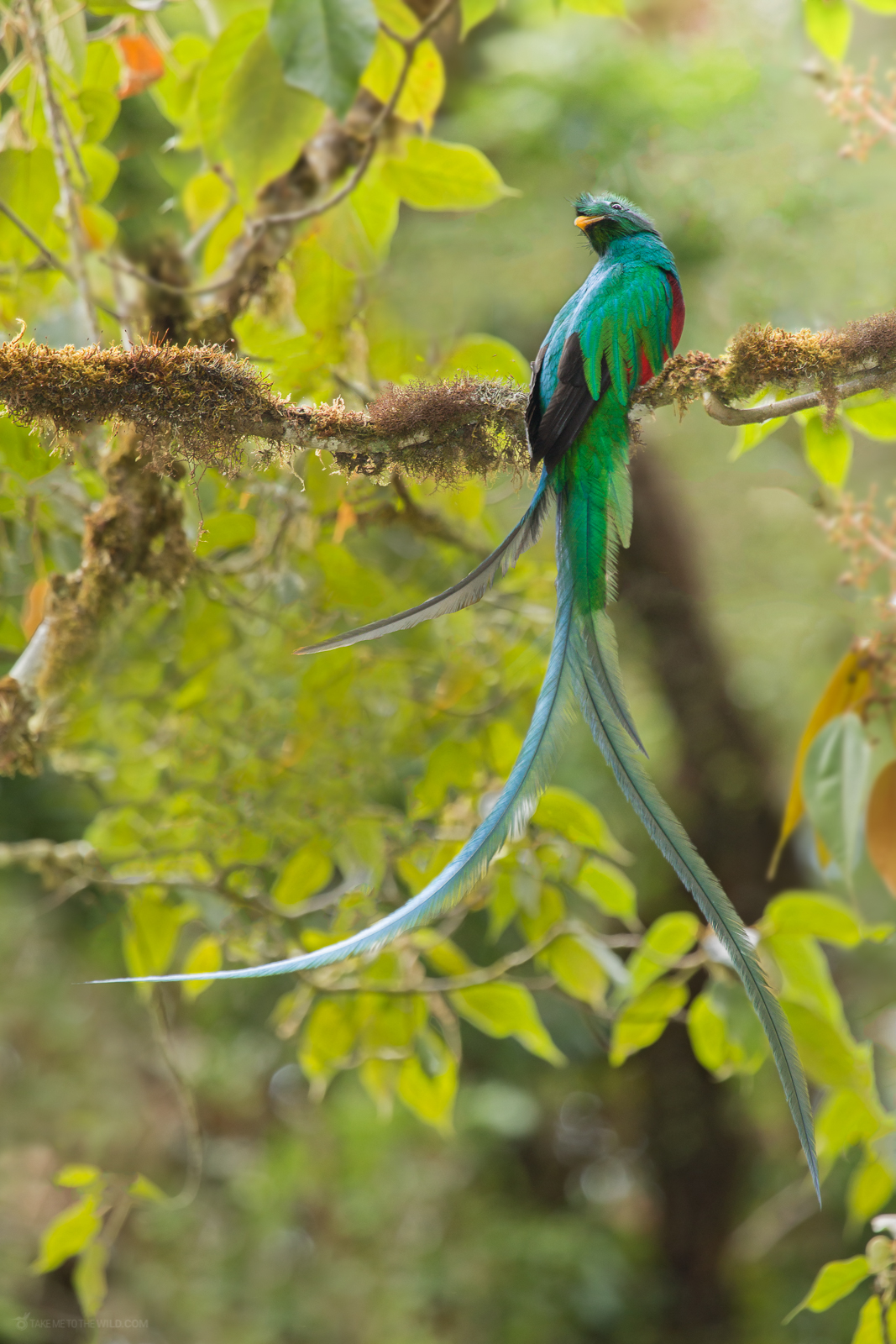
The first time I saw a male in full display, with his long tail streamers trailing behind him in flight, I forgot to press the shutter. It was that striking. The tail feathers can be over 60 centimeters long, longer than the bird itself, and they undulate in the air like ribbons.
The Aguacatillo
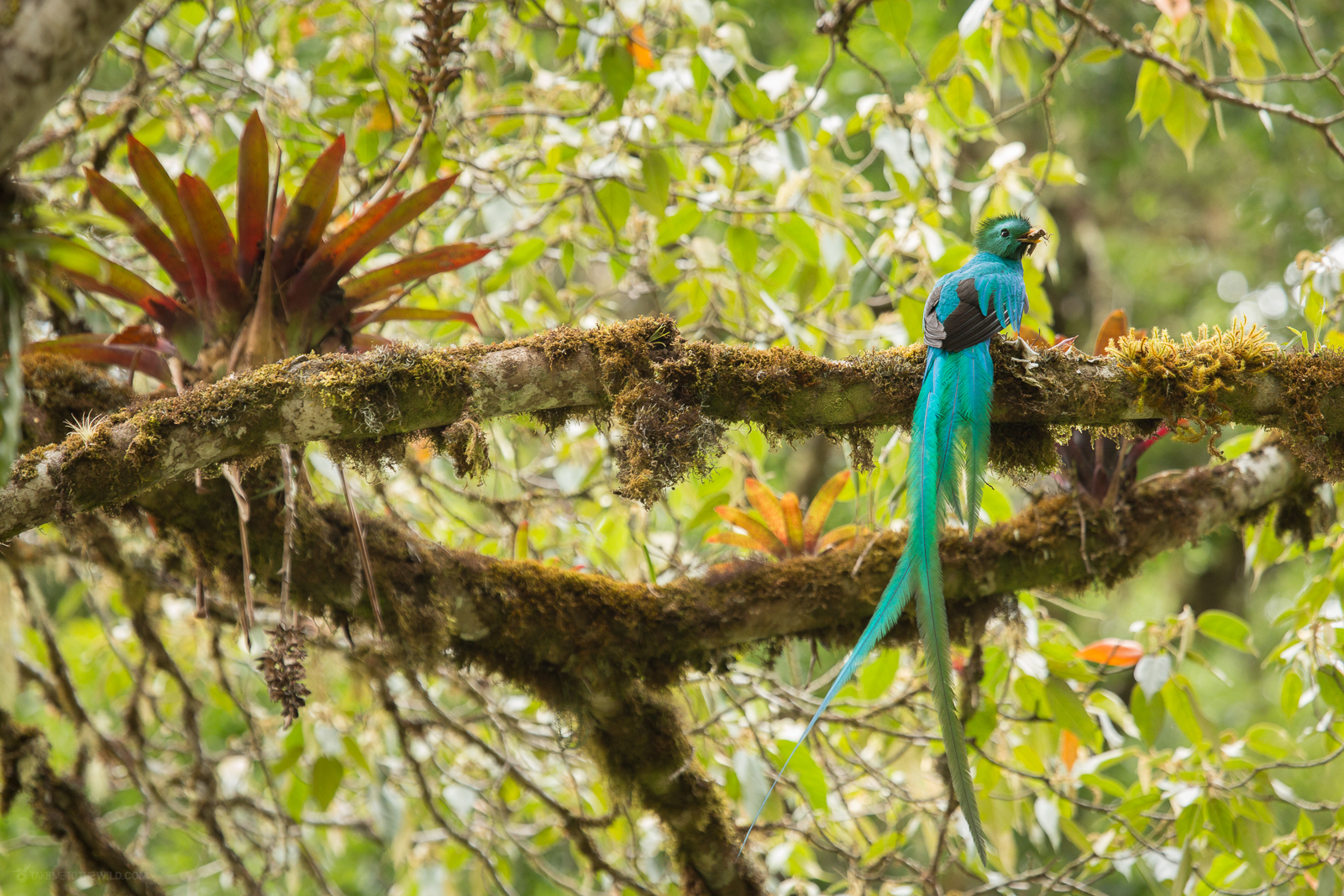
The quetzal’s life revolves around one tree: the aguacatillo, a wild avocado that grows in the cloud forest. The small, dark fruit is the quetzal’s primary food source, and the bird swallows it whole, regurgitating the seed later. This makes the quetzal an essential seed disperser for the aguacatillo, and the relationship between bird and tree is ancient and deeply connected. Where the aguacatillo grows, the quetzal follows. Protecting the forest means protecting both.
“Where the aguacatillo grows, the quetzal follows. Protecting the forest means protecting both.”
Nesting
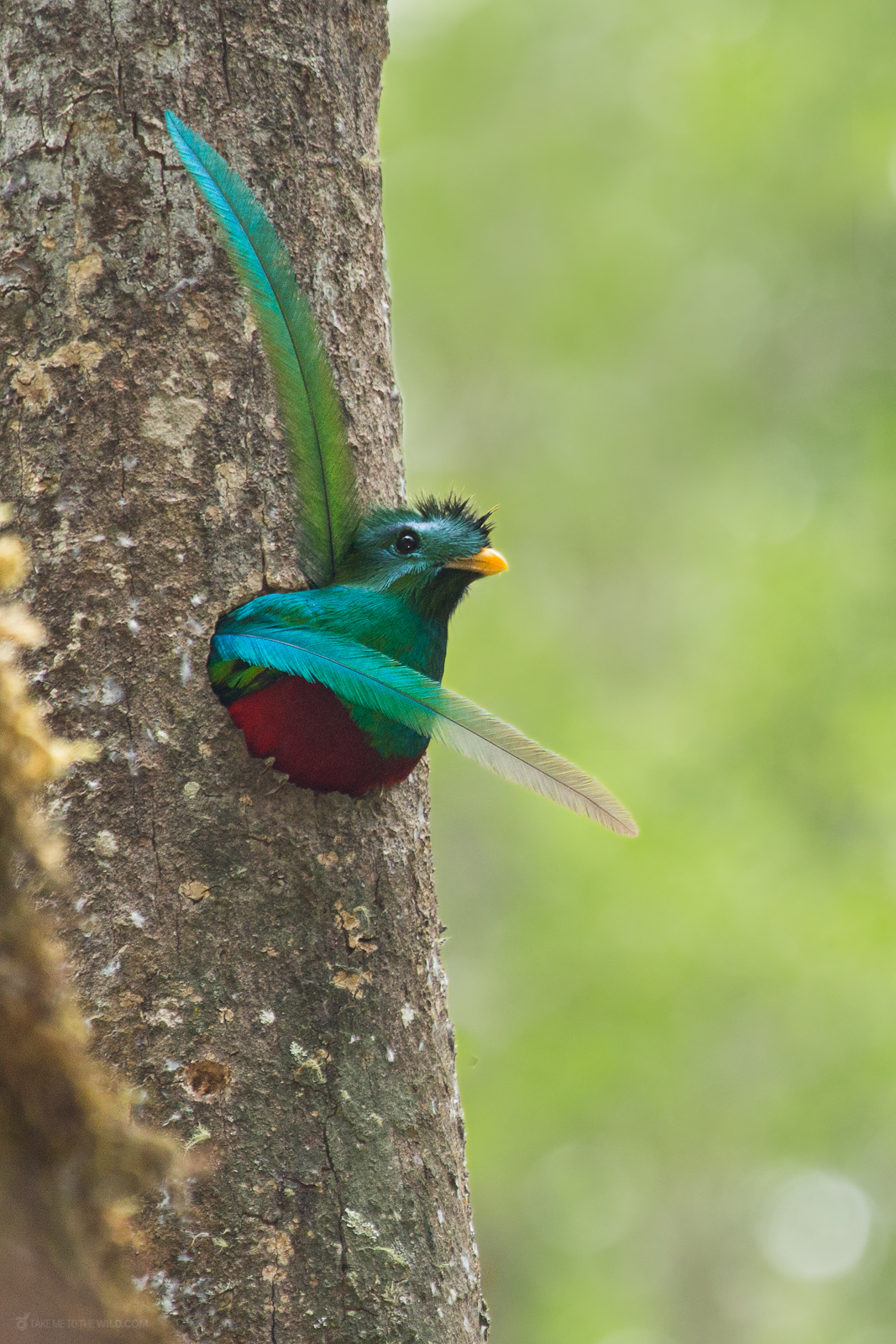
During nesting season, both parents share the work of raising the chicks. They nest in tree cavities, often in old woodpecker holes or rotted trunks. The male takes the day shift, sitting in the nest with his long tail feathers folded up and sticking out of the entrance. The female takes over at night.
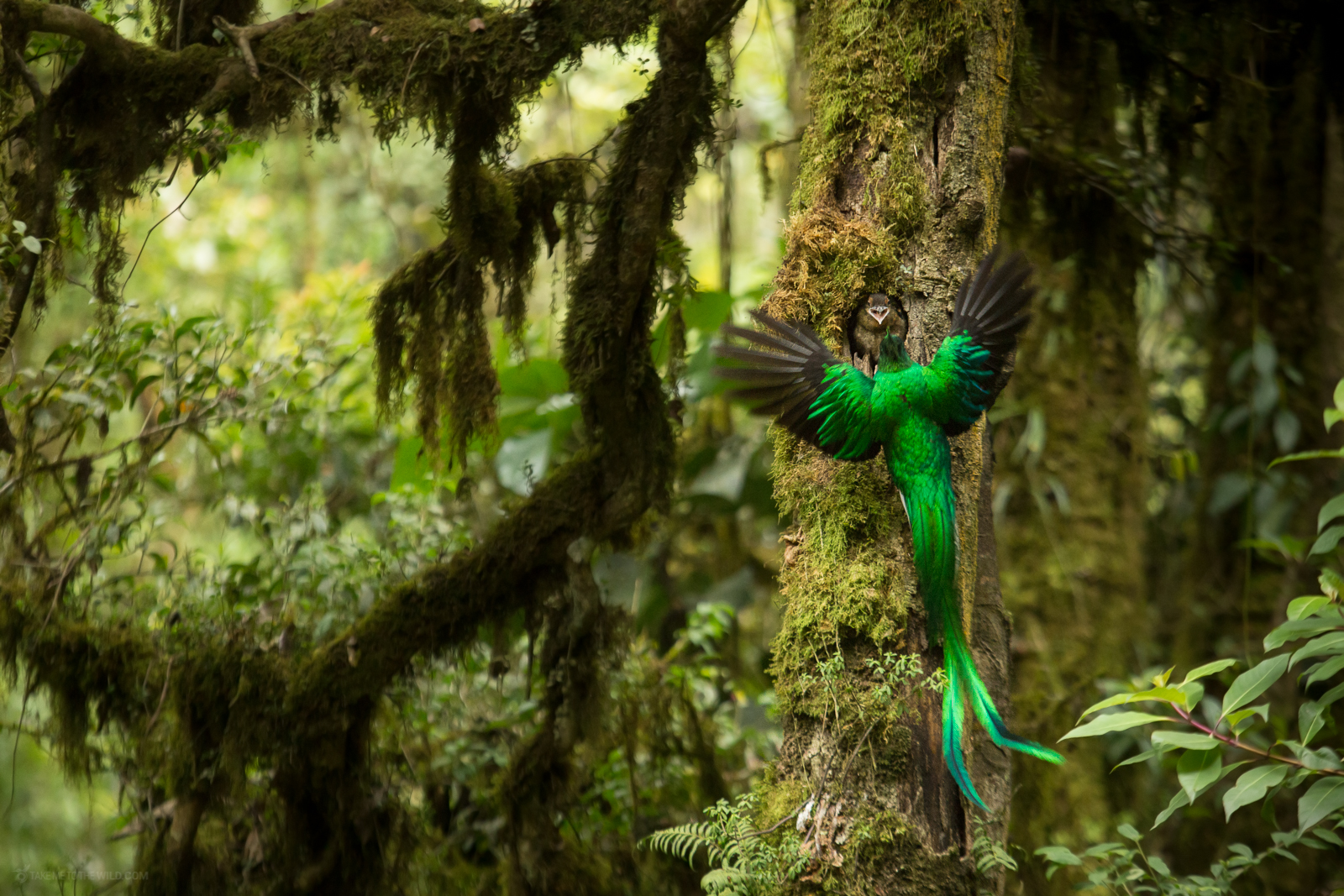
I spent several weeks photographing a nesting pair near San Gerardo de Dota. Every morning I would arrive before dawn, set up my camera at a respectful distance, and wait. The parents would arrive with food for the chicks, hover briefly at the nest entrance, and disappear inside. Getting the timing right for the feeding shot took many visits, but eventually I got the images I was after.
The Female
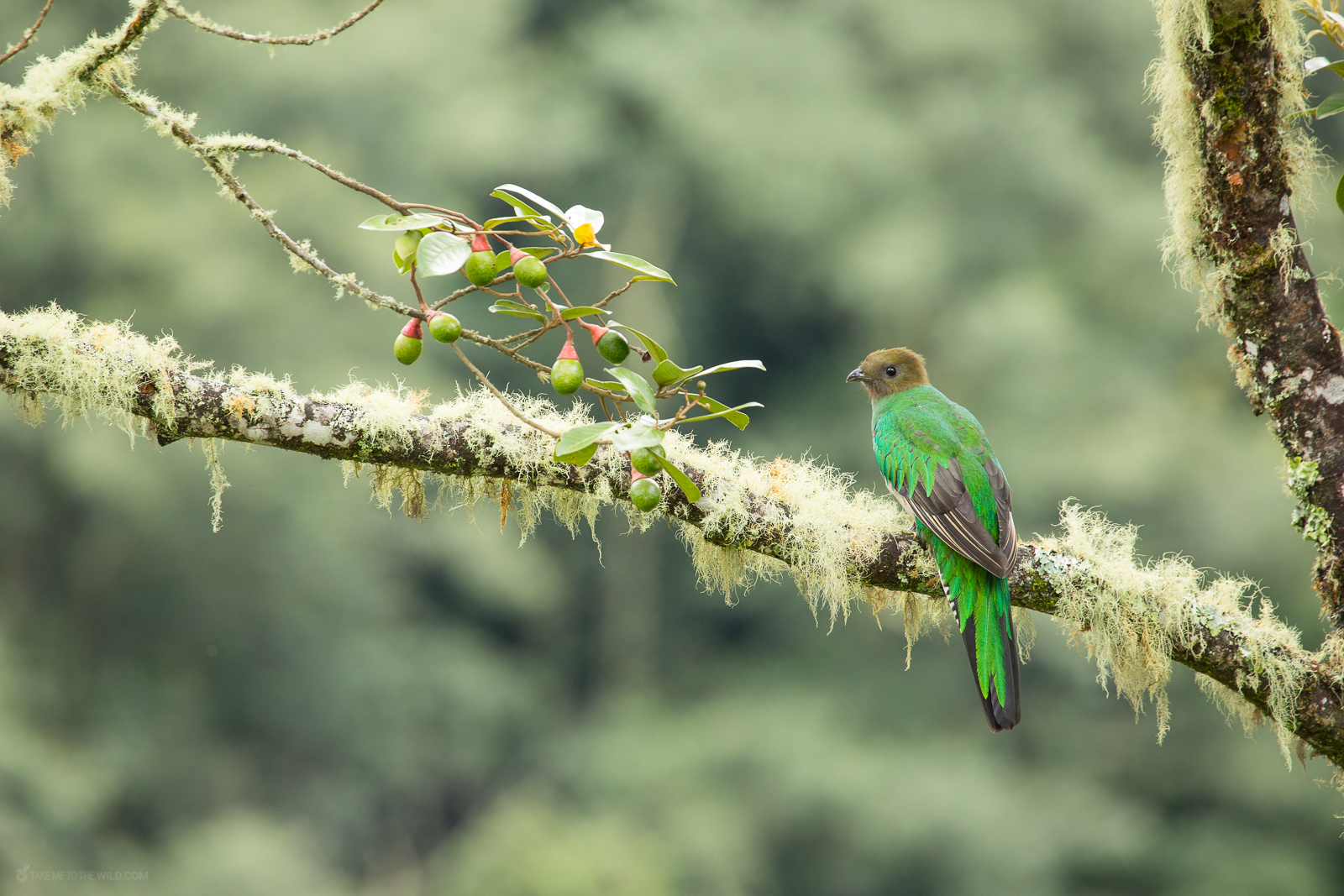
The female Resplendent Quetzal is often overlooked. She lacks the long tail streamers and the vivid red breast of the male, but she is beautiful in her own right, with subtle green and brown plumage that helps her stay hidden on the nest. Without her, there would be no quetzals at all.
The Forest at Night
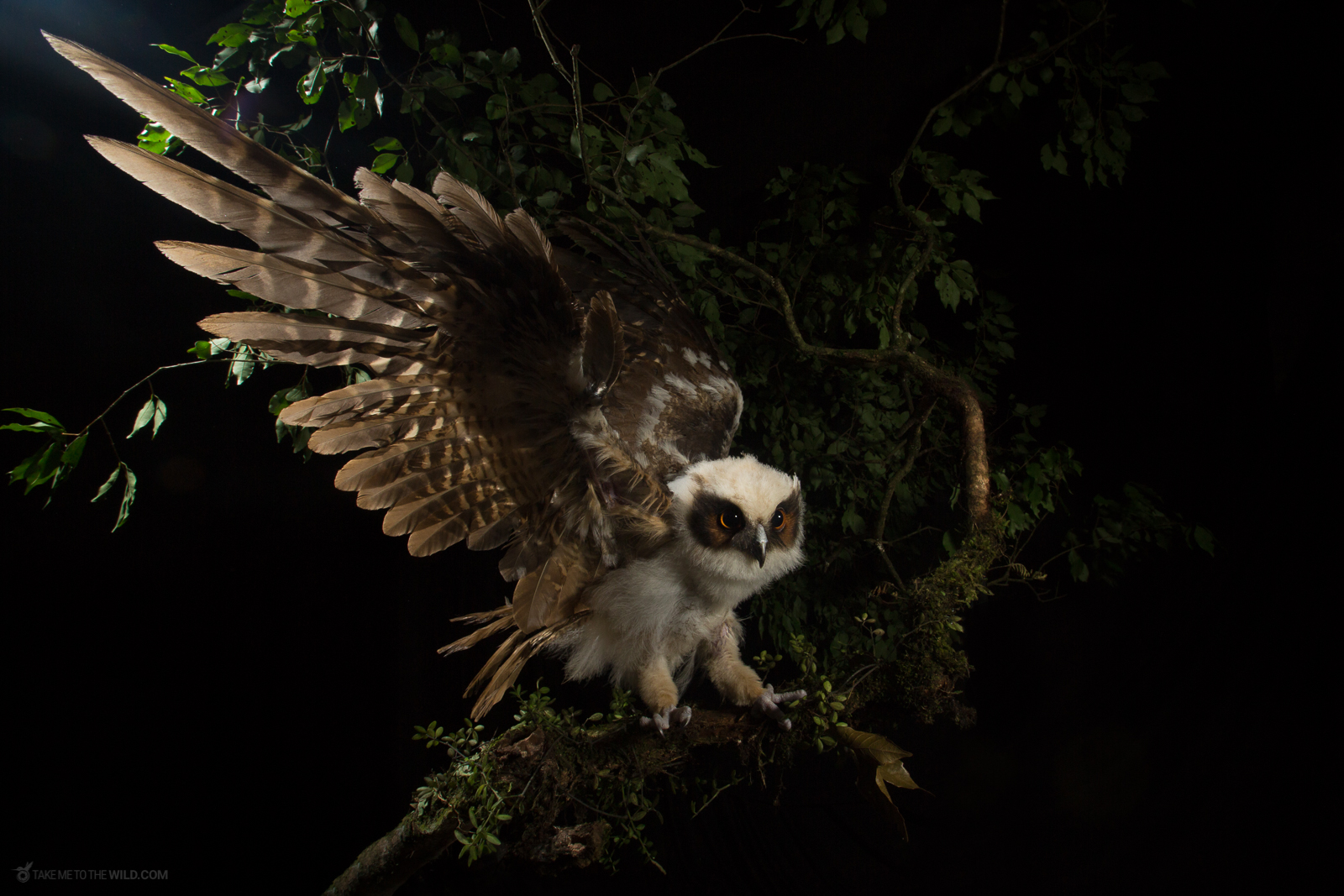
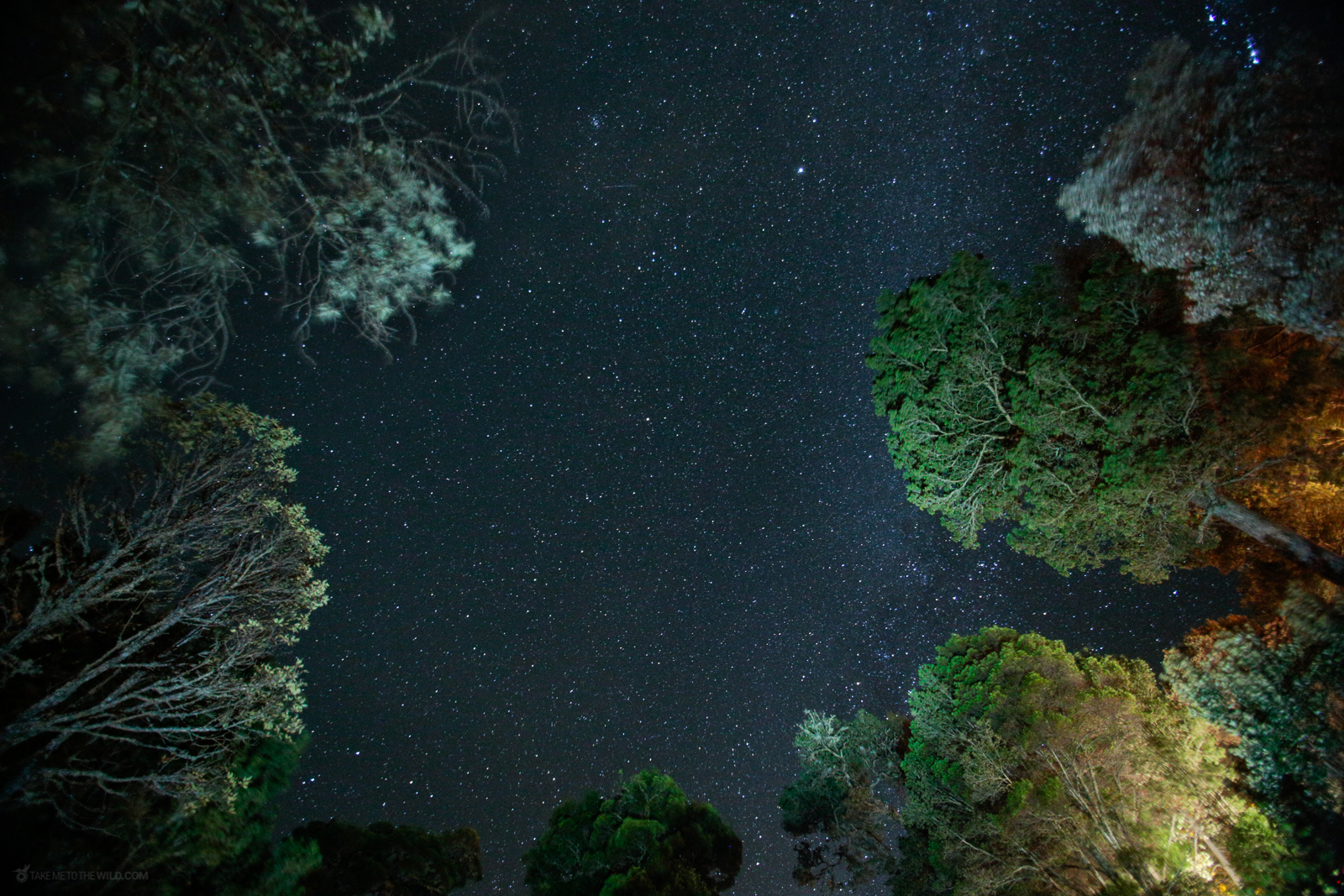
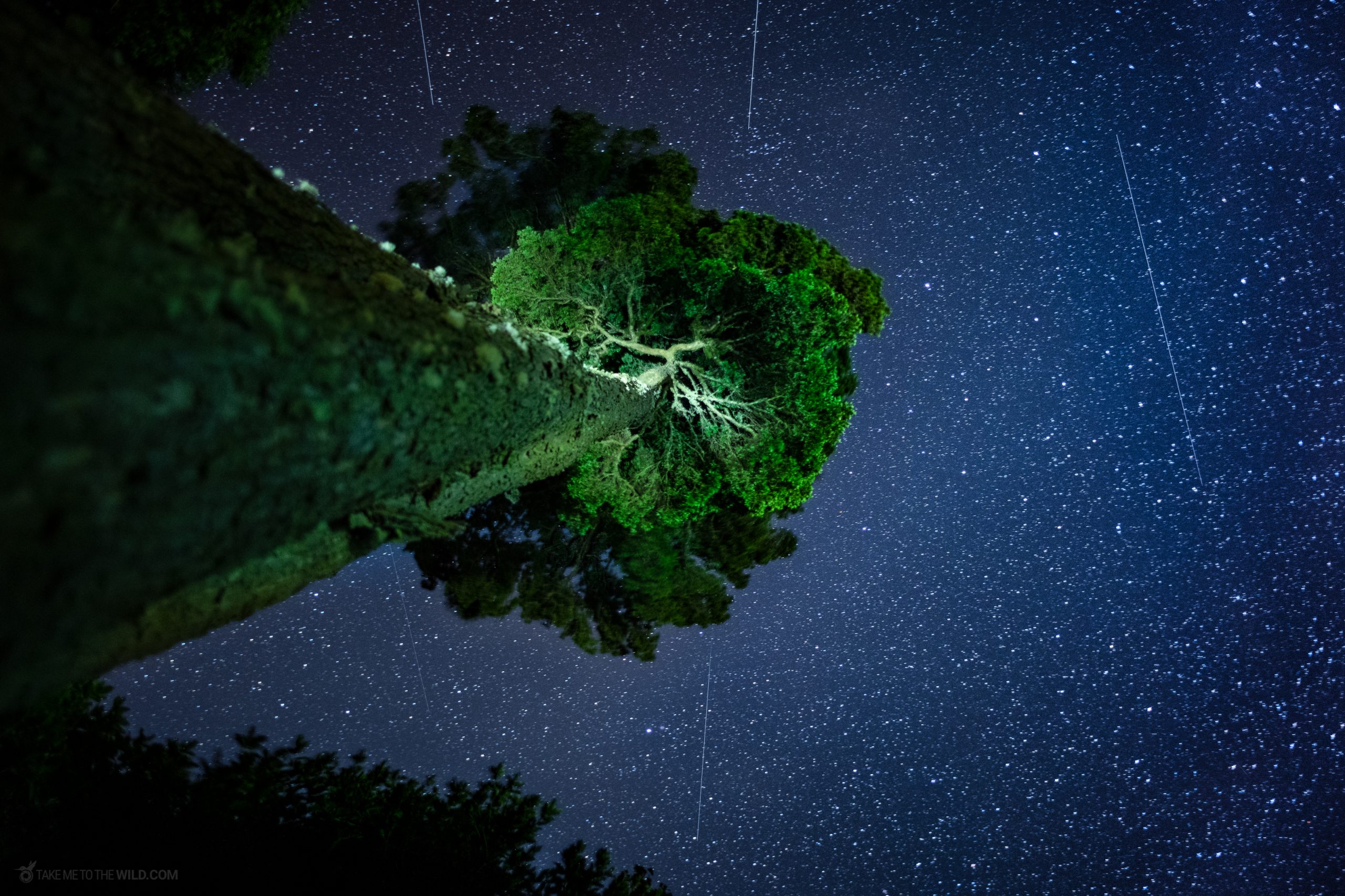
The cloud forest is not just a daytime world. At night, the landscape transforms completely. The ancient oaks stand dark against a sky full of stars, the Milky Way visible on clear nights above the canopy. The temperature drops close to freezing, and the forest fills with the sounds of insects and the occasional call of an owl.
I have spent many nights in these forests, sometimes photographing owls, sometimes just sitting in the dark and listening. There is something about being alone in a cloud forest at night that resets your sense of scale. You are small, the forest is old, and the stars above have been there long before any of us.
And after you see the quetzal, take a deep breath, savor the air, and smile. You have just seen a bird that inspired gods.
Gear
The photography gear used in this story.
Related Topics