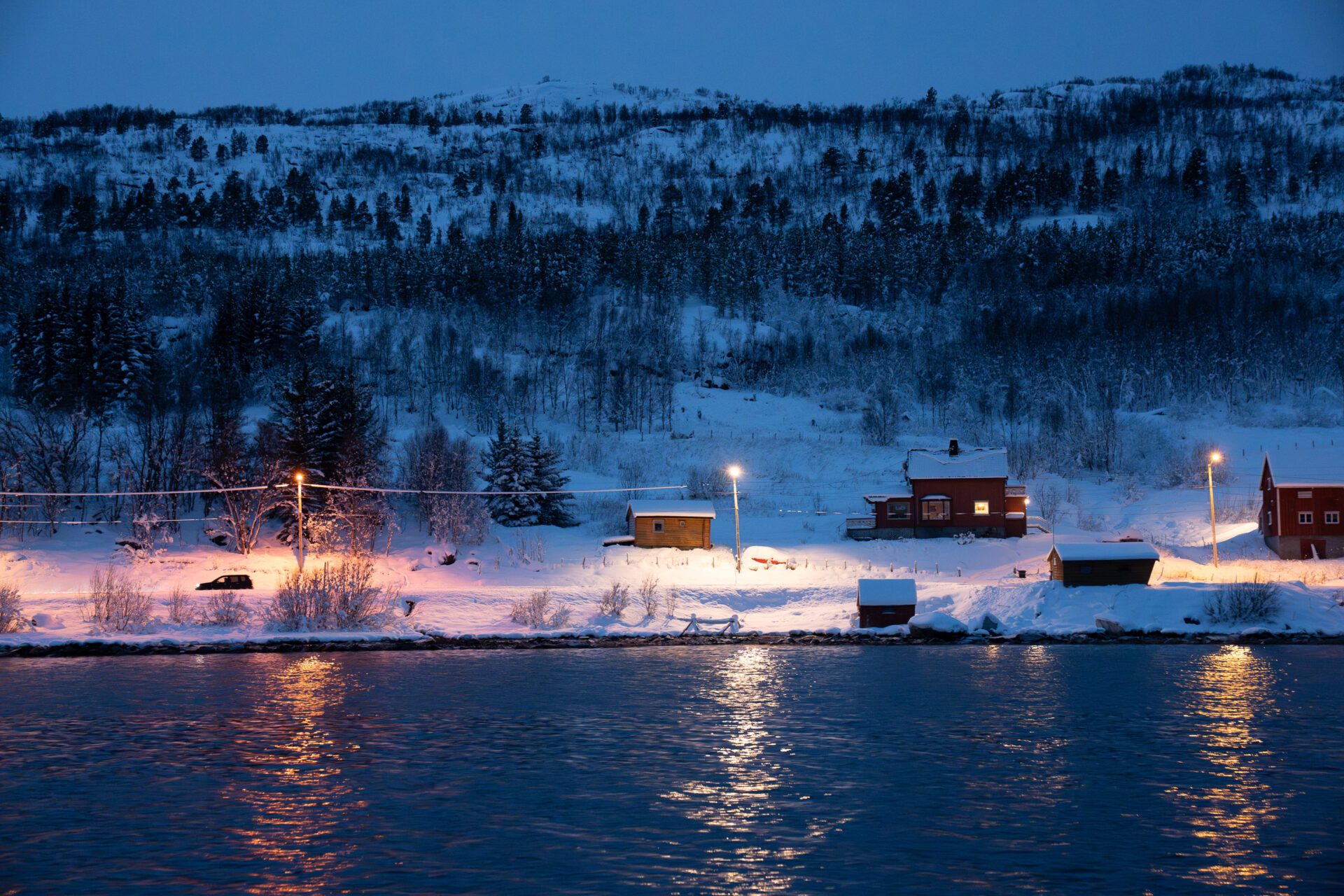
The room is spare. There is a kettle on a desk, humming in the corner. Outside the window, the light barely rises above the mountains. It’s early winter above the Arctic Circle, and soon the sun will disappear for weeks.
I pour hot water over another tea bag and wrap my hands around the cup, waiting to get warm. My throat burns. My body aches, wanting the familiarity of my own bed, my own pillow. Instead, I’m here, in Alta, minus fifteen outside. I imagined arriving here full of energy, ready to face the cold, not hunched over a hotel kettle, wondering if I’ve made a mistake coming here while still sick. But I am here.
Every year, starting in late November and lasting until January, schools of herring are coming into the northern fjords of Norway. And the orcas come here to feed on them. They arrive in pods, working together to bring the herring into a tight ball near the surface, then strike with their tails, a hunting technique passed down through generations. It is a great wildlife spectacle, and it happens here, in the dark Arctic waters, for only a few weeks each year.
That is why we are here, to get into the water with them, to be close enough to hear and see them. I came here last year for the same reason. But the weather was rough and we never made it into the water with them. We saw them from the boat, but only from the distance. I went home with the feeling of something unfinished, so we came back.
Now, as I am sitting in the hotel room, the thought that this could happen again (coming all this way, twice, and still not getting in the water) is worse than my sickness. We are supposed to be getting on a boat tomorrow, and I am definitely not well. But I’m already here. So I go anyway.
The next day, after an hour’s bus ride through heavy snow, we arrive at the harbour, and board our boat. We get a small room with bunk beds, and set up our equipment for the following day: dry suit, hood, gloves, fins, snorkel, mask.
That night, I barely sleep. I lie in the bed listening to all of the unfamiliar sounds, and thinking I didn’t come all this way to lie in a bunk bed, while my body tells me that I should rest.
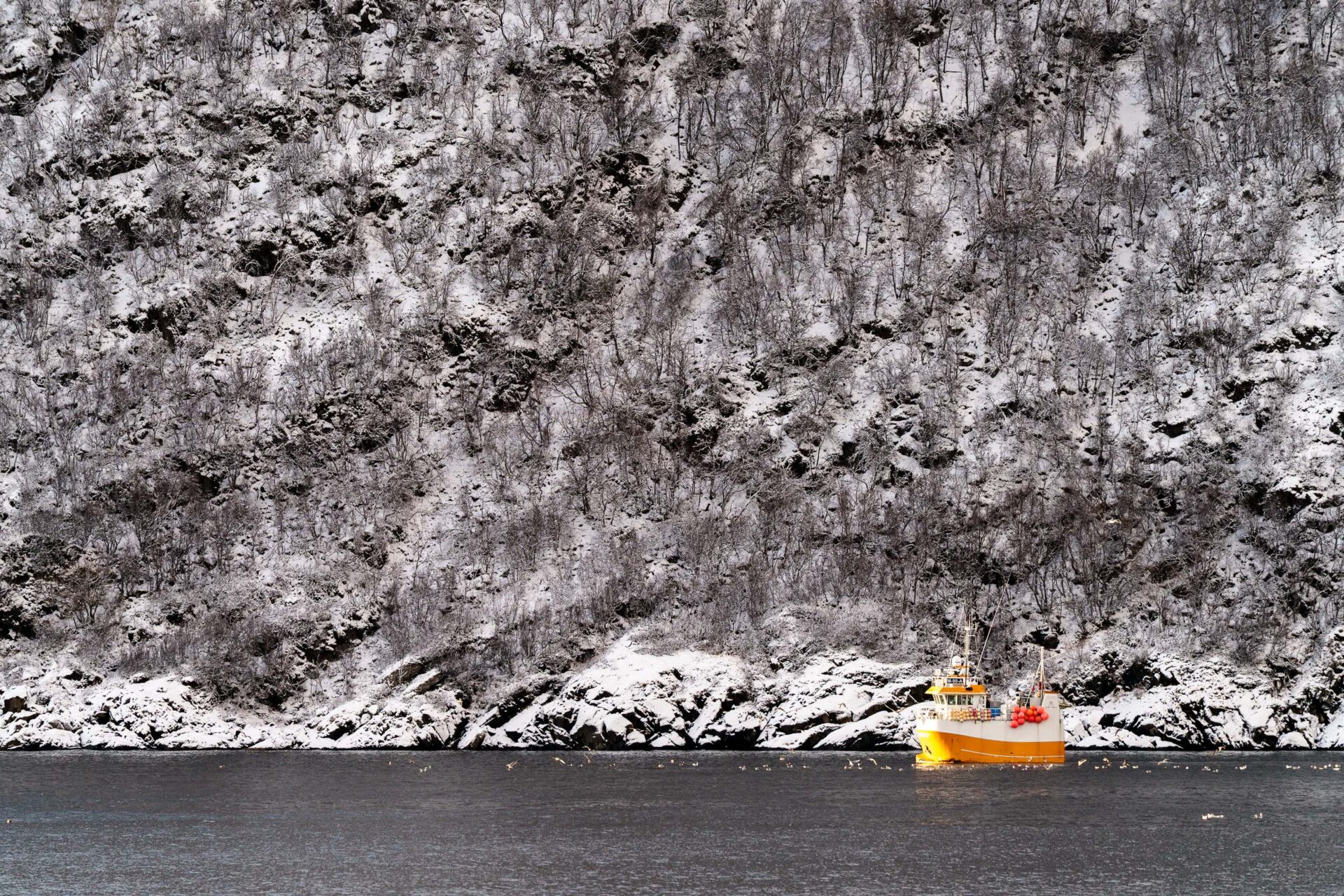
The following morning everything looks different. It is still cold, still -15 degrees Celsius, but the sky is clear and the wind has disappeared. This, I am told by one of the freediving guides, is perfect weather to go into the water.
Perfect, that is, if you are willing to accept the cold. I am still sick, but in that moment it does not seem to matter. Maybe it’s the adrenaline, maybe it’s the environment, maybe it’s the other people’s energy. Whatever it is, just staying on the boat feels wrong. I didn’t come all this way to be only an observer.
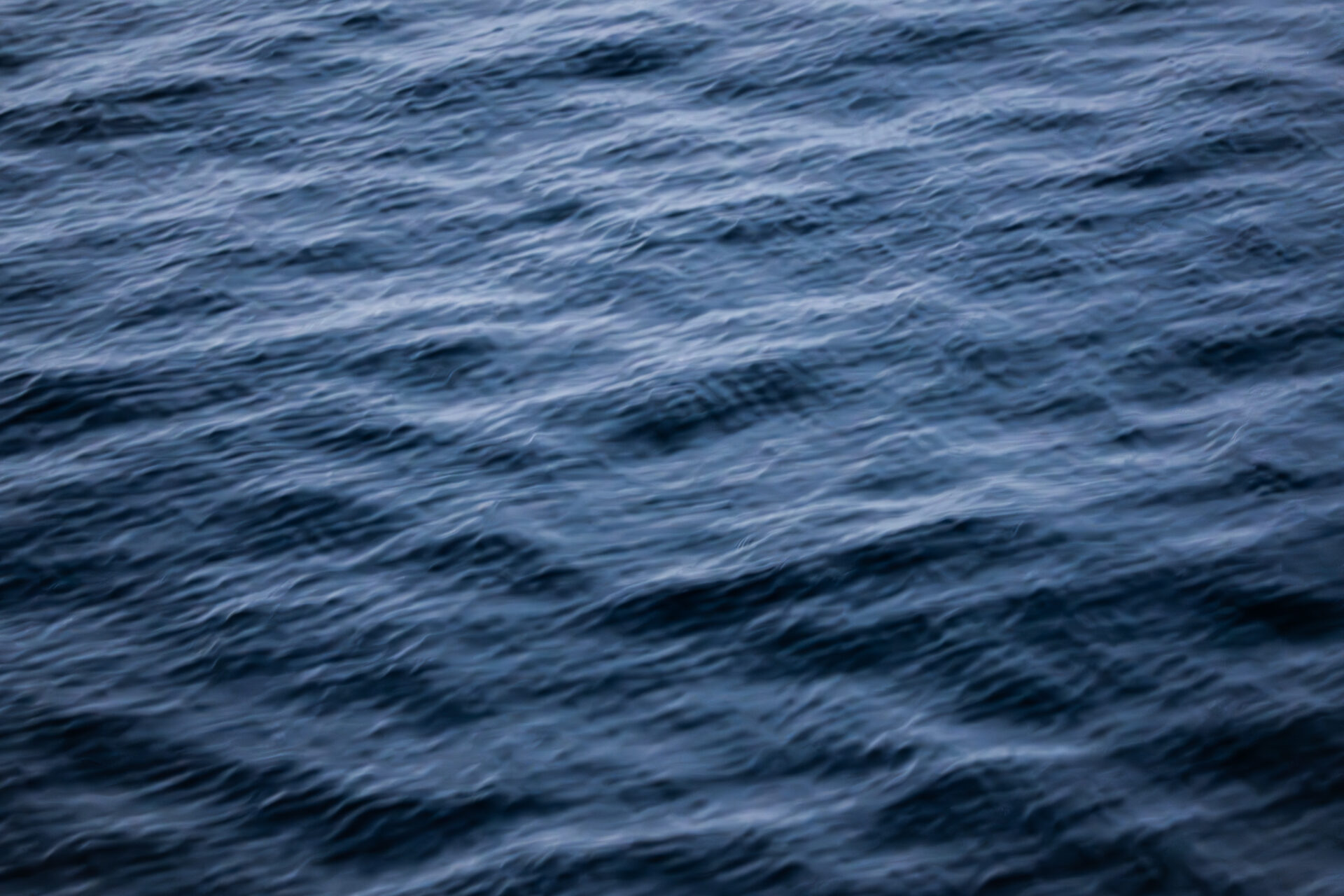
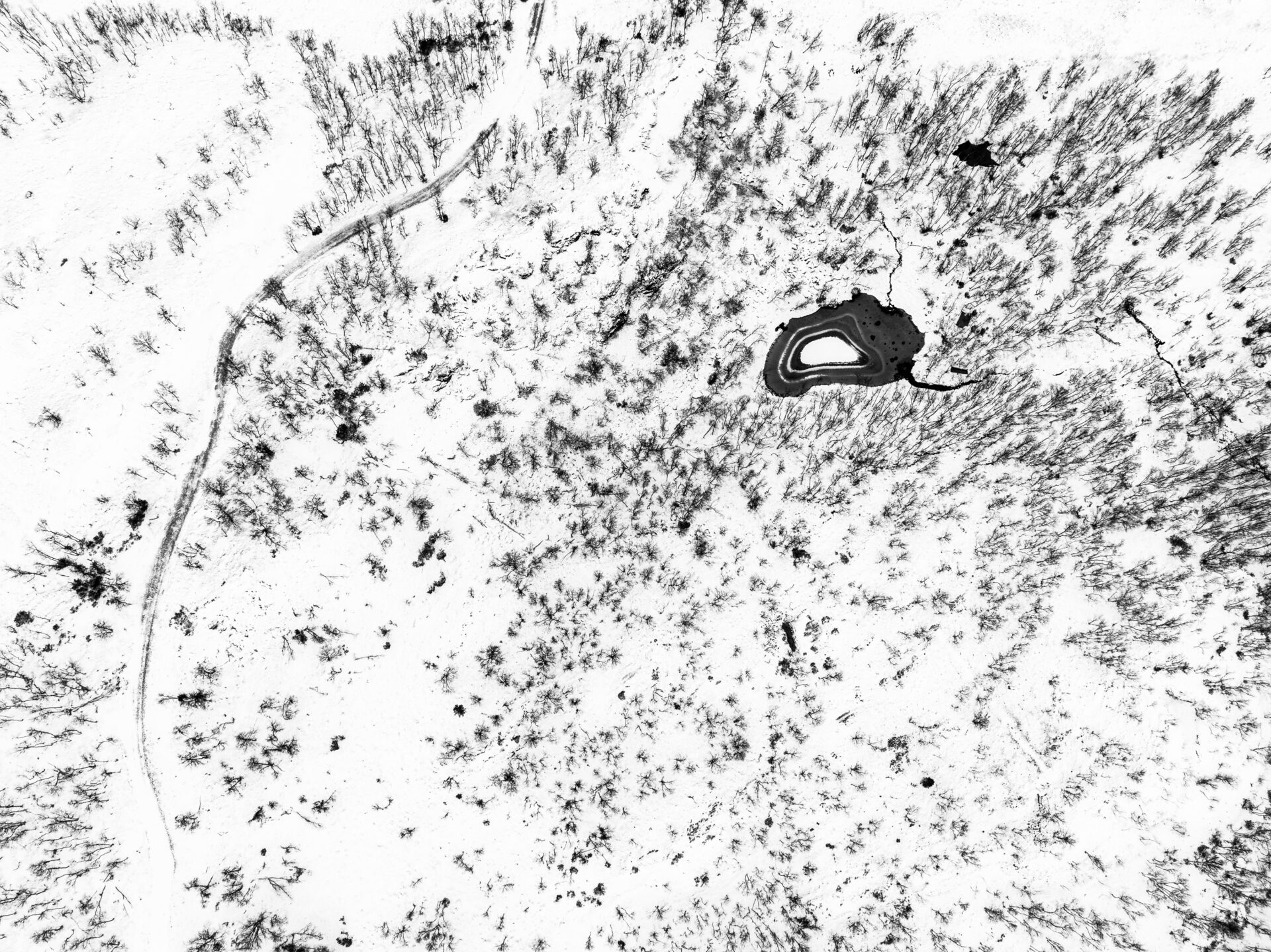
To enter the water this time of the year, there are no shortcuts, no hacks. I take the dry suit I picked the previous day and started to get dressed. Pulling on the dry suit doesn’t feel like getting dressed at all. It feels like preparing for a special mission, a descent into another world. The suit seals around you, tight and uncomfortable, and with it comes a clear message: you don’t belong where you are about to go. You are being allowed in, temporarily.
The modern world has trained me well for comfort, for temperature control and predictable outcomes. This is none of that. This is deliberate discomfort, a chosen one.
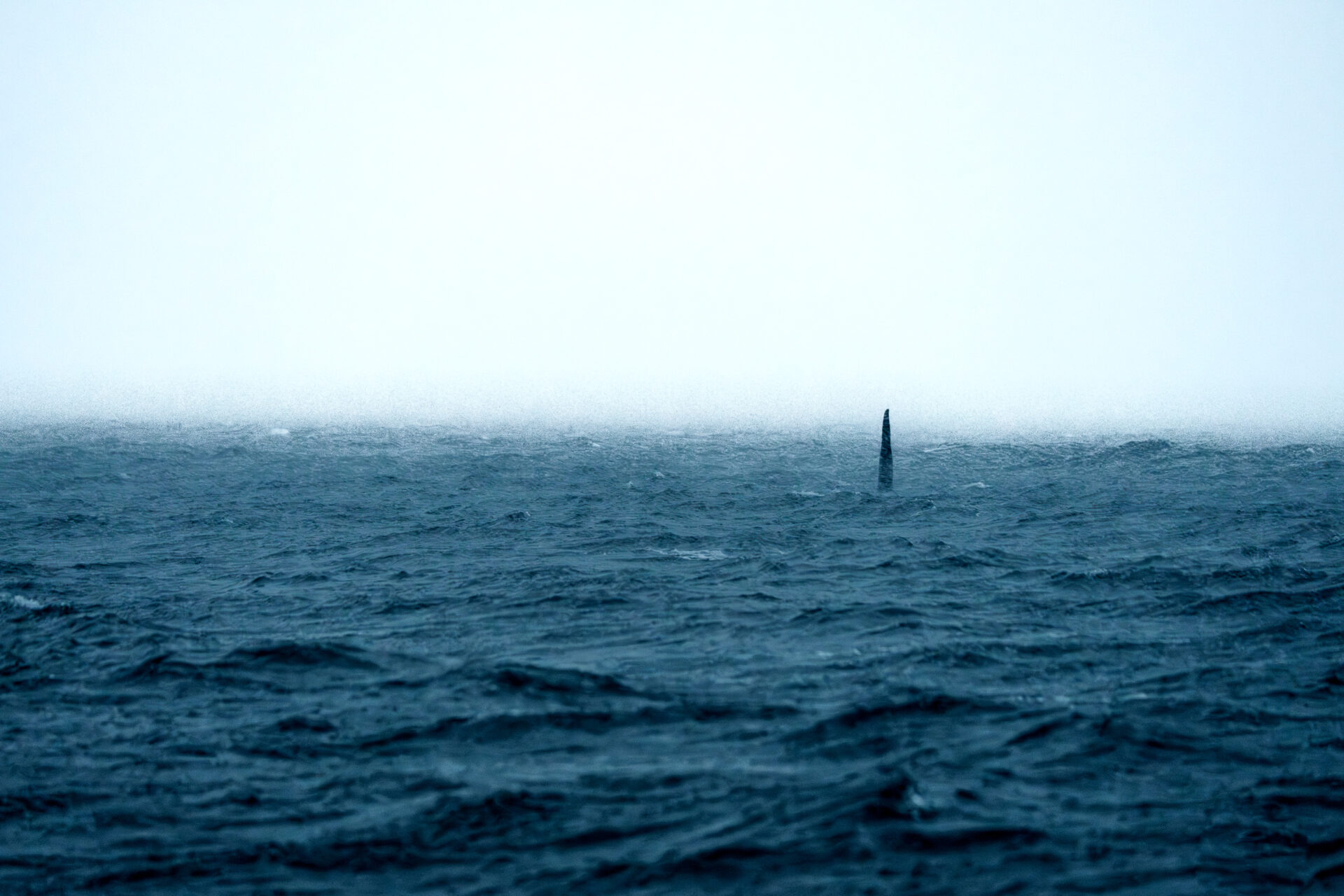
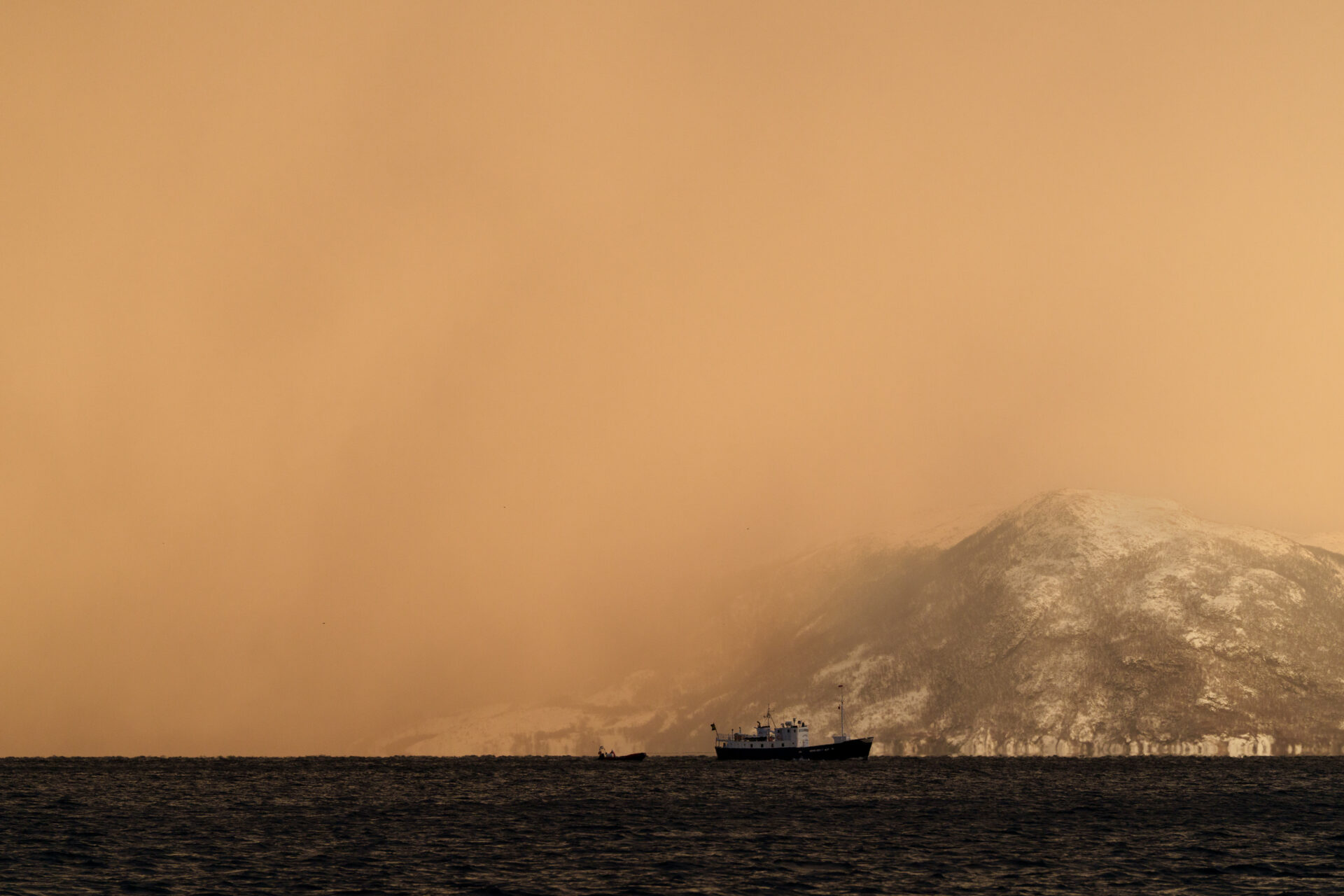
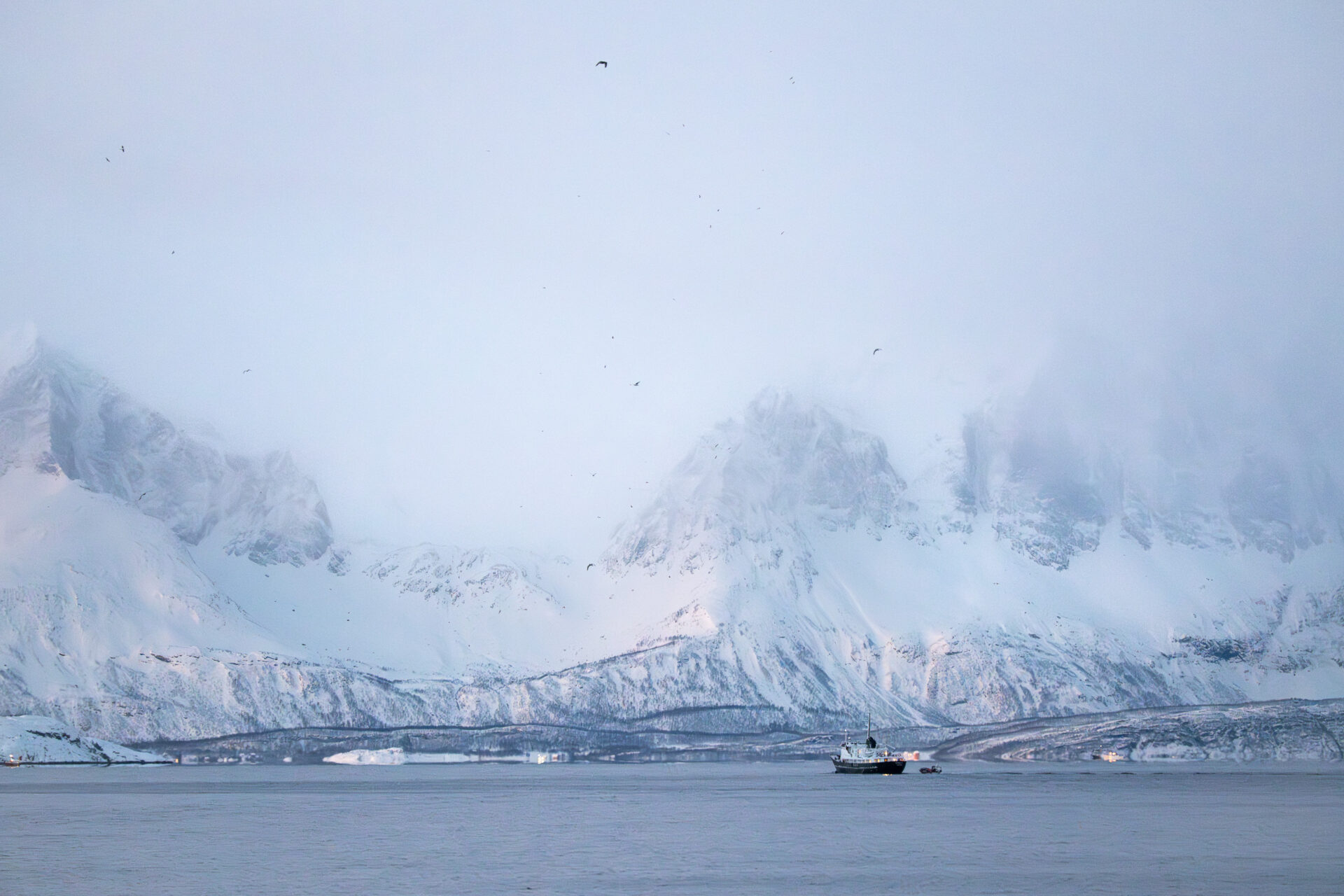
The water is almost black as our zodiac cuts across the fjords. The mountains rise on both sides, white against a strange sky, everything looks both close and impossibly far. No one speaks much, we all scan the water. Then we hear them, the sharp exhale of an orca’s breath. Then, the tall dorsal fins cut the surface. I don’t even notice the cold against my face anymore.
At the captain’s signal, we slide into the freezing water.
“I feel no fear, no cold, only the strong sensation of being profoundly alive.”
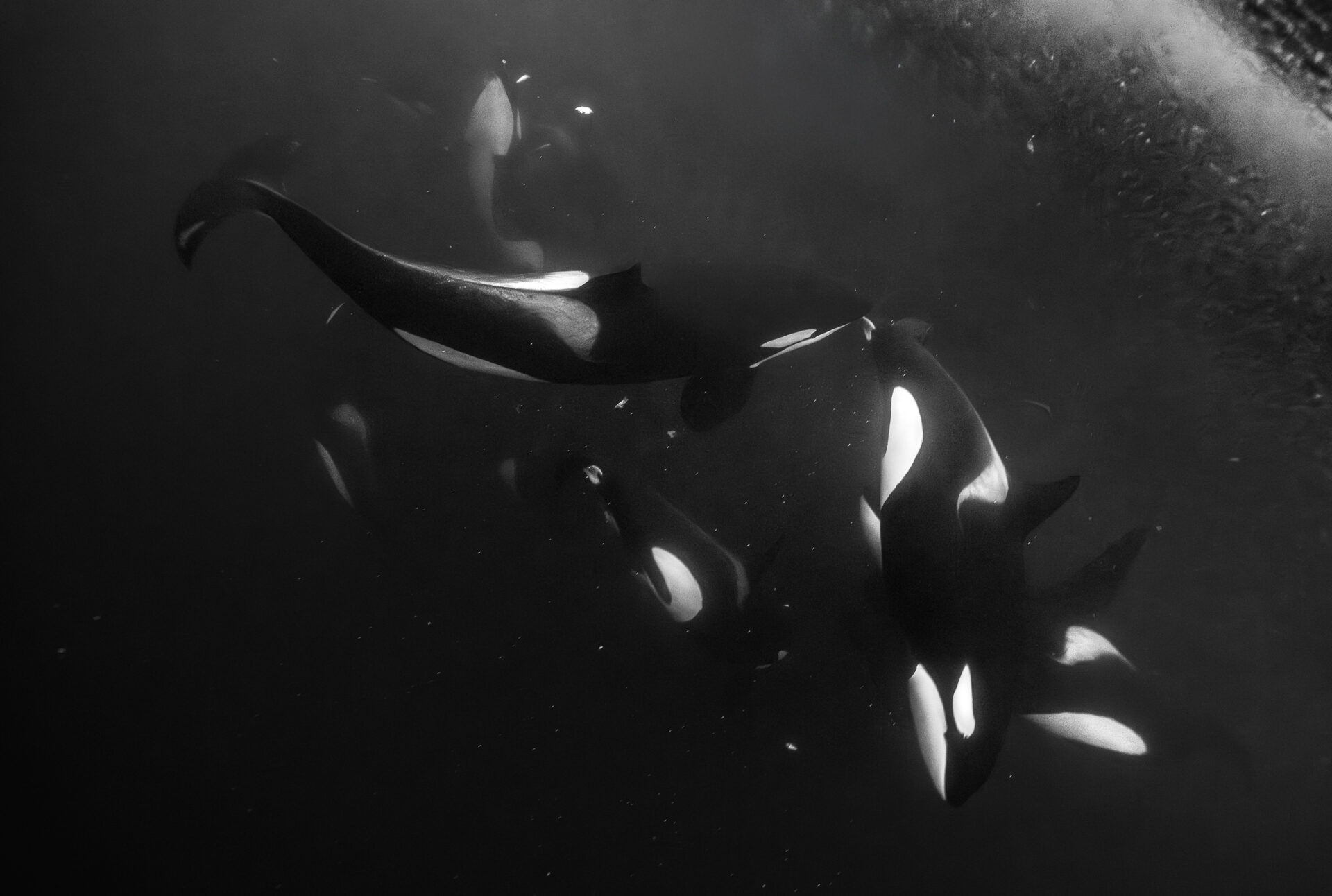
The cold hits all at once, and the fear disappears. Below the surface, the darkness softens. From the zodiac we saw the dorsal fins, now we see them whole. Shapes materialise, black and white, moving through the water with a coordination that feels rehearsed. Their bodies weave in and out of an enormous school of herring, working the bait ball with precision. They move without visible effort, gliding as if the water offers them no resistance at all. They register us, but they don’t change course or come close enough to feel intrusive. We are acknowledged and dismissed in almost the same moment. I forget about the cold entirely. All of my focus is in their space, the space they allow us to briefly share.
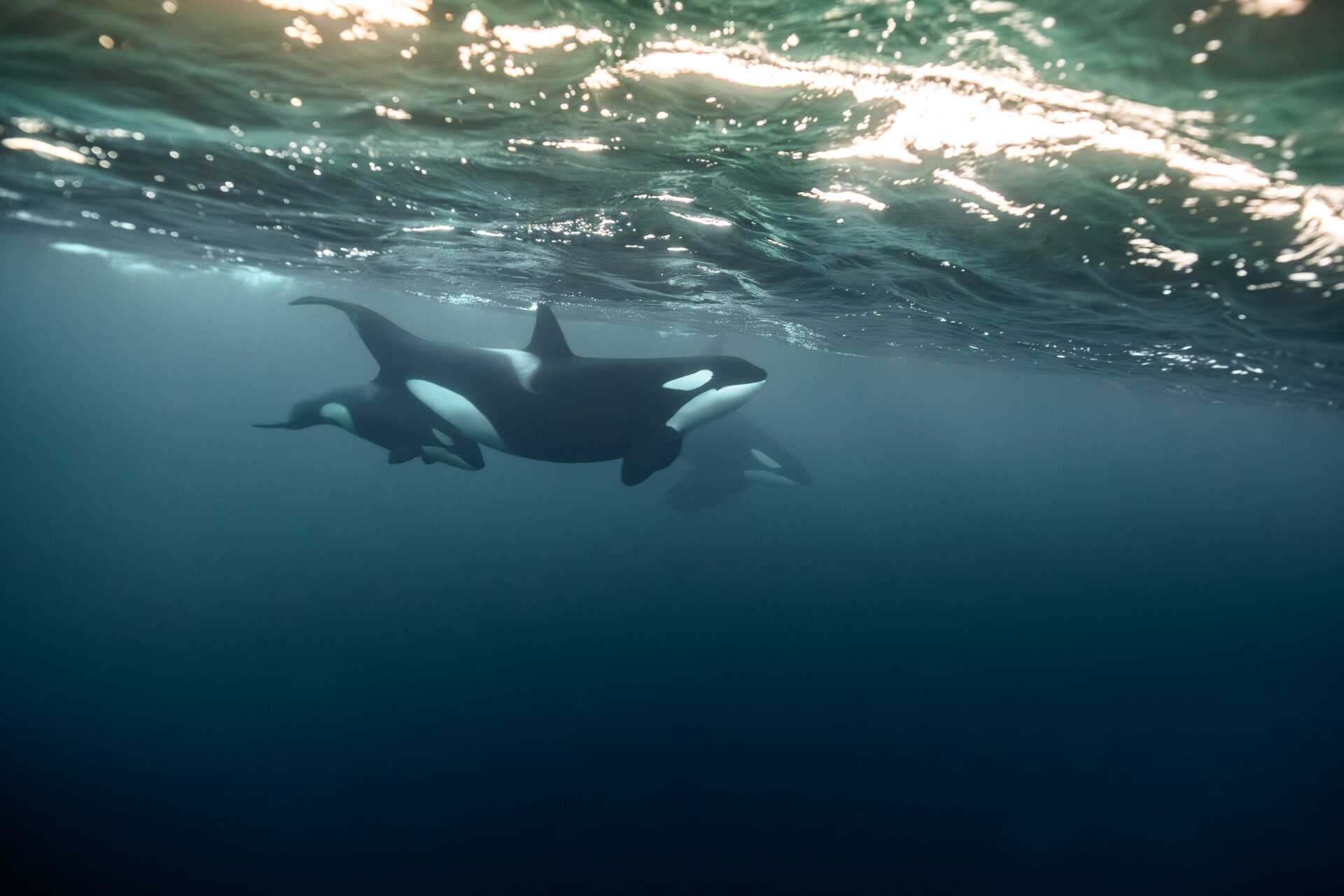
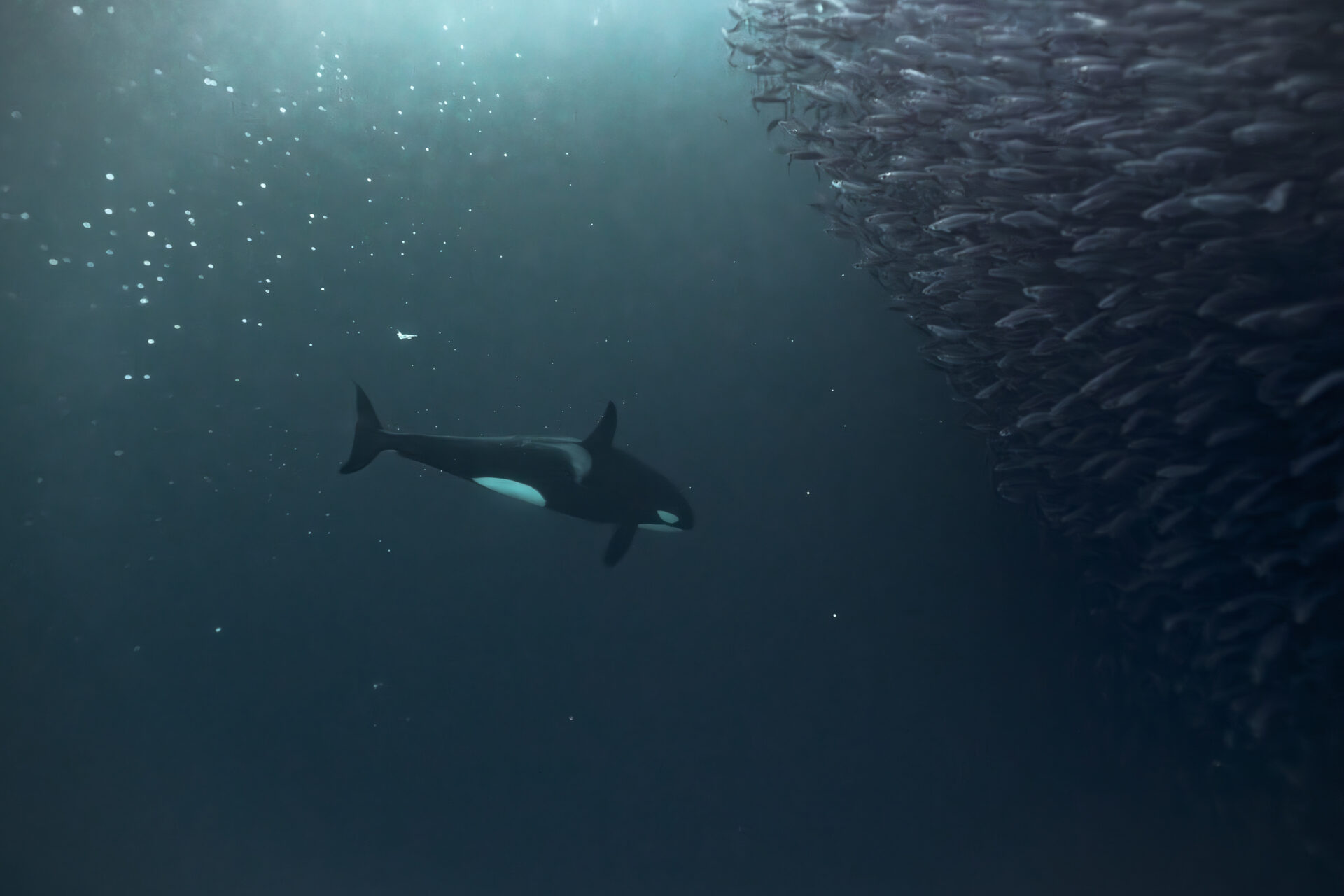
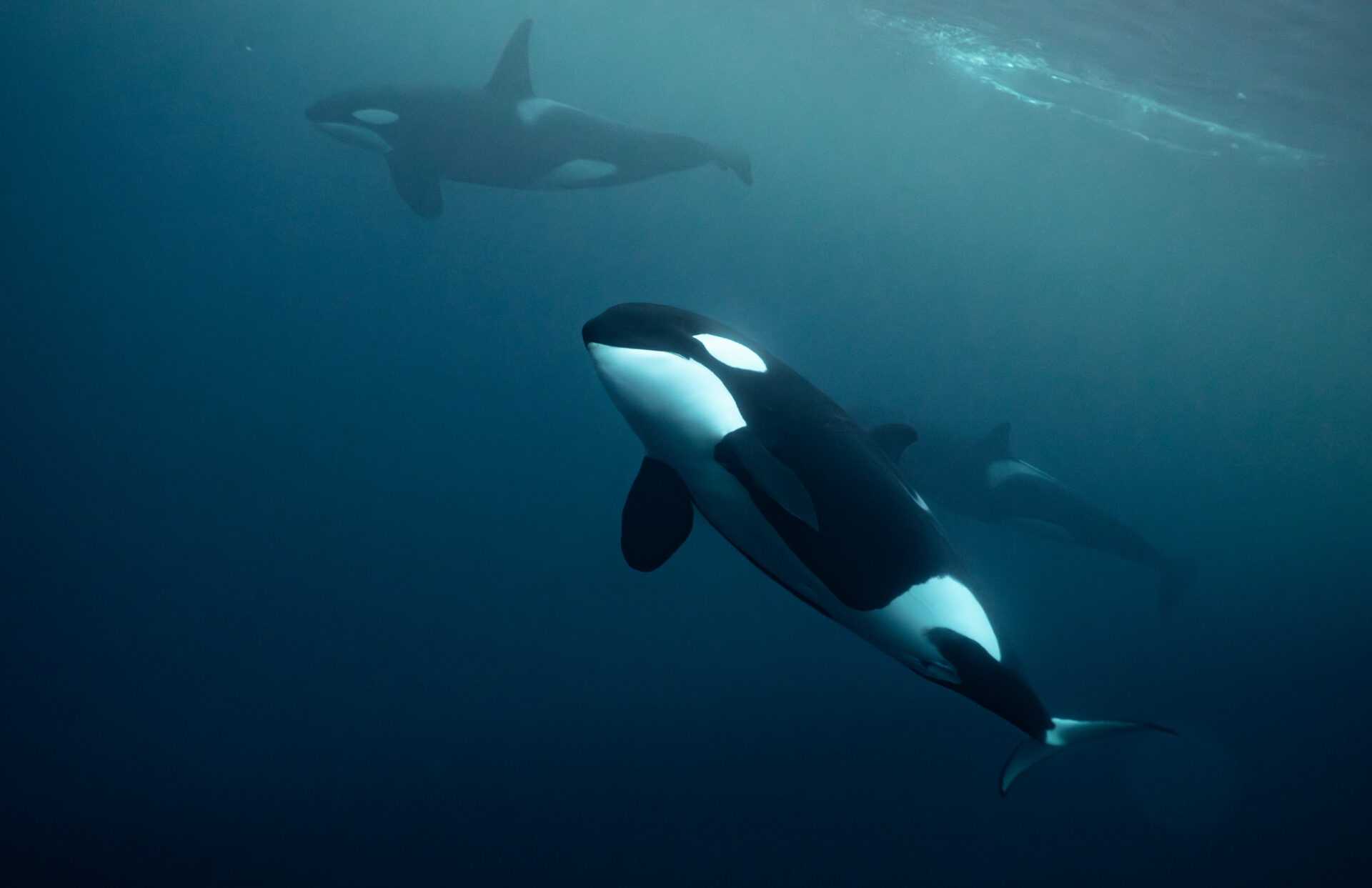
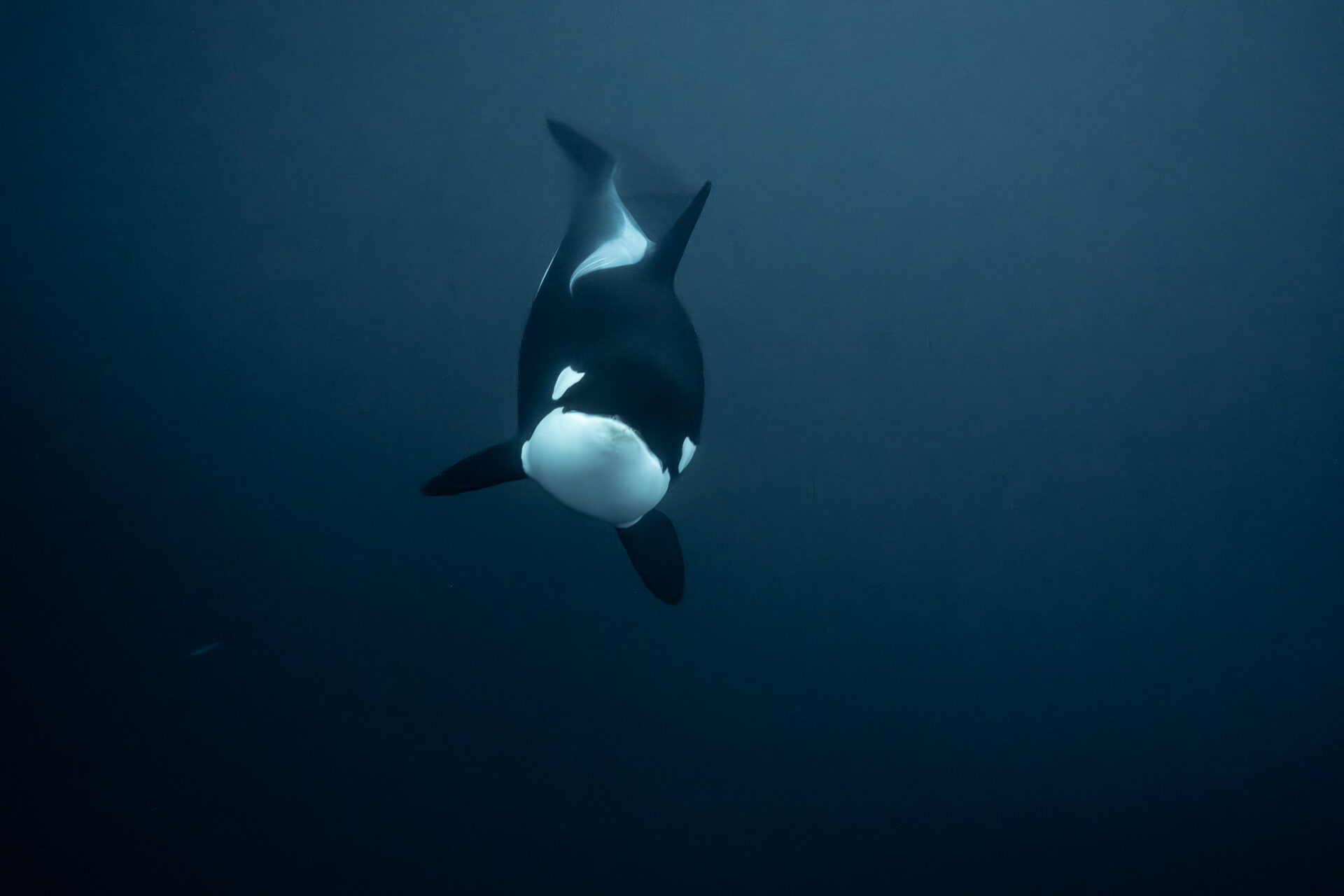
They are there to feed, not to waste energy on something else. They are clearly uninterested in us. And here is what strikes me: despite being called killer whales, a name that says more about us than them, there are no documented cases of orcas attacking humans in the wild. Yet they hunt penguins, seals, sharks, even blue whales. They are apex predators, perfectly aware of their power. But they don’t need to prove anything, an idea that feels almost radical in a human world obsessed with dominance and display.
Watching them, I can see this is a family at work. They stay together all of their life, sons never leave their mothers and daughters may go, but then return with calves of their own. Everything they know, they’ve taught each other through sound, movement, repetition and shared experience. What I’m witnessing is memory in motion, a strategy refined over generations.
They disappear into the dark water as quickly as they arrived, as if they were never there at all.
And just like that, the cold returns.
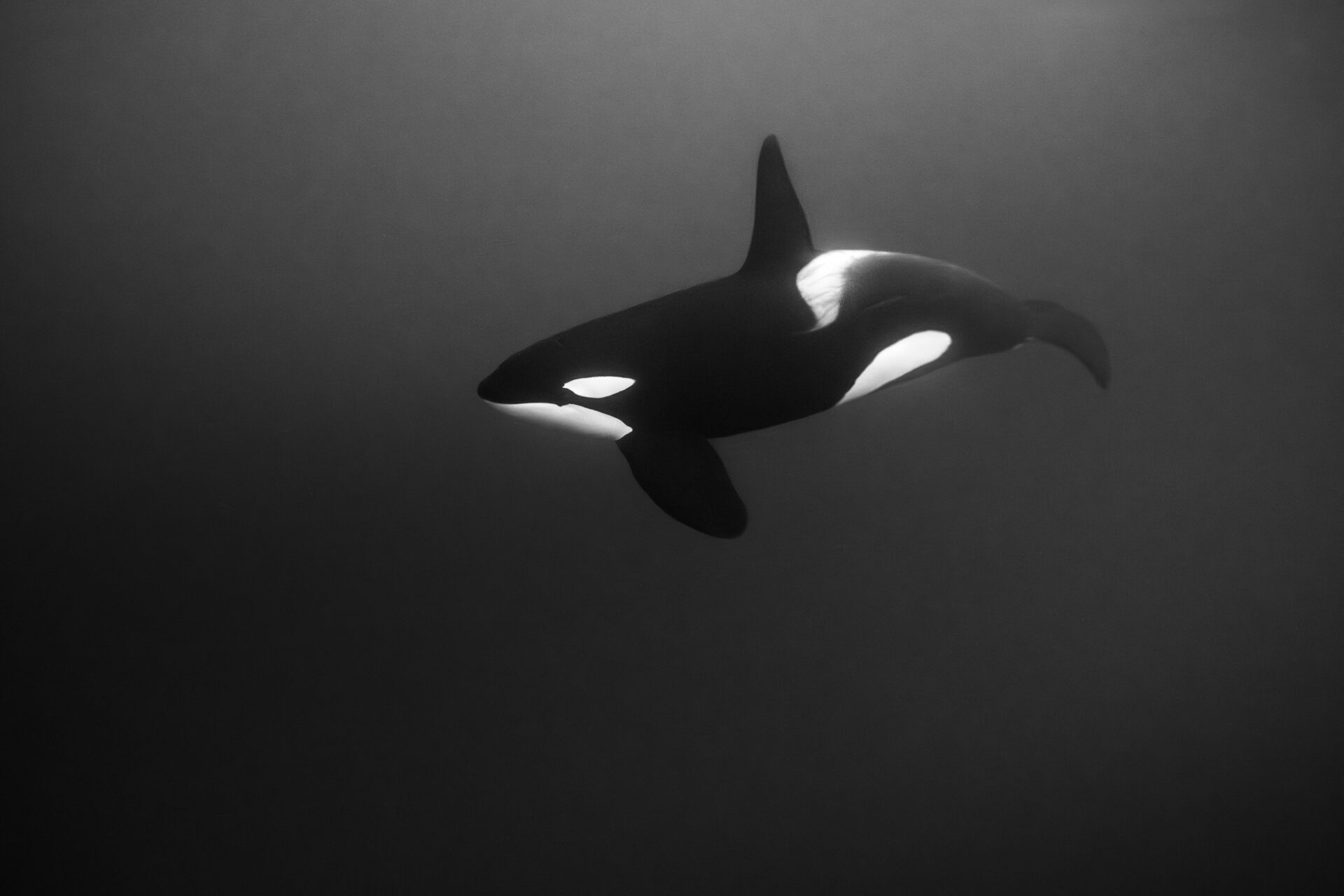
As I climb back onto the zodiac, it comes back even stronger, reminding me of my limits and my limited time in this place. Even as my fingers get numb and I start shaking, I want more. Another moment. The discomfort feels irrelevant in this moment, almost annoying, an interruption to something unfinished. I will trade warmth for that feeling again, even for a few moments.
But my body had other plans. That evening, the illness hit harder than before. Whatever adrenaline had been driving me was gone. I spent most of the night awake, coughing, aching, knowing I’ve pushed my body past what was sensible. There is a cost to ignoring your own limits, and I was paying it.
But lying in bed, exhausted, unable to sleep, something catches me by surprise. A couple of days ago, this same body felt like an obstacle. In the water, it endured. I used to believe that I had to feel strong and prepared before stepping into something difficult. That being ready was a prerequisite. But I was wrong. I can do more than I think.
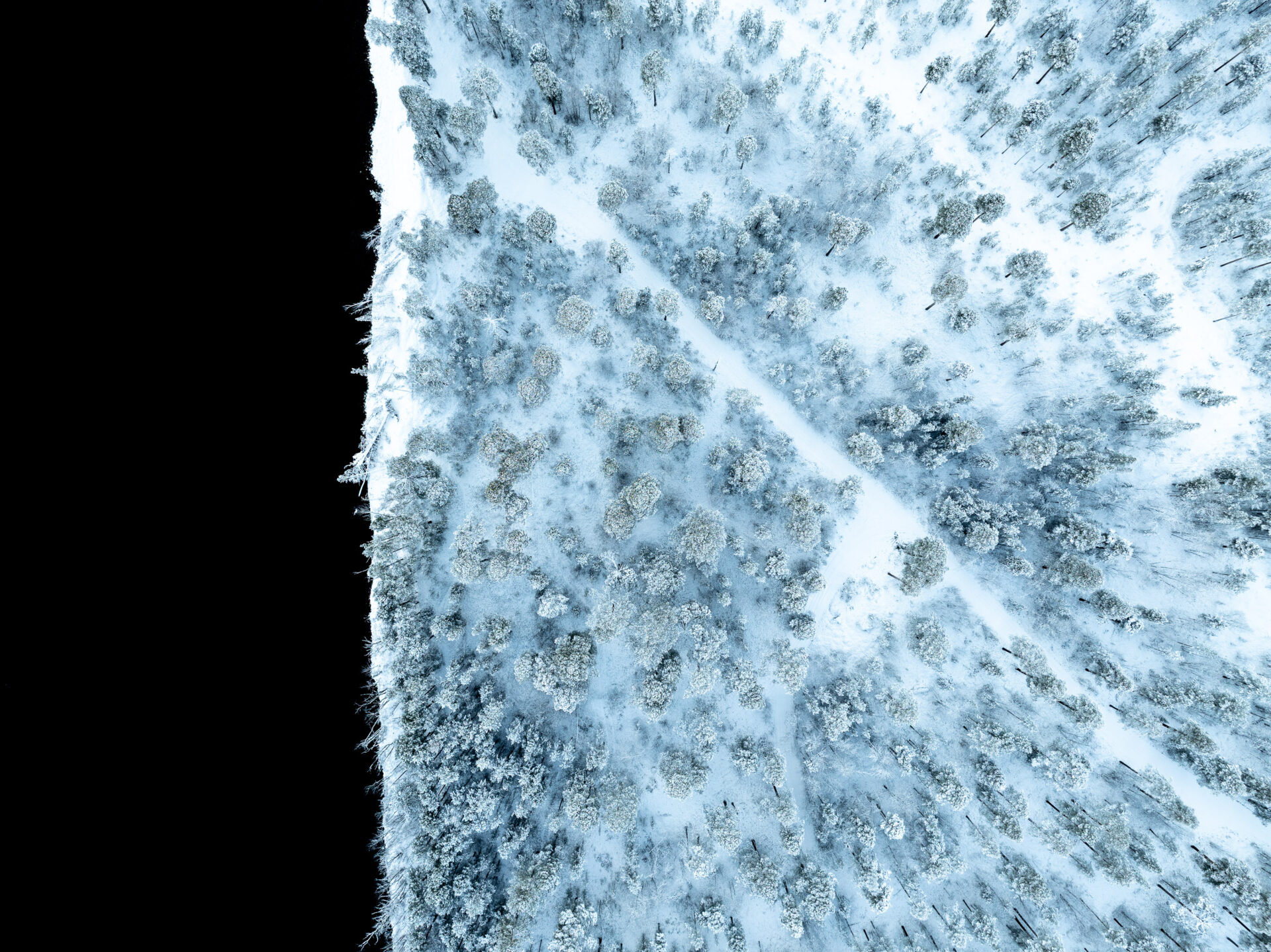
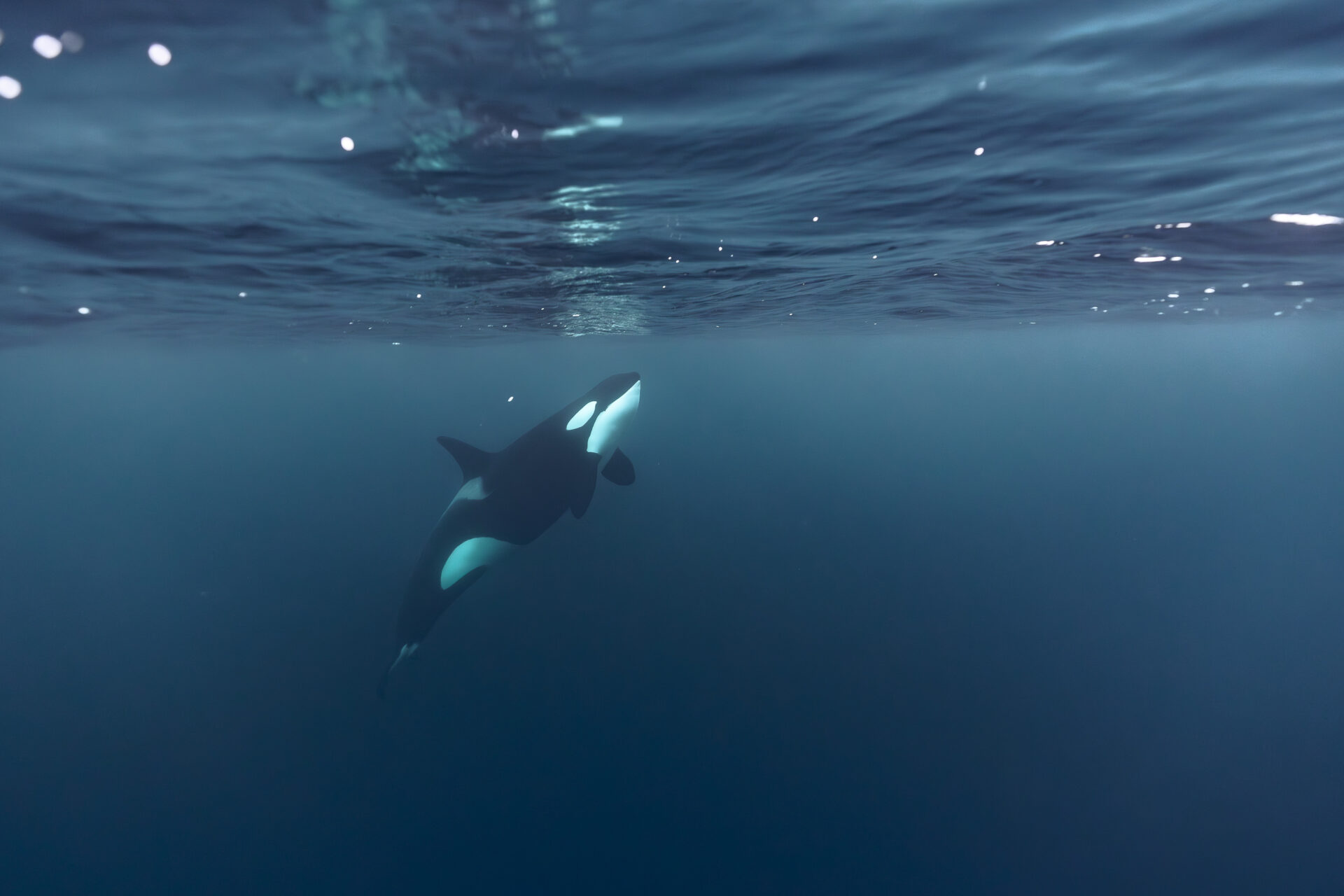
The orcas enter my mind. They are out there, moving through the dark with their families, doing what they’d done for thousands of years, whether anyone is watching or not.
The ocean holds animals the size of dinosaurs, communicating in frequencies we barely comprehend. Entire ecosystems and complex social structures unfold beneath the surface of our daily lives, indifferent to whether we notice them or not. They do not wait for us to pay attention. To enter that world, even briefly, requires something simple: curiosity and the willingness to be uncomfortable.
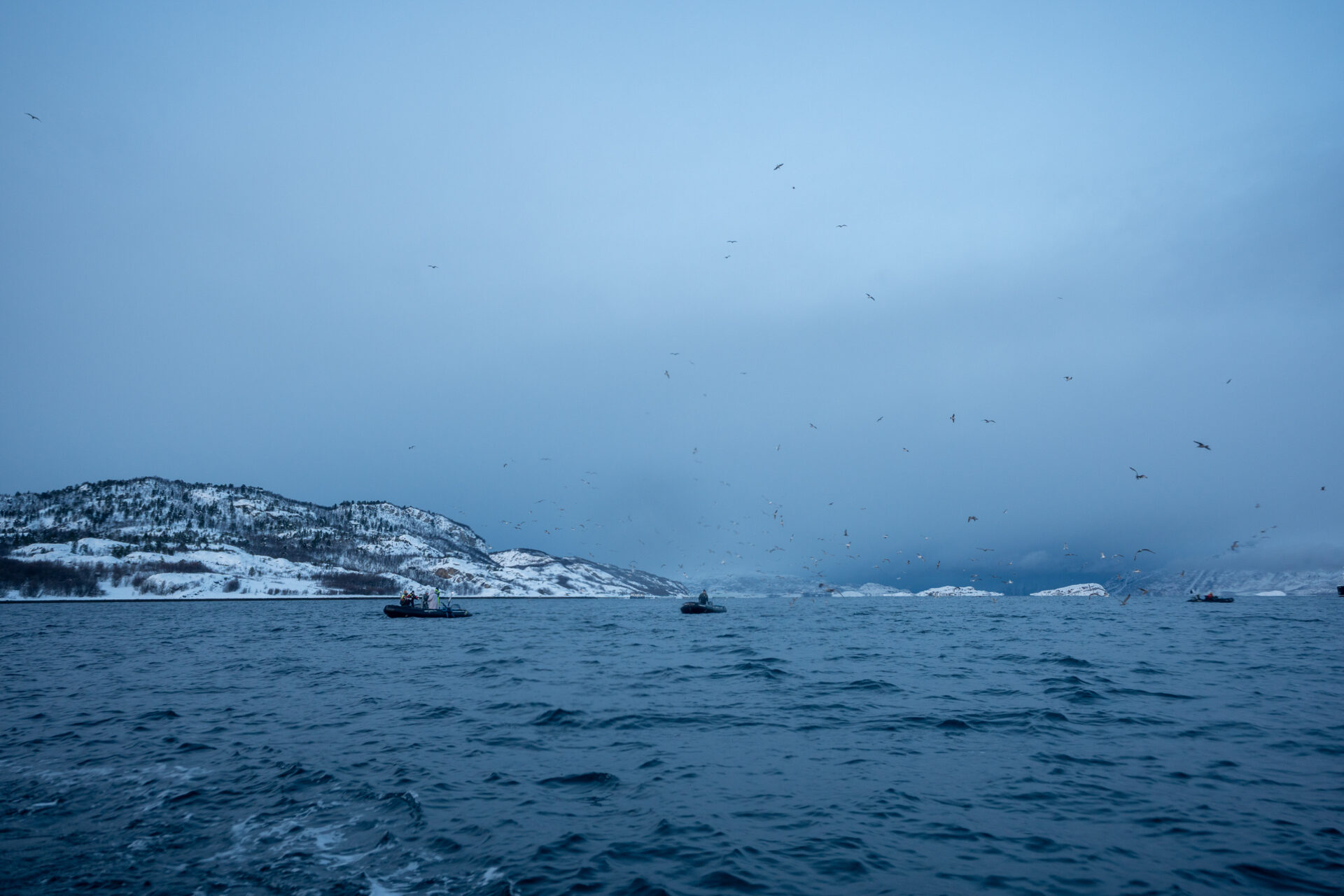
I’ve noticed something in my own life: when things become too comfortable, I stop paying attention. Out here, nothing lets you do that. Everything here demands presence.
I’m sick and tired and I can’t feel two of my fingers properly. But I’m not the same person who sat in that hotel room in Alta, wondering if I’d made a mistake. That person hadn’t been in the water yet.
“Once you've been in the water with them, once you've felt that aliveness, surrounded by a world so much larger and older than yourself, you will care.”
Maybe that’s why this matters. Not just the cold, or the sickness, or the act of stepping beyond what’s known. It’s what’s waiting on the other side. Because somewhere beneath the surface, right now, a pod is hunting together, teaching their young, moving through water they’ve known for generations. They don’t need us to notice. But once you’ve been in the water with them, once you’ve felt that aliveness, surrounded by a world so much larger and older than yourself, you will care.
Written with BlueTip 🦋
Gear
The photography gear used in this story.
Accessories
- Peak Design Travel Tripod
- F-stop 50L Mountain Series Tilopa Backpack
- SeaFrog Housing